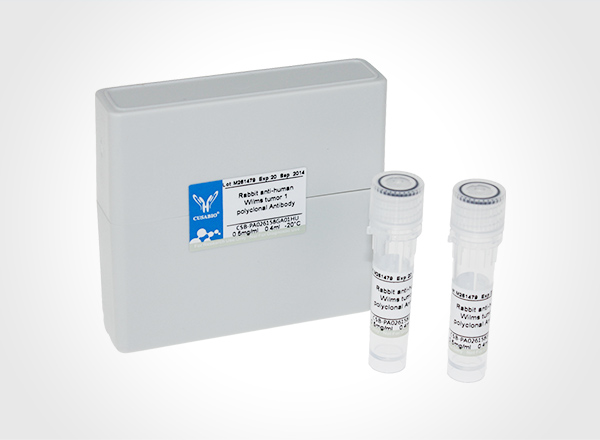
Liquid
Note: We will preferentially ship the format that we have in stock, however, if you have any special requirement for the format, please remark your requirement when placing the order, we will prepare according to your demand.
Upon receipt, store at -20°C or -80°C. Avoid repeated freeze.
Lead Time
Basically, we can dispatch the products out in 1-3 working days after receiving your orders. Delivery time maybe differs from different purchasing way or location, please kindly consult your local distributors for specific delivery time.
Note: All of our proteins are default shipped with normal blue ice packs, if you request to ship with dry ice, please communicate with us in advance and extra fees will be charged.
Usage
For Research Use Only. Not for use in diagnostic or therapeutic procedures.
May regulate the activity of kinases such as PKC and SRC via binding to integrin beta-1 (ITB1) and the receptor of activated protein C kinase 1 (RACK1). In complex with C1QBP is a high affinity receptor for kininogen-1/HMWK.
Gene References into Functions
The authors report a large Italian family affected Palmoplantar Keratoderma and Charcot Marie Tooth disease. Two different mutated genes, KRT1 and MPZ were responsible for the two main clinical signs. Exome analysis detected two missense mutations, one in KRT1 and one in MPZ.PMID:27639257
Results show that missense mutations exert dominant negative effects on the keratins K1/K10 protein structure by altering inter-chain interactions.PMID:27421141
KRT1 and the specific polymorphism of KRT1 in this Chinese Han population are associated with autoimmune diseases SLE and SScPMID:29028840
Case Report: post-zygotic mosaicism of KRT/1o mutations in epidermolytic Ichthyosis.PMID:27722766
KRT1 played an important role of maintaining epithelial barrier and its down-regulation in intestinal tissue was correlated with the progression of inflammatory bowel disease.PMID:28111259
Report genetic/clinical spectrum of KRT1 mutations in keratinopathic ichthyosis.PMID:26581228
demonstrated the presence of a genetic cutaneous mosaicism. Both patients carry the KRT1 pI479T substitution, but in the palmoplantar areas of one of them, only the mutated allele is expressed (hemizygous). This leads to highlight a new type of cutaneous mosaic, the palmoplantar mosaicismPMID:25904304
In our study, the missense mutation in the proband and his mother with epidermolytic ichthyosis was a single amino acid difference in codon 478, which causes more serious skin manifestationsPMID:25808222
Complete structure of an epithelial keratin 1/keratin 10 dimer has been presented.PMID:26181054
These findings indicate that exogenous FABP4 interacts with plasma membrane proteins, specifically CK1.PMID:26343611
analysis of a heterozygous novel splice junction mutation in the 2B domain of KRT1 in a family with diffuse palmoplantar keratodermaPMID:25429721
In ichthyosis with confetti, a causal de novo KRT1 mutation had a C-terminal frameshift, replacing 22 C-terminal AAs with an alternate 30-AA peptide. It distorted the IF network and mislocalized to the nucleus. Reversion occurred by mitotic recombination.PMID:25774499
In HeLa cells transiently expressing C2GnT-M-GFP, knockdown of KRT1 does not affect Golgi morphology but leaves C2GnT-M outside of the Golgi, resulting in the formation of sialyl-T antigen.PMID:25605727
Decreased levels of cytokeratin-1 is associated with breast cancer.PMID:25073515
Hsp74, a potential bladder cancer marker, has direct interaction with keratin 1.PMID:25050384
identified among endothelial antigens to which antibodies are produced during heart transplant rejectionPMID:23707440
Case Report/Letter: specific mutation in 2B domain of KRT1 gives rise to mild phenotype of epidermolytic hyperkeratosis mimicking ichthyosis bullosa of Siemens.PMID:23623204
study reports 2 related women of Colombian origin, affected by a severe ichthyosis curth-macklin phenotype, who present a novel KRT1 mutation c.1577delG (p.Gly526Alafs*88)PMID:22834809
Absence of Krt1 caused a prenatal increase in interleukin-18 (IL-18) and the S100A8 and S100A9 proteins, accompanied by a barrier defect and perinatal lethality.PMID:23132931
Among Japanese patients with bullous congenital ichthyosiform erythroderma for which genetic diagnosis was determined, all showed mustations in KRT1 or KRT10.PMID:23182068
Identification Keratin 1 as a cDDP-resistant protein in nasopharyngeal carcinoma cell lines.PMID:22348822
High cytokeratin is associated with colorectal carcinogenesis.PMID:21912905
we describe one Chinese family affected with EHK, type PS-1 (severe palmoplantar hyperkeratosis, type 1) and report a recurrent missense mutation (c.1436T>C) in the 2B rod domain of KRT1 in this family.PMID:22250628
mutation analysis in patients with epidermolytic ichthyosis by direct sequencing of KRT1 and KRT10 genes; identified 14 different mutations, of which four have not been published previouslyPMID:21271994
keratin 1 L12 domain mutations are associated with a milder epidermolytic ichthyosis phenotype with pronounced palmoplantar keratoderma, and without neonatal erythroderma and scaling.PMID:20500210
Data demonstrate that genetic variants in the KRT1 interval contribute to quantifiable differences in the migration rates of keratinocytes isolated from different individuals.PMID:17668073
alpha-keratin intermediate filaments have a low-density core as seen by cryoelectron microscopyPMID:12064938
The humans hair Keratin 1 genes are each clustered in the genome and clusters are part of the large typeI epithelial keratin gene domains on chromosomes.PMID:15797458
bullous congenital ichthyosiform erythroderma (BCIE) caused by a mutation in the 1A helix initiation motif of keratin 1.PMID:16361731
A new genetic polymorphism has been detected, which is especially prevalent among the African-American population.PMID:16417221
Allelic expression differences result from the cumulative contribution of multiple DNA sequence polymorphisms.PMID:16789827
The 2 keratin 1 mutations are associated with tonotubular keratin, i.e. 'whorls' of aggregated keratin that form tubules as seen in transverse or in longitudinal sectionsPMID:18795921
Mutation L437P in the 2B domain of keratin 1 causes diffuse palmoplantar keratoderma in a Chinese pedigree.PMID:19470048
Keratin 1, an intermediate filament network component, is the binding partner of the lymphocytic choriomeningitis virus nucleoprotein.PMID:19494018
Infection by HPV may alter the differentiation status of the epidermis, leading to delayed or absent expression of cytokeratin 1.PMID:19515043
Show
More
Hide
All
Subcellular Location
Cell membrane. Note=Located on plasma membrane of neuroblastoma NMB7 cells.
Protein Families
Intermediate filament family
Tissue Specificity
The source of this protein is neonatal foreskin. The 67-kDa type II keratins are expressed in terminally differentiating epidermis.