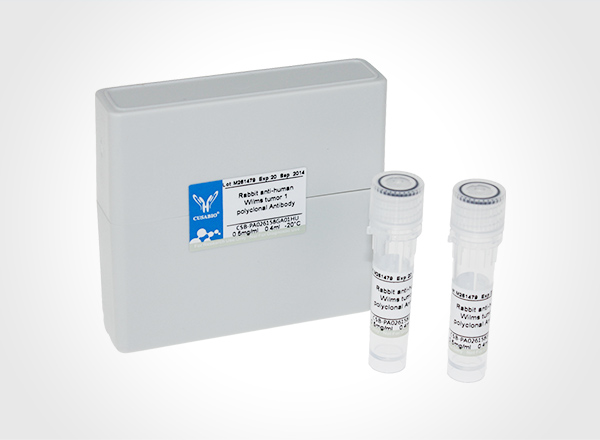
Liquid
Note: We will preferentially ship the format that we have in stock, however, if you have any special requirement for the format, please remark your requirement when placing the order, we will prepare according to your demand.
Storage
Upon receipt, store at -20°C or -80°C. Avoid repeated freeze.
Lead Time
Basically, we can dispatch the products out in 1-3 working days after receiving your orders. Delivery time maybe differs from different purchasing way or location, please kindly consult your local distributors for specific delivery time.
Note: All of our proteins are default shipped with normal blue ice packs, if you request to ship with dry ice, please communicate with us in advance and extra fees will be charged.
Usage
For Research Use Only. Not for use in diagnostic or therapeutic procedures.
Serine protease which exhibits a preference for Arg over Lys in the substrate P1 position and for Ser or Pro in the P2 position. Shows activity against amyloid precursor protein, myelin basic protein, gelatin, casein and extracellular matrix proteins such as fibronectin, laminin, vitronectin and collagen. Degrades alpha-synuclein and prevents its polymerization, indicating that it may be involved in the pathogenesis of Parkinson disease and other synucleinopathies. May be involved in regulation of axon outgrowth following spinal cord injury. Tumor cells treated with a neutralizing KLK6 antibody migrate less than control cells, suggesting a role in invasion and metastasis.
Gene References into Functions
High KLK6 expression is associated with metastasis of colon cancer.PMID:30015976
Results showed a significant downregulation of KLK6 mRNA expression in breast cancer (BC) tissue sections compared to the non-cancerous component. The expression of KLK6 is positively associated with tumor grade and is overexpressed in aggressive phenotypes such as TNBC.PMID:29435805
KLK6-PAR2 expression is down-regulated and PAR1 is up-regulated when DeltaNp63beta expression is decreased, leading to EMT with enhancing migration and invasion through ERK signal reduction at the invasive frontPMID:29224812
KLK6 may be the key protease involved in the proteolytic modification of PFK-M.PMID:29563071
Our data demonstrate for the first time increased levels of KLK6 in mucosal melanomas of the head and neckPMID:27844409
Induction of autophagic processes through KLK6 expression may increase acquisition of resistance of gastric cancer cells to auranofin-induced autophagy.PMID:27863404
Our data provide experimental evidence that KLK6 controls metastasis formation in colon cancer via specific downstream network of miRNA-mRNA effectors.PMID:28431272
Data show that kallikrein 6 (KLK6) expression is induced in mouse and human skin during chronic glucocorticoid treatment.PMID:27283773
FST and KLK6 may have significance in breast cancer detectionPMID:27168011
KLK6 overexpression and likely its proteolytic activity is associated with alterations in downstream miRNAs and their targets, and these differ with the molecular subtypes of breast cancer.PMID:27093921
Molecular models of peptides were built into the KLK6 structure and the marked preference of the cut between the two R of the examined peptides was related to the extended conformation of the substratesPMID:28254587
Our fine-mapping study has identified novel loci in the KLK6 region strongly associated with aggressive PCa.PMID:28376164
mRNA expression levels of KLK6 and KLK8 in advanced serous ovarian cancerPMID:27483364
Data indicate that elevated expression of microRNA-375 in head and neck squamous cell carcinoma (HNSCC) cells significantly reduces kallikrein 6 (KLK6), kallikrein 10 (KLK10), and matrix metalloproteinase 9 (MMP9) messenger RNA expression.PMID:26172508
KLK6 expression was detected in head and neck tumor cell lines (FaDu, Cal27 and SCC25), but not in HeLa cervix carcinoma cells.PMID:25990935
The results of this study indicated that reductions in kallikrein-6 and calpain-1 may contribute to the accumulation of alpha-synuclein in DLB.PMID:25476568
KLK6 and KLK10 may be useful markers and potential therapeutic targets in gastroesophageal junction tumorsPMID:25649006
This study assessed the prognostic utility of human tissue kallikrein-like peptidases 6 and 10 (KLK6 and KLK10) and correlated their expression with histopathological and clinical parameters in gastric cancer.PMID:25153389
KLK6 may represent a potential unfavorable prognostic biomarker for colon cancer.PMID:25153391
KLK6 promotes the proliferation of lung tumoral cells and restrains their apoptosis in vitro via ligand-dependent EGFR and was dependent on the protease-activated receptor 2.PMID:24643912
The level of KLK6 is significantly increased in the plasma samples from laryngeal cancer patients compared to the controls.PMID:24669031
Our data suggest that de novo KLK6 expression during early liver carcinogenesis may induce production of Ubi(1-74) by post-translational modification of ubiquitinPMID:24979321
KLK6 mRNA expression could be considered as an independent, unfavorable molecular prognostic biomarker in colorectal adenocarcinoma, with additional prognostic value in patients without regional or distant metastasesPMID:24430362
Data indicate there was no SNP in KLK6 was associated with altered risk of prostate cancer.PMID:21741862
Neuropathological analysis following delivery of LV-Neurosin to alpha-syn tg mice resulted in reduced accumulation of alpha-syn and reversal of neurodegenerative alterations in wild type but not A53T alpha-syn tg micePMID:22508489
Patients with synucleinopathy displayed lower cerebrospinal fluid levels of neurosin and alpha-synuclein compared to controls and Alzheimer's disease patients.PMID:23308173
KLK6 DNA methylation was significantly associated with pathological stage in prostate cancer patients operated by radical prostatectomy.PMID:22874102
Decreased serum concentrations of KLK6 are found in patients with aneurysmal subarachnoid hemorrhage, with the lowest levels in patients who diedPMID:23049835
hsa-let-7 family member hsa-let-7a is a modulator of KLK6 protein expression that is independent of the KLK6 copy number statusPMID:23136250
KLK6 gene expression may have clinical utility as a marker of unfavorable prognosis for intracranial tumors, and consequently, it could be used as target for therapeutic intervention.PMID:22477710
in colorectal cancer patients, lymph node KLK6 positivity indicated presence of aggressive tumour cells associated with poor prognosis and high risk of tumour recurrencePMID:22699826
KLK6 is positioned to serve as a molecular trigger of select physiological processes involved in the development of astrogliosisPMID:22505518
KLK6 expressed by stromal cells may considerably contribute to the aggressiveness of ovarian cancerPMID:22505521
KLK6 is significantly upregulated and secreted in gastric cancer tissues and sera, suggesting that KLK6 might be used as a potential biomarker and therapeutic target for gastric cancer.PMID:22373580
KLK6 immunostaining is an independent prognostic marker in patients with colorectal carcinoma.PMID:22285222
High KLK6 is associated with ovarian cancer.PMID:22102857
KLK6-induced intracellular Ca(2+) flux and tumor cell invasion critically depends on the protease-activated receptor 1 (PAR1).PMID:21753781
KLK6 has a role in tumour proliferation and progression of NSCLCPMID:19426157
upregulated in late stage epithelial ovarian cancerPMID:20680316
KLK6 was up-regulated significantly in tissues and sera from patients with colon cancer and was associated closely with a poor prognosis.PMID:21656738
KLK6 promotes lymphocyte survival by a mechanism that depends in part on activation of PAR1.PMID:21464892
The expression of kallikrein 7 and kallikrein 6 in melanomas may be responsible for the loss of cell-cell adhesion.PMID:21193224
an altered KLK6 expression may contribute to vascular abnormalities in Alzheimer's disease and vascular dementiaPMID:20846516
Neurosin targets extracellular alpha-synuclein in cultured cells.PMID:20403393
Patients diagnosed with advanced multiple sclerosis showed mean CSF levels of kallikrein-related peptidase 6 (29 ng/ml) that were significantly higher than in neurological controls (25.5 ng/ml).PMID:20836755
The expression of hK6 in ovarian cancer was higher than that in benign and borderline ovarian neoplasms. Expression is higher in the ovarian cancer of late stage, higher-grade, with lymph node metastasis and is associated with a poorer prognosis.PMID:19950700
KLK6 expression in cancerous tissues may play an important role in the invasion and metastasis of primary breast carcinoma.PMID:18992199
Data show that it was unable to distinguish men with and without prostate cancer using multiple kallikreins as urinary biomarkers.PMID:19560453
characterization of human kallikrein 6 as a degradative protease with structural features more similar to trypsin than the regulatory kallikreinsPMID:11983703
X-ray crystallographic structure of KLK6.PMID:12016211
Show
More
Hide
All
Subcellular Location
Secreted. Nucleus, nucleolus. Cytoplasm. Mitochondrion. Microsome. Note=In brain, detected in the nucleus of glial cells and in the nucleus and cytoplasm of neurons. Detected in the mitochondrial and microsomal fractions of HEK-293 cells and released into the cytoplasm following cell stress.
Protein Families
Peptidase S1 family, Kallikrein subfamily
Tissue Specificity
In fluids, highest levels found in milk of lactating women followed by cerebrospinal fluid, nipple aspirate fluid and breast cyst fluid. Also found in serum, seminal plasma and some amniotic fluids and breast tumor cytosolic extracts. Not detected in urin