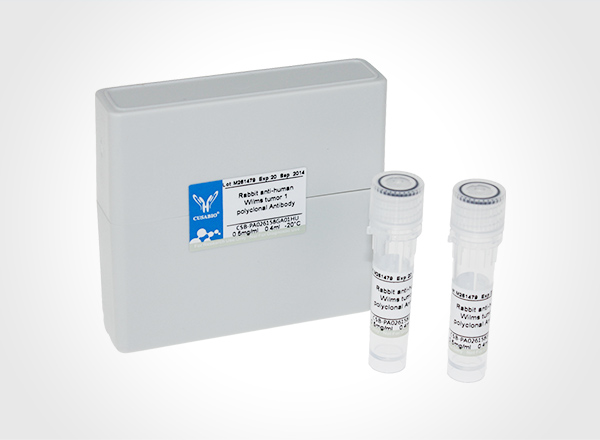
KIR2DS1 antibody; CD158HKiller cell immunoglobulin-like receptor 2DS1 antibody; CD158 antigen-like family member H antibody; MHC class I NK cell receptor Eb6 ActI antibody; CD antigen CD158h antibody
Raised in
Rabbit
Species Reactivity
Human
Immunogen
Recombinant Human Killer cell immunoglobulin-like receptor 2DS1 protein (22-245AA)
Immunogen Species
Homo sapiens (Human)
Conjugate
Non-conjugated
Clonality
Polyclonal
Isotype
IgG
Purification Method
>95%, Protein G purified
Concentration
It differs from different batches. Please contact us to confirm it.
Liquid
Note: We will preferentially ship the format that we have in stock, however, if you have any special requirement for the format, please remark your requirement when placing the order, we will prepare according to your demand.
Upon receipt, store at -20°C or -80°C. Avoid repeated freeze.
Lead Time
Basically, we can dispatch the products out in 1-3 working days after receiving your orders. Delivery time maybe differs from different purchasing way or location, please kindly consult your local distributors for specific delivery time.
Note: All of our proteins are default shipped with normal blue ice packs, if you request to ship with dry ice, please communicate with us in advance and extra fees will be charged.
Usage
For Research Use Only. Not for use in diagnostic or therapeutic procedures.
Receptor on natural killer (NK) cells for some HLA-C alleles such as w6. Does not inhibit the activity of NK cells.
Gene References into Functions
we demonstrated peptide-dependent binding of the activating NK cell receptor KIR2DS1, providing new insights into the underlying mechanisms involved in KIR2DS1-related disorders.PMID:28546555
Study findings determined the detrimental impact of KIR2DS1, 2DS5, 3DS1, 2DL5 and CxT4 genotype on genetic predisposition to head and neck squamous cell carcinoma in Iranians.PMID:29408295
KIR2DS1 expression by decidual natural killer cells increases their ability to control placental HCMV infectionPMID:27956621
A negative association between the KIR2DS1 polymorphism and susceptibility to type 1 diabetes mellitus was found.PMID:29384924
KIR2DS1 gene polymorphism is associated with HIV-1 infection.PMID:26888639
The absence of KIR-2DS1 in the mother and the presence of HLA-C2 ligand in the child were negatively associated with type 1 diabetes in the child. Our results indicate that maternal KIR genes and their interaction with foetal HLA-C2 may contribute to the risk of type 1 diabetes among Han Chinese childrenPMID:26991115
KIR2DS1-C2C2 is less frequent in type 1 diabetes in Saudi childrenPMID:26542066
Recurrent Pregnancy Loss in Women with Killer Cell Immunoglobulin-Like Receptor KIR2DS1 is Associated with an Increased HLA-C2 Allelic FrequencyPMID:26589762
functional interactions between KIR and HLA modify risks of BCC and SCC and that KIR encoded by the B genes provides selective pressure for altered p53 in BCC tumors.PMID:26744525
The activating KIR gene KIR2DS1 has an important predictive potential for early onset of type 1 autoimmune hepatitis.PMID:26744892
Absence of HLA-C2 for donor KIR2DL1 was associated with higher grade II to IV (HR, 1.4; P = .002) and III to IV acute GVHD (HR, 1.5; P = .01) compared with HLA-C2(+) patients.PMID:25960307
frequency of the maternal KIR2DS1 gene lower in the preeclampsia group than control groupPMID:24911933
Data show that KIR2DL5 receptor, KIR2DS1 protein, KIR2DS5 protein and KIR3DS1 receptors were all significantly associated with high viral load.PMID:25253288
the frequencies of HLA-Cw07 were statistically significantly higher in the patient group than those in the control group (P = 0.009). KIR2DS1(+) HLA(-) Cw(Lys) was more common in subjects with SLEPMID:25581336
Moreover, the frequency of activating genotypes in the AS patient group was significantly higher than in the healthy control group (P < 0.05). KIR2DS1 and KIR3DS1PMID:25491925
Effect of KIR2DS1 was most significant in pregnancies where its ligand, HLA-C2, was paternally but not maternally inherited by a fetus (p = 0.005, odds ratio = 2.65).PMID:24778445
Different expression levels of KIR2DL1 may contribute to the abnormal function of natural killer (NK) and NKT lymphocytes, which lead to the risk of systemic lupus erythematosus (SLE) susceptibility.PMID:24839813
A negative association was found between the activating KIR2DS1 gene and multiple sclerosis.PMID:24529855
Activation of KIR2DS1 positive decidual natural killer cells by HLA-C2 stimulated production of soluble products including GM-CSF.PMID:24091323
Frequencies of the great majority of KIR genes did not differ between patients and controls, except for KIR2DS1, whose frequency was significantly lower in patients than in controlsPMID:23831511
many NK cells with anti-HLA-C2 reactivity are present in HLA-C1 homozygous and heterozygous donors with KIR2DS1.PMID:23554313
Activating KIR genes from donors were associated with distinct outcomes of allogeneic HSCT for AML. Donor KIR2DS1 appeared to provide protection against relapse in an HLA-C-dependent manner, and donor KIR3DS1 was associated with reduced mortality.PMID:22931314
Data found that the frequencies of KIR2DS1, 2DS3 and 3DS1 were significantly higher in pulmonary tuberculosis patients than in the control group.PMID:22653583
High KIR2DS1 activation is associated with breast cancer.PMID:21479698
in this cohort, KIR2DS1(+) patients had significantly lower 2-year probabilities of achieving CCyR and OS than KIR2DS1(-) patients. The impact of KIR2DS1 on CCyR was greatest when the ligand for the corresponding inhibitory receptor, KIR2DL1, was absentPMID:21844874
In this study, KIR2DS1+HLA-C2 and KIR3DL1+HLA-B Bw4 Ile80 combinations were associated with the vulnerability to ankylosing spondylitis.PMID:21797986
KIR2DS1 expression may also significantly amplify the size of the alloreactive NK cell subset by switching a subset of "not alloreactive" NK cells into potent alloreactive cells.PMID:21791599
In alloreactive natural killer-cell responses, KIR2DS1 expression represents a remarkable advantage as it allows efficient killing of C2/C2 or C1/C2 myelomonocitic dendritic cells (DCs) and T-cell blasts.PMID:21355085
This study suggested that the presence of functional compounds of activating KIR receptors together with their HLA ligands, allowing the immunomodulatory function of NK cells, may have a protective role against the disease.PMID:20826009
Study showed that the activating KIR2DS1 and KIR2DS3 genes associate with fatal outcome in Ebola virus infection.PMID:20878400
KIR2DS1 has been associated with autoimmunity and hematopoietic stem cell transplantation, these results pave the way to dissect the function of KIR2DS1 in these clinical conditions.PMID:20093094
KIR3DS1 and KIR2DS1 may be necessary to trigger an effective early immune response against HPV-infected targets to establish resistance to recurrent respiratory papillomatosisPMID:19861144
individuals carrying three activating KIR genes 3DS1, 2DS1, and 2DS5 are more frequent in patients with Vogt-Koyanagi-Harada disease than in controlsPMID:19897003
KIR2DS1 genes are overrepresented in combination with KIR2DS3, KIR3DS1 and KIR2DS5.PMID:12559621
The frequencies of KIR2DS1 and KIR2DL5 were significantly increased in psoriasis vulgaris cases compared with controlsPMID:15140215
Results indicate a role of KIR2DS1 on recognition of HLA-Cw6 in susceptibility to psoriasis.PMID:15310528
An increase in the frequency of the activating KIR2DS1 gene was detected in the psoriatic arthritis (PsA) patients, compared with psoriasis patients negative for PsA and an unaffected American Caucasian control group.PMID:16112031
The presence of KIR2DS1 in the donor (n = 16/25) was not demonstrated to influence outcome following donor-hematopoietic cell transplantation.PMID:16504727
Significantly increased KIR2DS1 is associated with systemic lupus erythematosus and sclerodermaPMID:17445179
These results suggest that activating KIR2DS1 gene may not confer susceptibility to PV, and an association of KIR2DS1 gene with the HLA-Cw*0602+ was observed in these patients.PMID:18643961
KIR2DS1 incompatibilities increased risk of chronic graft-versus-host disease after allogeneic hematopoietic stem cell transplantationPMID:19500138
Data show that sHLA-Cw4 or sHLA-Cw3 alleles induced secretion of TGF-beta1 by ligation of stimulatory KIR2DS1 or KIR2DS2 isoforms.PMID:19830740
Show
More
Hide
All
Subcellular Location
Cell membrane; Single-pass type I membrane protein.