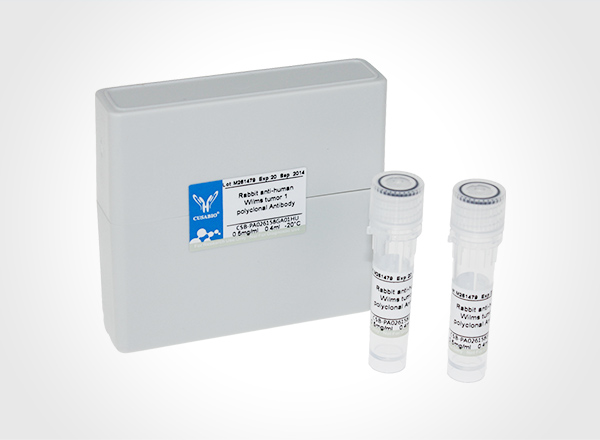
A type potassium channel modulatory protein 1 antibody; A-type potassium channel modulatory protein 1 antibody; KChIP1 antibody; KCIP1_HUMAN antibody; Kcnip1 antibody; Kv channel interacting protein 1 antibody; Kv channel-interacting protein 1 antibody; MGC9 antibody; MGC95 antibody; Potassium channel interacting protein 1 antibody; Potassium channel-interacting protein 1 antibody; VABP antibody; Vesicle APC binding protein antibody; Vesicle APC-binding protein antibody
Raised in
Rabbit
Species Reactivity
Human,Mouse,Rat
Immunogen
Synthesized peptide derived from the N-terminal region of Human KChIP1.
Immunogen Species
Homo sapiens (Human)
Conjugate
Non-conjugated
Isotype
IgG
Purification Method
The antibody was affinity-purified from rabbit antiserum by affinity-chromatography using epitope-specific immunogen.
Concentration
It differs from different batches. Please contact us to confirm it.
Buffer
Liquid in PBS containing 50% glycerol, 0.5% BSA and 0.02% sodium azide.
Form
Liquid
Note: We will preferentially ship the format that we have in stock, however, if you have any special requirement for the format, please remark your requirement when placing the order, we will prepare according to your demand.
Upon receipt, store at -20°C or -80°C. Avoid repeated freeze.
Lead Time
Basically, we can dispatch the products out in 1-3 working days after receiving your orders. Delivery time maybe differs from different purchasing way or location, please kindly consult your local distributors for specific delivery time.
Note: All of our proteins are default shipped with normal blue ice packs, if you request to ship with dry ice, please communicate with us in advance and extra fees will be charged.
Usage
For Research Use Only. Not for use in diagnostic or therapeutic procedures.
Regulatory subunit of Kv4/D (Shal)-type voltage-gated rapidly inactivating A-type potassium channels. Regulates channel density, inactivation kinetics and rate of recovery from inactivation in a calcium-dependent and isoform-specific manner. In vitro, modulates KCND1/Kv4.1 and KCND2/Kv4.2 currents. Increases the presence of KCND2 at the cell surface.
Gene References into Functions
This is the first copy number variation association study of the KCNIP1 gene in Chinese population, and these data indicated that KCNIP1 might function as a type 2 diabetes-susceptibility gene whose dysregulation alters insulin production.PMID:29491224
Study shows that the VAPB-PTPIP51 tethers regulate autophagy and demonstrates that overexpression of VAPB or PTPIP51 to tighten endoplasmic reticulum-mitochondria contacts impairs, whereas small interfering RNA-mediated loss of VAPB or PTPIP51 to loosen contacts stimulates, autophagosome formation.PMID:28132811
the current study provides evidence that genetic variants of Kv accessory proteins may contribute to the susceptibility of Attention-deficit/hyperactivity disorder.PMID:29176790
These studies showed that a common copy number variation in KCNIP1 gene is a genetic predictor of atrial fibrillation risk possibly pointing to a functional pathway.PMID:26831368
KCNIP1 from copy number variations study might function as a type 2 diabetes susceptibility gene whose dysregulation alters insulin production.PMID:24886904
Protein aggregation due to nsSNP resulting in P56S VABP protein is associated with amyotrophic lateral sclerosisPMID:24681403
V234I-VAPB induces ubiquitin aggregation followed by cell death; proposed that V234I-VAPB exhibits the characteristics of amyotrophic lateral sclerosis in spite of not having the typical aggregation property of different mutations in various neurodegenerative diseasesPMID:24792378
our findings suggest that KChIP1 interacts with Kv4.3 in interneurons at the stratum lacunosum-moleculare/radiatum junctionPMID:21129448
X-ray crystallographic and small-angle X-ray scattering data that show that the KChIP1-Kv4.3 N-terminal cytoplasmic domain complex is a cross-shaped octamer bearing two principal interaction sites.PMID:17057713
EF-hands 3 and 4 of KChIP1 are functionally involved in a specific association with PS on the membranePMID:19550036
Isoform 1 and isoform 2 are expressed in brain and kidney. Isoform 1 is also expressed in liver, pancreas, skeletal muscle, small intestine and testis. Isoform 2 is also expressed in lung, pancreas, leukocytes, prostate and thymus.