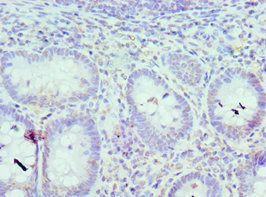
Recombinant Human Interferon regulatory factor 8 protein (137-426AA)
Immunogen Species
Homo sapiens (Human)
Conjugate
Non-conjugated
Isotype
IgG
Purification Method
Antigen Affinity Purified
Concentration
It differs from different batches. Please contact us to confirm it.
Buffer
PBS with 0.02% sodium azide, 50% glycerol, pH7.3.
Tested Applications
ELISA, IHC
Recommended Dilution
Application
Recommended Dilution
IHC
1:20-1:200
Storage
Upon receipt, store at -20°C or -80°C. Avoid repeated freeze.
Lead Time
Basically, we can dispatch the products out in 1-3 working days after receiving your orders. Delivery time maybe differs from different purchasing way or location, please kindly consult your local distributors for specific delivery time.
Note: All of our proteins are default shipped with normal blue ice packs, if you request to ship with dry ice, please communicate with us in advance and extra fees will be charged.
Usage
For Research Use Only. Not for use in diagnostic or therapeutic procedures.
Transcription factor that specifically binds to the upstream regulatory region of type I interferon (IFN) and IFN-inducible MHC class I genes (the interferon consensus sequence (ICS)). Can both act as a transcriptional activator or repressor. Plays a negative regulatory role in cells of the immune system. Involved in CD8(+) dendritic cell differentiation by forming a complex with the BATF-JUNB heterodimer in immune cells, leading to recognition of AICE sequence (5'-TGAnTCA/GAAA-3'), an immune-specific regulatory element, followed by cooperative binding of BATF and IRF8 and activation of genes. Required for the development of plasmacytoid dendritic cells (pDCs), which produce most of the type I IFN in response to viral infection. Positively regulates macroautophagy in dendritic cells.
Gene References into Functions
Exogenous expression of IRF8 in the silenced or downregulated lung cancer cell lines restored the sensitivity of lung cancer cells to apoptosis, and arrested cells at the G0/G1 phase. IRF8 bound to the T-cell factor/lymphoid enhancer factor (TCF /LEF) promoter, thus repressing beta-catenin nuclear translocation and its activation.PMID:30466106
Study shows that hypermethylation of IRF8 associated with decreased mRNA expression in dendritic cells confers risk to VKH disease.PMID:28432342
IRF8 upregulation in tumor cells inhibited the generation of Th17 cells in vitro, and this may be mediated by the downregulation of RORgammat. we found that a high level of IRF8 in the DLBCL tumor microenvironment was a predictor of poor survival in DLBCL patients.PMID:28537908
These findings identify IRF8 as a novel tumor suppressor regulating IFN-gamma/STAT1 signaling and beta-catenin signaling in breast cancer.PMID:28388578
Irf8 induction, but not its knockdown, decreased APL leukemogenic potential through driving monocytic maturation.PMID:28492552
Total cellular protein presence of the transcription factor IRF8 does not necessarily correlate with its nuclear presence.PMID:27582125
IRF8 is dispensable for induced pluripotent stem cell and embryonic stem cell differentiation into hemogenic endothelium and for endothelial-to-hematopoietic transition.PMID:28090699
TP(thymidine phosphorylase ) curbed the expression of three proteins-IRF8, RUNX2, and osterix. This downregulation was epigenetically driven: High levels of 2DDR, a product of TP secreted by myeloma cells, activated PI3K/AKT signaling and increased the methyltransferase DNMT3A's expressionPMID:27658717
It findings provide evidence for an additional mechanism of epigenetic IRF8 silencing during osteoclastogenesis that likely works cooperatively with DNA methylation, further emphasizing the importance of IRF8 as a negative regulator of osteoclastogenesis.PMID:27183582
Data suggest that ubiquitin specific protease 4 (USP4) interacts with interferon regulatory factor 8 (IRF8) and, by its Lys48-specific deubiquitinase/endopeptidase activity, stabilizes IRF8 protein levels in regulatory T-lymphocytes; USP4 and IRF8 are also expressed in helper T-lymphocytes.PMID:28477415
these data indicate that human NK cells require IRF8 for development and functional maturation and that dysregulation of this function results in severe human disease, thereby emphasizing a critical role for NK cells in human antiviral defense.PMID:27893462
down-regulation of IRF8 in the wound leads to impaired wound healing possibly through the regulation of macrophage function and apoptosis in skin wound.PMID:27709315
IRF8 may contribute to the genetic susceptibility of Behcet's disease by regulating IRF8 expression and cytokine production.PMID:26794091
IRF5 and IRF8, two transcription factors with opposing functions, control TLR9 signaling in human plasmacytoid dendritic cells.PMID:26613957
cytarabine-induced upregulation of the IRF8 in leukemic cells involves increased levels of ZNF224, which can counteract the repressive activity of WT1 on the IRF8-promoterPMID:26563595
Expression of WT1and IRF8 showed a moderate inverse correlation in acute myeloid leukemia patients. WT1 can be used as an minimal residual disease marker, especially in patients without recurrent genetic abnormalities.PMID:25387409
Results show that IRF8 is a possible genetic variant associated with the development of HT and production of thyroid antibodyPMID:25989711
The IRF8 gene variant influenced the interaction between IRF8 and NF-kappaB and thus susceptibility to systemic sclerosis.PMID:25880423
This article provides an overview of recent advances in our understanding of the role of IRF8 in myelopoiesis and related diseases. [review]PMID:25749660
This study demonstrated that the Polymorphism, Single Nucleotide of IRF8 is associated with multiple sclerosis in woman in Russia.PMID:25903733
gene variants in IRF5, IRF8 and GPC5 were not associated with risk of relapse or disease progression in multiple sclerosisPMID:24943672
Irf8 forms a negative feedback loop with Cebpb, a monocyte-derived DC epigenetic fate-determining transcription factor.PMID:25453760
MN1 prevents activation of the immune response pathway, and suggest restoration of IRF8 signaling as therapeutic target in AMLPMID:24957708
Data demonstrate that IRF8 as a functional tumor suppressor is frequently methylated in RCC, and IRF8-mediated interferon signaling is involved in RCC pathogenesis.PMID:25109451
The IRF8 gene polymorphisms might be associated with susceptibility to SLE.PMID:24034601
Data demonstrate a novel function for ICSBP in epithelial-mesenchymal transition, cell motility, and invasion through the TGF-beta and Snail signaling pathways.PMID:24832596
These data reveal a previously unrecognized BCR-ABL-STAT5-IRF-8 network, which widens the repertoire of potentially new anti-chronic myeloid leukemia targets.PMID:24753251
IRF8 is associated with germinal center B-cell-like type of diffuse large B-cell lymphoma and exceptionally involved in translocation t(14;16)(q32.33;q24.1).PMID:23573829
Mutations in linker histone genes HIST1H1 B, C, D, and E; OCT2 (POU2F2); IRF8; and ARID1A underlying the pathogenesis of follicular lymphoma.PMID:24435047
the prognostic significance of IRF8 transcripts in other populations of AML patientsPMID:23967110
In a Korean population, there was no association of IRF8 polymorphisms, with inflammatory demyelinating diseases.PMID:22994200
novel insights into the contribution of EBNA3C to EBV-mediated B-cell transformation through regulation of IRF4 and IRF8 and add another molecular link to the mechanisms by which EBV dysregulates cellular activitiesPMID:23658517
Using a capture sequencing strategy, we discovered the B-cell relevant genes IRF8, EBF1, and TNFSF13 as novel targets for IGH deregulation.PMID:23775715
Coronary heart disease in systemic lupus erythematosus is associated with IRF8 gene variants.PMID:23661672
A 3'UTR variant in IRF8 gene is associated with risk of chronic lymphocytic leukemia.PMID:23307532
these results underscore a key role of IRF-8 in the cross talk between melanoma and immune cells, thus revealing its critical function within the tumor microenvironment in regulating melanoma progression and invasiveness.PMID:23308054
IRF8 is required for ontogeny of the myeloid lineage and for host response to mycobacteria. The K108E & T80A mustations cause distinct forms of a novel primary immunodeficiency & associated susceptibility to mycobacteria. Review.PMID:23468103
The association of IRF1 and IRF8 variants with tuberculosis susceptibility was investigated.PMID:22879909
In resting macrophages, some IRF8 is conjugated to small ubiquitin-like modifiers (SUMO) 2/3 through the lysine residue 310. Macrophage activation prompts a reduction in SUMOylated IRF8.PMID:22942423
Four additional susceptibility loci (IRF8, TMEM39A, IKZF3, and ZPBP2) for systemic lupus erythematosus were robustly established a multiethnic population (European, African American, Asian, Hispanic, Gullah, and Amerindian).PMID:22464253
interaction between Tel and Tel-PdgfRbeta decreases Tel/Icsbp/Hdac3 binding to the PTPN13 cis element, resulting in increased transcription.PMID:22262849
Data showed that IRF8 target genes contributes to multiple aspects of the biology of mature B cells including critical components of the molecular crosstalk among GC B cells, T follicular helper cells, and follicular dendritic cells.PMID:22096565
Association analysis identified five SLE susceptibility genes reaching genome-wide levels of significance : NCF2 ,IKZF1 ,IRF8 ,IFIH1 , and TYK2PMID:22046141
IRF4 has activities similar to IRF8 in regulating myeloid cell developmentPMID:22003407
[review] Induction of transcriptional repressors such as IRF8 is one of the mechanisms that inhibits osteoclastogenesis.PMID:22082370
study identifies a novel role for ICSBP in regulating cell growth via TGF-beta receptor upregulation and subsequent activation of the TGF-beta receptor/TAK-1/p38 pathwayPMID:21625229
The promoter was methylated in many MDS or AML patients. This may be the main mechanism of ICSBP inactivation in myeloid malignancies & may be functionally important for accumulation of chromosome aberrations during leukemic progression.PMID:21475251
association of single nucleotide polymorphisms to multiple sclerosisPMID:21552549
We detected two distinct disease-causing mutations affecting interferon regulatory factor 8 (IRF8). Both mutations impair IRF8 transcriptional activity.PMID:21524210
Findings determine the mechanism of IRF8 downregulation in CML cells.PMID:21487040