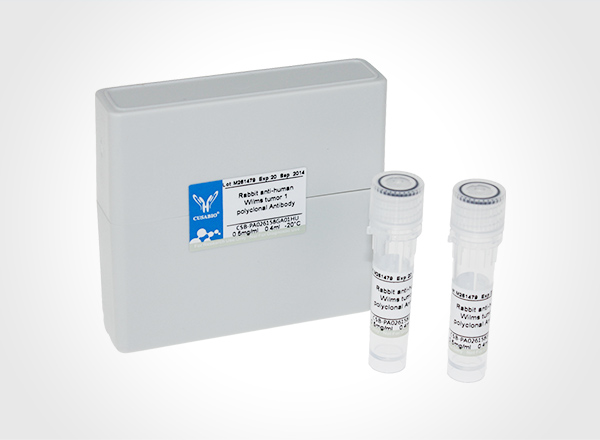
Liquid
Note: We will preferentially ship the format that we have in stock, however, if you have any special requirement for the format, please remark your requirement when placing the order, we will prepare according to your demand.
Storage
Upon receipt, store at -20°C or -80°C. Avoid repeated freeze.
Lead Time
Basically, we can dispatch the products out in 1-3 working days after receiving your orders. Delivery time maybe differs from different purchasing way or location, please kindly consult your local distributors for specific delivery time.
Note: All of our proteins are default shipped with normal blue ice packs, if you request to ship with dry ice, please communicate with us in advance and extra fees will be charged.
Usage
For Research Use Only. Not for use in diagnostic or therapeutic procedures.
Transcription factor that plays a critical role in innate immunity by activating expression of type I interferon (IFN) IFNA and INFB and inflammatory cytokines downstream of endolysosomal toll-like receptors TLR7, TLR8 and TLR9. Regulates the transcription of type I IFN genes (IFN-alpha and IFN-beta) and IFN-stimulated genes (ISG) by binding to an interferon-stimulated response element (ISRE) in their promoters. Can efficiently activate both the IFN-beta (IFNB) and the IFN-alpha (IFNA) genes and mediate their induction downstream of the TLR-activated, MyD88-dependent pathway. Key transcription factor regulating the IFN response during SARS-CoV-2 infection.
Gene References into Functions
A possible cross-reaction between IRF5/EBV homologous antigens and shifts in T cell balance disrupted by anti-IL-2 Abs.PMID:29379122
study suggests a novel role for interferon regulatory factor 5 (IRF5) in the regulation of the inflammatory response in human myometriumPMID:30006439
In IAV-infected patients, miR-302a expression was down-regulated, whereas IRF-5 expression was up-regulated. Taken together, this work uncovers and defines a signaling pathway implicated in an IAV-induced cytokine storm.PMID:29046356
Analysis of clinical HCC specimens supports a pathologic role for IRF5 in HCV-induced HCC, as IRF5 expression was down-regulated in livers from HCV-positive versus HCV-negative HCC patients or healthy donor livers. These results identify IRF5 as an important suppressor of HCV replication and HCC pathogenesis.PMID:29079574
Results indicated that IFR5 variants rs77571059 and rs2004640 and haplotype GTAA were associated with the susceptibility to CAP and rs77571059 was related to the severity of the disease, suggesting that IFR5 variants may contribute to the pathogenesis of community-acquired pneumonia (CAP), and may serve as prognostic markers of CAP susceptibility and outcome.PMID:30176312
IRF5 and its related inflammatory cytokines are associated with the severity, prognosis, and causative pathogen of CAP patients.PMID:29847542
this study shows that interferon regulatory factor 5 regulates the expression of matrix metalloproteinase-3 in human chondrocytesPMID:29274624
IFR5 variants may contribute as a host factor in determining the pathogenesis in chronic HBV infections.PMID:29375210
The presence of the interferon regulatory factor 5 rs2004640 T allele increases the risk of nephritis development in Egyptian children with systemic lupus erythematosus.PMID:28059021
IRF5 was an adverse independent prognostic factor for both overall survival and recurrence free survival in patients with non-metastatic ccRCC.PMID:28562332
Data suggest that IRAK4 activity regulates activation of IRF5, TAK1, and IKKB in monocytes; IRAK4 activation of TAK1-IKKB-IRF5 axis leads to induction of cytokines and interferons following TLR7/TLR8 stimulation. (IRAK4 = interleukin-1 receptor-associated kinase 4; IRF5 = interferon regulatory factor-5; TAK1 = MAPK kinase kinase 7; IKKB = I-kappa B kinase; TLR = toll-like receptor)PMID:28924041
IRF5 and IRF5 disease-risk variants increase glycolysis and human m1 macrophage polarization by regulating proximal signaling and Akt2 activation.PMID:27545875
the genomic pattern according to MATH demonstrated that mutation rates of TP53, IRF5 and KRAS were independently associated with MATH, and the latter two were only significant in male patients. As MATH increased, the fraction of somatic copy number alteration (SCNA) elevated. Moreover, more SCNA events was independently associated with MATH in male than in femalePMID:28531253
IRF-5 targeted the expression of vascular cell adhesion molecule 1 (VCAM-1) at the transcriptional level by binding to its promoter.PMID:28818665
oncogenic IRF5 overexpression in HL is the result of a specific LTR transcriptional activationPMID:26279299
the primary activating regulatory region of human IRF5 was located in its minimal promoter region between nucleotides -179 and +62. In addition, it was shown that Sp1 was able to bind to the multiple sites in IRF5 promoter region, and was involved in the transcriptional regulation of IRF5 at the basal level.PMID:27484157
This study demonstrates the association of IRF5 with an increased susceptibility for systemic lupus erythematosus (SLE) in the population of Crete and emphasizes the association of the Neanderthal-derived IRF5 haplotype with SLE susceptibility. Patients carrying allele the Neanderthal allele C had greater type I IFN, supporting a functional consequence of this polymorphism.PMID:28185859
this study shows that IRF5 polymorphisms are associated with unexplained recurrent pregnancy loss among Iranian womenPMID:27798840
The results demonstrated that STAT4 rs7574865 and IRF5 rs2004640G/T substitution are associated with a susceptibility to systemic sclerosis.PMID:26712637
IRF5 and PADI4 significantly discriminated between RA patients and healthy controls in LDA.PMID:27092776
IRF5 and IRF8, two transcription factors with opposing functions, control TLR9 signaling in human plasmacytoid dendritic cells.PMID:26613957
meta-analysis demonstrated the IRF5 rs2070197 polymorphism conferred susceptibility to systemic lupus erythematosus (SLE) in all subjects without inter-study heterogeneity; IRF5 rs2070197 polymorphism was identified as risk factors for SLE in Caucasian populations but it had no effects in AsiansPMID:26233721
Genetic associations and gene-gene interactions of IRF5 and TYK2 were significantly detected in Han Chinese with systemic lupus erythematosusPMID:26294277
four single nucleotide polymorphisms studied in IRF5 may affect neither Neuromyelitis optica nor Multiple sclerosis in the Southeastern Han Chinese populationPMID:26112714
h Epstein-Barr virus and Mycobacterium avium subsp. paratuberculosis epitopes of IRF5 elicit a consistent humoral response in multiple sclerosis patientsPMID:25392335
Study indicates that high-level IRF-5 expression is specific to HTLV-1-infected T cells and regulated by Tax viral protein.PMID:26004104
the data demonstrate a critical mechanism by which sex differences in basal plasmacytoid dendritic cell IRF5 expression lead to higher IFN-alpha production upon TLR7 stimulation in females.PMID:26519527
regulates CXCL13-mediated recruitment of B and T cells to IRF5-positive tumor-conditioned mediaPMID:25533286
The polymorphisms in the IRF5 gene may play a role in the development of Crohn's Disease in the Malaysian population, as seen in the significant associations of SNPs, that is, rs3807306, rs10954213 and rs11770589.PMID:25564941
study gives no definite evidence for a pathogenic genetic link of periodontitis and RA but suggests IRF5 and PRDM1 as shared susceptibility factors.PMID:25263394
IRF5-TNPO3 genetic variation is associated systemic lupus erythematosus.PMID:25205108
A conserved region within interferon regulatory factor 5 controls breast cancer cell migration through a cytoplasmic and transcription-independent mechanism.PMID:25649192
IRF-5 is suppressed by hypermethylation of its promoter-A in most of EBV-infected transformed cells, especially Burkitt's lymphomas and EBV-associated gastric carcinoma (EBVaGC)PMID:25557482
We have found that three polymorphisms in linkage disequilibrium with the protective haplotypes of IRF5 have differential allele effectsPMID:23941291
IRF5rs2004640 T (mutant) allele may be a susceptibility factor conferring risk for RA in South Indian Tamils, whereas G allele (wild type) may be protective.PMID:25284481
The association of IRF5 markers (rs2004640, rs10954213) with susceptibility to SLE and to the development of more than one autoimmune disease (OP) and to analyse the influence of rs2004640 on IRF5 isoform expression were exploredPMID:24697591
TNFAIP3 and IRF5 polymorphisms were associated with polymyositis/dermatomyositis in Chinese Han patients with interstitial lung disease.PMID:25337792
gene variants in IRF5, IRF8 and GPC5 were not associated with risk of relapse or disease progression in multiple sclerosisPMID:24943672
Our results reveal that IRF5 gene variants are associated with risk of cardiovascular events in patients with Rheumatoid arthritisPMID:25011482
IKKbeta is an IRF5 kinase that instigates inflammationPMID:25326420
IKKbeta activates two "master" transcription factors of the innate immune system, IRF5 and NF-kappaBPMID:25326418
IRF5 is a key regulator in classical Hodgkin lymphoma, according to transcription factor motifsPMID:25288773
TRIpartite motif 21 (TRIM21) differentially regulates the stability of interferon regulatory factor 5 (IRF5) isoforms.PMID:25084355
The IRF5's promoter polymorphisms alter first exon usage and increase transcription levels and high levels of IRF5 may bias the immune system toward autoimmunity.PMID:24350899
Polymorphisms of IRF5 may play an important role in susceptibility to systemic sclerosis.PMID:25572744
Meta-analysis certified that IRF5 polymorphisms confer susceptibility to systemic lupus erythematous, multiple sclerosis, and systemic sclerosis.PMID:25036352
results indicate that T3-bound TRs interfere with transactivation by TEADs via protein-protein interactions, resulting in the negative regulation of MYH7 promoter activityPMID:24788560
Unlike other studies, this study found no association of the rs2004640 SNP with SLE among Han Chinese. It did however interact with SNPS in ETS1, STAT4, and IKZF1.PMID:24697319
No significant association was found between all IRF5 SNPs (rs10954213, rs2004640, rs3807306, rs752637 and rs7808907) and ophthalmopathy in Graves' patients.PMID:24582590
This meta-analysis suggests that the A allele of rs10954213 and TCA haplotype (rs2004640-rs2070197-rs10954213) in IRF5 is associated with the increased risk of SLE in different ethnic groups, and its prevalence is ethnicity dependent.PMID:23392701