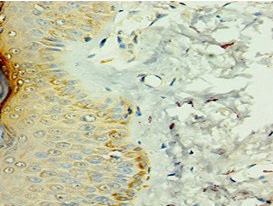
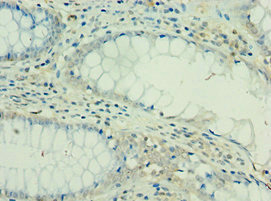
AI413231 antibody; Family of interleukin 1 delta antibody; FIL1 antibody; FIL1 delta antibody; FIL1(DELTA) antibody; FIL1D antibody; Fil1delta antibody; I36RA_HUMAN antibody; IL 1 delta antibody; IL 1 related protein 3 antibody; IL 1F5 (IL 1HY1, FIL1 delta, IL 1RP3, IL 1L1, IL 1 delta) antibody; Il 1h3 antibody; IL 1HY1 antibody; IL 1L1 antibody; IL 1ra homolog antibody; IL 1ra homolog, IL1F5 (Canonical product IL 1F5a) antibody; IL 1RP3 antibody; IL-1 delta antibody; IL-1-related protein 3 antibody; IL-1F5 antibody; IL-1HY1 antibody; IL-1L1 antibody; IL-1ra homolog 1 antibody; IL-1RP3 antibody; IL1F5 antibody; IL1HY1 antibody; IL1L1 antibody; IL1RP3 antibody; IL36RA antibody; IL36RN antibody; Interleukin 1 delta antibody; Interleukin 1 family member 5 (delta) antibody; Interleukin 1 family member 5 antibody; Interleukin 1 HY1 antibody; Interleukin 1 like protein 1 antibody; Interleukin 1 receptor antagonist homolog 1 antibody; Interleukin 36 receptor antagonist antibody; Interleukin-1 delta antibody; Interleukin-1 family member 5 antibody; Interleukin-1 HY1 antibody; Interleukin-1 receptor antagonist homolog 1 antibody; Interleukin-1-like protein 1 antibody; Interleukin-36 receptor antagonist protein antibody; MGC29840 antibody; PSORP antibody; RP23-176J12.6 antibody
Raised in
Rabbit
Species Reactivity
Human
Immunogen
Recombinant Human Interleukin-36 receptor antagonist protein (1-155AA)
Immunogen Species
Homo sapiens (Human)
Conjugate
Non-conjugated
Isotype
IgG
Purification Method
Antigen Affinity Purified
Concentration
It differs from different batches. Please contact us to confirm it.
Buffer
PBS with 0.02% sodium azide, 50% glycerol, pH7.3.
Tested Applications
ELISA, IHC
Recommended Dilution
Application
Recommended Dilution
IHC
1:20-1:200
Storage
Upon receipt, store at -20°C or -80°C. Avoid repeated freeze.
Lead Time
Basically, we can dispatch the products out in 1-3 working days after receiving your orders. Delivery time maybe differs from different purchasing way or location, please kindly consult your local distributors for specific delivery time.
Note: All of our proteins are default shipped with normal blue ice packs, if you request to ship with dry ice, please communicate with us in advance and extra fees will be charged.
Usage
For Research Use Only. Not for use in diagnostic or therapeutic procedures.
Inhibits the activity of interleukin-36 (IL36A,IL36B and IL36G) by binding to receptor IL1RL2 and preventing its association with the coreceptor IL1RAP for signaling. Part of the IL-36 signaling system that is thought to be present in epithelial barriers and to take part in local inflammatory response; similar to the IL-1 system with which it shares the coreceptor. Proposed to play a role in skin inflammation. May be involved in the innate immune response to fungal pathogens, such as Aspergillus fumigatus. May activate an anti-inflammatory signaling pathway by recruiting SIGIRR.
Gene References into Functions
systemic lupus erythematosus patients had significantly decreased serum IL-36Ra levelsPMID:29571080
IL36RN may be the major disease-causing gene in generalized pustular psoriasis patients in Han population in Sichuan region of China.PMID:30075588
IL36RN mutations were strongly linked with early onset and hyponychial pustules, but not with therapeutic efficacy of acitretin or recurrence frequency. Early onset and hyponychial pustules may be specific to IL36RN mutation, however this alone is an insufficient biomarker for acitretin therapy.PMID:29619998
Using different blood leukocyte and skin resident cell preparations, and recombinant proteins, the authors have identified that neutrophil elastase, but not other neutrophil derived proteases, cleaves IL-36Ra into its highly active antagonistic form.PMID:27101808
A study on the association of IL36RN mutations that affect protein expression and function with phenotype in patients with generalized pustular psoriasis.PMID:27220475
The findings indicate that IL36RN mutations do not seem to contribute to the pathogenesis of common, nonpustular forms of psoriasis, but to the rarer pustular manifestations such as GPP, acrodermatitis continua suppurativa of Hallopeau and acute generalized exanthematous pustulosis.PMID:27038307
Some cases of geographic tongue are caused by IL36RN mutations, while those lacking mutations are associated with an imbalance in expression between IL-36Ra and IL-36gamma proteins in tongue tissue.PMID:27900482
Study data and the previous European study suggest that palmoplantar pustulosis is not associated with mutations of the IL36RN gene.PMID:27542682
Case Report: short-term infliximab for treatment of juvenile generalized pustular psoriasis with IL36RN mutation.PMID:26627198
The authors present a case of strikingly distinct phenotypes seen in two IL36RN mutation carriers from the same nonconsanguineous pedigree. This mutation it appears may influence the age of onset.PMID:26147717
The present study identified IL-36RN in various species and investigated the associations between IL-36RN and cancer prognosis.PMID:26676204
We identified a novel homozygous missense mutation in IL36RN in two siblings, and showed the molecular basis of the condition to be both distinct from psoriasis and distinct between the two families studied.PMID:25688670
generalized pustular psoriasis and early onset, ever generalized pustular psoriasis (more than two attacks), ever acrodermatitis continua of Hallopeau, inverse psoriasis, and a family history of pustular psoriasis were associated with IL36RN mutation.PMID:26589685
IL36RN was identified as strong regulators of skin pathology in both lesional and non-lesional skin samples.PMID:25897967
IL36RN missense mutation was not associated with psoriasis.PMID:25989471
we report T123M and 115+6T>C mutations, both homozygous in nature, in two Japanese individuals with Zumbusch type of generalized pustular psoriasis.PMID:25615897
found 2 new variants and 4 known IL36RN variants in 29 generalized pustular psoriasis patientsPMID:25212972
identified a novel IL36RN missense mutation, c.334G > A in exon 5, that caused p.E112K substitution and was located adjacent to a 113 amino acid residue in generalized pustular psoriasisPMID:25468355
The study found that IL36RN alleles define a generalized pustular psoriasis phenotype characterized by early onset, high risk of systemic inflammation, and low prevalence of psoriasis vulgaris.PMID:25458002
in a Chinese Daur family with generalized pustular psoriasis, identified a homozygous splice site mutation c.115+6T>C in intron 3 in both patients; other 4 family members and 7 healthy controls carried heterozygous c.115+6T>C mutationsPMID:24979538
Individuals with IL36RN mutations are very susceptible to Generalized pustular psoriasis (GPP) or GPP-related generalized pustulosis induced by drugs. [review]PMID:24656634
We report two cases of impetigo herpetiformis with homozygous and heterozygous IL36RN mutations.PMID:24717243
IL-36 promotes myeloid cell infiltration, activation, and inflammatory activity in skinPMID:24829417
IL36RN variants are unlikely to confer significant disease risk for psoriasis vulgaris.PMID:23792462
Acrodermatitis is a clinical phenotype of DITRA: evidence a variant of pustular psoriasis... recessively inherited mutations in the IL36RN gene, which encodes interleukin-36 receptor antagonist... the cause of familial GPP, a condition termed DITRAPMID:23428889
The majority of generalized pustular psoriasis alone is caused by deficiency of the interleukin-36 receptor antagonist due to IL36RN mutations.PMID:23698098
The percentage of IL36RN mutations of pediatric generalized pustular psoriasis patients was much higher than that of adult onset patients.PMID:23863864
Our rate of 38.9% IL36RN mutations provides further evidence that generalized pustular psoriasis is heterogenous.PMID:23648549
IL36RN missense mutations may underlie some forms of acute generalized exanthematous pustulosis.PMID:23358093
Results indicate that IL36RN mutations are not associated with pustular psoriasis in Chinese populations.PMID:22862555
Rare pathogenic variants in IL36RN underlie a spectrum of psoriasis-associated pustular phenotypes.PMID:23303454
Data indicate that IL36RN mutations were identified in 2 of 14 Japanese generalized pustular psoriasis (GPP) patients.PMID:22903787
The mutation in the interleukin-36-receptor antagonist gene plays a role in generalised pustular psoriasisPMID:22325761
These data provide evidence that IL-38 binds to the IL-36R, as does IL-36Ra.PMID:22315422
Interleukin-36 (IL-36) ligands require processing for full agonist (IL-36alpha, IL-36beta, and IL-36gamma) or antagonist (IL-36Ra) activityPMID:21965679
Mutations in IL36RN/IL1F5 are associated with the severe episodic inflammatory skin disease known as generalized pustular psoriasis.PMID:21839423
Expression of IL-1F5 is increased in human plaque psoriasis skin and is overexpressed in the lesional psoriatic skin of transgenic mice.PMID:21242515
results suggest that polymorphisms within IL1RN and IL1L1 themselves or a gene in linkage disequilibrium with IL1RN and IL1L1 predispose to the more severe forms of alopecia areataPMID:11841485
The commnon variants in the IL-1 cluster gene are not associated with incidence of restenosis in patients after PTCA.PMID:14644395
IL-1beta-511T was associated with reflux esophagitis having hyperacidity.PMID:16211343
Data show that the gene expression for interleukin-8, IL-10, and IL-1Ra, but not IL-6, is increased in blood leukocytes taken from athletes following 2 hours of intensive cycling and is not influenced by carbohydrate compared with placebo ingestion.PMID:16978071
IL-1 delta, which shows striking homology to IL-1 receptor antagonist, specifically and potently inhibits NF-kappa B activation through the orphan IL-1 receptor-related protein 2.PMID:11466363
Show
More
Hide
All
Subcellular Location
Cytoplasm. Secreted.
Protein Families
IL-1 family
Tissue Specificity
Predominantly expressed in skin keratinocytes but not in fibroblasts, endothelial cells or melanocytes. Detected also in the spleen, brain leukocyte and macrophage cell types. Increased in lesional psoriasis skin.