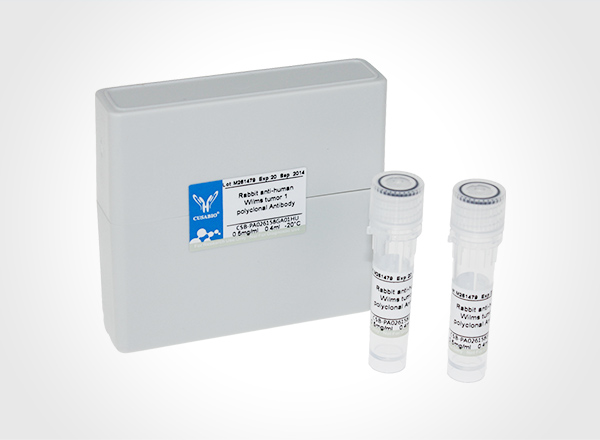
Liquid
Note: We will preferentially ship the format that we have in stock, however, if you have any special requirement for the format, please remark your requirement when placing the order, we will prepare according to your demand.
Upon receipt, store at -20°C or -80°C. Avoid repeated freeze.
Lead Time
Basically, we can dispatch the products out in 1-3 working days after receiving your orders. Delivery time maybe differs from different purchasing way or location, please kindly consult your local distributors for specific delivery time.
Note: All of our proteins are default shipped with normal blue ice packs, if you request to ship with dry ice, please communicate with us in advance and extra fees will be charged.
Usage
For Research Use Only. Not for use in diagnostic or therapeutic procedures.
IFN-induced antiviral protein which inhibits the entry of viruses to the host cell cytoplasm, permitting endocytosis, but preventing subsequent viral fusion and release of viral contents into the cytosol. Active against multiple viruses, including influenza A virus, SARS coronaviruses (SARS-CoV and SARS-CoV-2), Marburg virus (MARV), Ebola virus (EBOV), Dengue virus (DNV), West Nile virus (WNV), human immunodeficiency virus type 1 (HIV-1) and hepatitis C virus (HCV). Can inhibit: influenza virus hemagglutinin protein-mediated viral entry, MARV and EBOV GP1,2-mediated viral entry and SARS-CoV and SARS-CoV-2 S protein-mediated viral entry. Also implicated in cell adhesion and control of cell growth and migration. Inhibits SARS-CoV-2 S protein-mediated syncytia formation. Plays a key role in the antiproliferative action of IFN-gamma either by inhibiting the ERK activation or by arresting cell growth in G1 phase in a p53-dependent manner. Acts as a positive regulator of osteoblast differentiation. In hepatocytes, IFITM proteins act in a coordinated manner to restrict HCV infection by targeting the endocytosed HCV virion for lysosomal degradation. IFITM2 and IFITM3 display anti-HCV activity that may complement the anti-HCV activity of IFITM1 by inhibiting the late stages of HCV entry, possibly in a coordinated manner by trapping the virion in the endosomal pathway and targeting it for degradation at the lysosome.
Gene References into Functions
Strong ifitm1 Expression in CD4 T Cells in HIV Controllers Is Correlated With Immune ActivationPMID:27552157
Using a multi-group heat map from GSE9716 analysis of the GEO database, IFITM1 was determined to be a relevant radioresistance gene. Inhibition of IFITM1 in combination with radiotherapy could, indeed, inhibit oral neoplasm cells.PMID:29770536
Inactivated viral particle inoculation increased the expression of IFITM1protein at mRNA and protein levels, and mediated the antiviral state in HUVECs.PMID:29100522
Identification of three distinct mutations that converted IFITM1 or IFITM3 from inhibitors to enhancers of MERS-CoV or SARS-CoV spike protein-mediated entry revealed key structural motifs or residues determining the biological activities of IFITM proteins.PMID:29263263
Epithelial-mesenchymal transition (EMT) signature was dysregulated by both loss and gain of function of IFITM1, which was partially reverted by Caveolin-1 (CAV1).PMID:27852071
These results indicate that IFITM1 protein can restrict alphavirus infection by inhibiting viral fusion with cellular membranes.PMID:27219333
The transcriptional regulation of IFITM1, 2 and 3 expression.PMID:28511927
IFITM1 and IFITM3 inhibit Zika virus infection early in the viral life cycle.PMID:27268505
IFITM1 suppression blocks proliferation and invasion of aromatase inhibitor-resistant breast cancer in vivo by JAK/STAT1-mediated induction of p21.PMID:28411130
Compared with CD10, IFITM1 has superior performance distinguishing endometrial stroma of adenomyosis from mesenchyma surrounding invasive endometrial adenocarcinoma.PMID:27124937
Overexpression of IFITM1 is associated with Oral Squamous Cell Carcinomas.PMID:27221933
High expression of IFITM1 is associated with poor prognosis of colorectal cancer.PMID:26884876
These findings indicate that overexpression of IFITM1 enhances the aggressive phenotype of triple-negative SUM149 IBC cells and that this effect is dependent on STAT2/BRG1 interaction.PMID:26897526
propose that the IFITM proteins act in a coordinated manner to restrict HCV infection by targeting the endocytosed HCV virion for lysosomal degradation and demonstrate that the actions of the IFITM proteins are indeed virus and cell-type specificPMID:26354436
the importance of the C-terminal region of IFITM1 in modulating the antiviral function through controlling protein subcellular localization.PMID:25738301
Suggest that IFITM1 promotes the aggressiveness of colorectal cancer cells via caveolin-1 signaling.PMID:26259513
In virus-producing cells, IFITMs coalesce with forming virions and are incorporated into HIV-1 viral particles.PMID:25422070
Incorporation of IFITM1, IFITM2 and IFITM3 into HIV-1 virions impair viral fusion and spread.PMID:25464829
Host IFITM3,IFITM2 and IFITM1 facilitate morphogenesis of the human cytomegalovirus assembly.PMID:25552713
Schizophrenia subjects with higher IFITM mRNA levels in cortical blood vessels have greater disturbances in cortical GABA neurons suggests that these cell-type disturbances might be influenced by a shared upstream insult that involves immune activation.PMID:24209773
IFITM1 could be a novel metastasis-promoting gene that enhances the metastatic phenotype in ovarian cancer via epigenetic transcriptional regulation.PMID:24676393
IFITM1 is a potential valuable addition to immunohistochemical panels used in the diagnosis of cellular mesenchymal uterine tumors.PMID:24072182
Results suggest that the g.-1920G>A polymorphism in interferon inducible transmembrane protein 1 (IFITM1) may be associated with susceptibility to ulcerative colitis (UC).PMID:24120510
IFITM1 is essential for the formation of functional blood vessels and stabilizes EC-EC interactions during endothelial lumen formation by regulating tight junction assembly.PMID:24603679
Although their inhibitory activities were modest when compared to that of tetherin, IFITMs, but not tetherin, directly reduced the expression of HIV-1 proteins including Gag, Vif and Nef.PMID:23376165
Authors show that interferon-induced transmembrane protein 1 (IFITM-1), IFITM-2, and IFITM-3 exhibit a broad spectrum of antiviral activity against several members of the Bunyaviridae family.PMID:23720721
This study defines IFITM1 as an interferon-stimulated gene effector with action against HCV entry.PMID:22996292
IFITM1 knockdown in human alveolar-derived bone marrow stromal cells was associated with inhibition of Runx2 mRNA and protein expression.PMID:22634173
Introduction of anti-miR-130a in hepatocytes increased IFITM1 expression. Hepatocytes stably expressing IFITM1 reduced HCV replication. Together, these results suggested that HCV infection of hepatocytes upregulates miR-130a.PMID:22787204
The results suggest that the expression of IFITM1 controls the invasiveness and migration of gastric cancer.PMID:22609115
Hepatitis C virus infection suppresses the upregulation of a subset of effector molecules, including ISG56 and IFITM1.PMID:21976647
IFITM1 was expressed in the five human glioma cell lines, and its expressions were positively correlated with their tumorigenicityPMID:20838853
IFITM proteins differentially restrict the entry of a broad range of enveloped viruses, and modulate cellular tropism independently of viral receptor expression.PMID:21253575
IFITM1, IFITM2, and IFITM3 inhibit HIV-1 replication through interfering with virus entry.PMID:21177806
Data show that ULBP1, TFR2 and IFITM1 were associated with increased susceptibility to Vgamma9Vdelta2 T-cell cytotoxicity.PMID:20220060
Activated IFITM1 is associated with Peutz-Jeghers syndrome polyps.PMID:20428811
Down regulation of IFITM1 is associated with cervical squamous cell carcinoma.PMID:20099975
The positive expression level of IFITM1 is associated with the progression of the carcinogenetic process in Peutz-Jeghers syndrome.PMID:19304549
LEU13 has a novel role different from that in the inhibition of cell proliferation, involved in IFNA-induced refractoriness of RSa cells to X raysPMID:12926988
IFITM1 expression profiling could be used for molecular classification of CML, which may also predict survivalPMID:15661263
Overexpression of 9-27 leads to increased migration and invasiveness by suppressing natural killer cells in gastric cancerPMID:15808405
IFITM1 has a role in cellular sensitivity to CDDP in esophageal cancerPMID:18202764
IFITM1 plays an important role for the invasion at the early stage of HNSCC progressionPMID:18829488
results revealed that the interaction between IFITM1 and CAV-1 could enhance the inhibitory effect of CAV-1 on ERK activationPMID:19499152
Antiviral effect of IFITM family members on H1N1 influenza, West Nile virus, and Dengue virusPMID:20064371
Bone (at protein level). Levels greatly elevated in colon cancer, cervical cancer, esophageal cancer and ovarian cancer. Expressed in glioma cell lines.