HYOU1 Antibody

Code: CSB-PA896895ESR1HU
Size:
20μl
20μl50μl100μl
US$83
Quantity:
Species Reactivity: Human
Raised in: Rabbit
Application: ELISA, IHC
For inquiries on large quantities or another requirements
Send an Inquiry
Start an on-line Chat
Online ordering is currently available for U.S. customers only. For orders outside the U.S., please kindly submit an inquiry or start a chat with us.

Product Details

Uniprot NO.
Target Names
HYOU1
Alternative Names
150 kDa oxygen regulated protein antibody; 150 kDa oxygen-regulated protein antibody; 170 kDa glucose regulated protein antibody; 170 kDa glucose-regulated protein antibody; DKFZp686N08236 antibody; FLJ94899 antibody; FLJ97572 antibody; glucose regulated protein 170 antibody; Grp 170 antibody; GRP-170 antibody; Grp170 antibody; HSP 12A antibody; HSP12A antibody; Hyou1 antibody; HYOU1_HUMAN antibody; Hypoxia up regulated 1 antibody; hypoxia up-regulated 1 precursor antibody; Hypoxia up-regulated protein 1 antibody; Hypoxia upregulated 1 antibody; Orp 150 antibody; ORP-150 antibody; Orp150 antibody; oxygen regulated protein (150kD) antibody
Raised in
Rabbit
Species Reactivity
Human
Immunogen
Recombinant Human Hypoxia up-regulated protein 1 protein (1-140AA)
Immunogen Species
Homo sapiens (Human)
Conjugate
Non-conjugated
Clonality
Polyclonal
Isotype
IgG
Purification Method
Antigen Affinity Purified
Concentration
It differs from different batches. Please contact us to confirm it.
Buffer
PBS with 0.02% sodium azide, 50% glycerol, pH7.3.
Form
Liquid
Note: We will preferentially ship the format that we have in stock, however, if you have any special requirement for the format, please remark your requirement when placing the order, we will prepare according to your demand.
Tested Applications
ELISA, IHC
Recommended Dilution
ApplicationRecommended Dilution
IHC1:20-1:200
Storage
Upon receipt, store at -20°C or -80°C. Avoid repeated freeze.
Lead Time
Basically, we can dispatch the products out in 1-3 working days after receiving your orders. Delivery time maybe differs from different purchasing way or location, please kindly consult your local distributors for specific delivery time.
Note: All of our proteins are default shipped with normal blue ice packs, if you request to ship with dry ice, please communicate with us in advance and extra fees will be charged.
Usage
For Research Use Only. Not for use in diagnostic or therapeutic procedures.
Datasheet & COA
Images
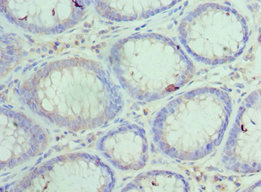
  • Immunohistochemistry of paraffin-embedded human colon cancer using CSB-PA896895ESR1HU at dilution of 1:100

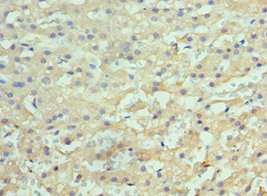
  • Immunohistochemistry of paraffin-embedded human liver cancer using CSB-PA896895ESR1HU at dilution of 1:100

Customer Reviews and Q&A

 Customer Reviews

Target Background

Function(From Uniprot)
Has a pivotal role in cytoprotective cellular mechanisms triggered by oxygen deprivation. May play a role as a molecular chaperone and participate in protein folding.
Gene References into Functions
  1. These results strongly suggest that AMPK can activate ORP150 through FOXO1 pathway and confer protection against endoplasmic reticulum stress - induced apoptosis of airway epithelial cells following exposure to cigarette smoke extract. PMID:29448096
  2. Findings establish a general function of Grp170 during ERAD and suggest that positioning this client-release factor at the retrotranslocation site may afford a mechanism to couple client release from BiP and retrotranslocation. PMID:27030672
  3. Data reveal that Grp170 participates in preparing mutant proinsulin for degradation while enabling wild-type proinsulin escape from the endoplasmic reticulum. PMID:28028074
  4. High ORP150 expression is associated with thyroid cancer. PMID:26700459
  5. Two NEFs, Grp170 and Sil1, trigger toxin release from BiP to enable successful retrotranslocation and clarify the fate of the toxin after it disengages from BiP. PMID:25877869
  6. Grp170 induces nucleotide exchange of BiP and releases SV40 virus from BiP, promoting SV40 ER-to-cytosol transport and infection. PMID:25653441
  7. HYOU1 also modulates vIL-6's ability to induce CCL2. PMID:24920810
  8. Here we show that Grp170 can bind directly to a variety of incompletely folded protein substrates in the endoplasmic reticulum, and as expected for a bona fide chaperone, it does not interact with folded secretory proteins. PMID:24327659
  9. inducible overexpression of ORP150, in ER stress conditions, exerts inhibitory effect on apoptosis and senescence in human breast carcinoma cells but not in normal fibroblasts PMID:23757447
  10. Data indicate that Grp170 (Lhs1 ortholog) coprecipitate with alphaENaC. PMID:23645669
  11. AICAR infusion enhanced ORP150 expression, resulting in the marked amelioration of hepatic ER stress and apoptosis PMID:21296878
  12. Report ORP-150 levels in autopsy tissue after hypoxia/ischemia events in term neonates. PMID:20626887
  13. ORP150 exerts cytoprotective effects in renal tubular epithelia subjected to I/R injury and suggest a key role for ER stress in the renal tubular response to acute renal failure PMID:15240565
  14. Hypoxia results in an enhancement of ORP 150 expression in several tumour cell lines. PMID:16543725
  15. These findings suggest that ORP150 is structurally and functionally well conserved in distant species PMID:17131193
  16. Our observations led to the hypothesis that ORP150 protects against MPTP/MPP(+)-induced neurotoxicity, and indicate the importance of the ER environment in maintaining the nigrostriatal pathways. PMID:17330988
  17. data indicate ORP150 inhibits oxLDL-induced apoptosis by blocking calcium signaling & apoptosis; calcium released from ER stores is inhibited by ORP150; ORP150 is expressed in advanced atherosclerotic lesions PMID:18404158
  18. The forced expression of ORP150 highlights its new protective role against oxLDL-induced ER stress and subsequent apoptosis PMID:19106412
  19. the increased expression of ORP150 is a factor which protects collagen against intracellular degradation induced by glucose deprivation. PMID:19225868
  20. The ORP150-precursor peptide complex can elicit a cytotoxic T-lymphocyte response through cross-presentation, as well as the CD4-positive T cell response by dendritic cells. PMID:19812200

Show More

Hide All

Subcellular Location
Endoplasmic reticulum lumen.
Protein Families
Heat shock protein 70 family
Tissue Specificity
Highly expressed in tissues that contain well-developed endoplasmic reticulum and synthesize large amounts of secretory proteins. Highly expressed in liver and pancreas and lower expression in brain and kidney. Also expressed in macrophages within aortic
Database Links

HGNC: 16931

UNIGENE: Hs.277704

KEGG: hsa:10525

STRING: 9606.ENSP00000384144

OMIM: 601746

icon of phone
Call us
301-363-4651 (Available 9 a.m. to 5 p.m. CST from Monday to Friday)

icon of address
Address
No. 269, Shendun 5th Road, Donghu Hi-Tech Development Area, Hubei Province, 430206, P.R.China
icon of social media
Join us with

Subscribe newsletter

Leave a message

* To protect against spam, please pass the CAPTCHA test below.
CAPTCHA verification
© 2007-2025 CUSABIO TECHNOLOGY LLC All rights reserved. 鄂ICP备15011166号-1
Select 0 Products