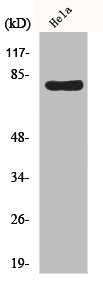
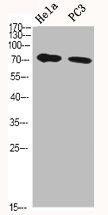
78 kDa glucose regulated protein antibody; 78 kDa glucose-regulated protein antibody; AL022860 antibody; AU019543 antibody; BIP antibody; D2Wsu141e antibody; D2Wsu17e antibody; Endoplasmic reticulum lumenal Ca(2+)-binding protein grp78 antibody; Endoplasmic reticulum lumenal Ca2+ binding protein grp78 antibody; Epididymis secretory sperm binding protein Li 89n antibody; FLJ26106 antibody; Glucose Regulated Protein 78 antibody; Glucose Regulated Protein 78kDa antibody; GRP 78 antibody; GRP-78 antibody; GRP78 antibody; GRP78_HUMAN antibody; Heat shock 70 kDa protein 5 antibody; Heat Shock 70kDa Protein 5 antibody; Heat shock protein family A (Hsp70) member 5 antibody; HEL S 89n antibody; Hsce70 antibody; HSPA 5 antibody; HSPA5 antibody; Immunoglobulin Heavy Chain Binding Protein antibody; Immunoglobulin heavy chain-binding protein antibody; mBiP antibody; MIF2 antibody; Sez7 antibody
Raised in
Rabbit
Species Reactivity
Human,Mouse,Rat,Monkey
Immunogen
Synthesized peptide derived from the C-terminal region of Human HSP A5.
Immunogen Species
Homo sapiens (Human)
Conjugate
Non-conjugated
Isotype
IgG
Purification Method
The antibody was affinity-purified from rabbit antiserum by affinity-chromatography using epitope-specific immunogen.
Concentration
It differs from different batches. Please contact us to confirm it.
Buffer
Liquid in PBS containing 50% glycerol, 0.5% BSA and 0.02% sodium azide.
Tested Applications
WB, IHC, IF, ELISA
Storage
Upon receipt, store at -20°C or -80°C. Avoid repeated freeze.
Lead Time
Basically, we can dispatch the products out in 1-3 working days after receiving your orders. Delivery time maybe differs from different purchasing way or location, please kindly consult your local distributors for specific delivery time.
Note: All of our proteins are default shipped with normal blue ice packs, if you request to ship with dry ice, please communicate with us in advance and extra fees will be charged.
Usage
For Research Use Only. Not for use in diagnostic or therapeutic procedures.
Endoplasmic reticulum chaperone that plays a key role in protein folding and quality control in the endoplasmic reticulum lumen. Involved in the correct folding of proteins and degradation of misfolded proteins via its interaction with DNAJC10/ERdj5, probably to facilitate the release of DNAJC10/ERdj5 from its substrate. Acts as a key repressor of the ERN1/IRE1-mediated unfolded protein response (UPR). In the unstressed endoplasmic reticulum, recruited by DNAJB9/ERdj4 to the luminal region of ERN1/IRE1, leading to disrupt the dimerization of ERN1/IRE1, thereby inactivating ERN1/IRE1. Accumulation of misfolded protein in the endoplasmic reticulum causes release of HSPA5/BiP from ERN1/IRE1, allowing homodimerization and subsequent activation of ERN1/IRE1. Plays an auxiliary role in post-translational transport of small presecretory proteins across endoplasmic reticulum (ER). May function as an allosteric modulator for SEC61 channel-forming translocon complex, likely cooperating with SEC62 to enable the productive insertion of these precursors into SEC61 channel. Appears to specifically regulate translocation of precursors having inhibitory residues in their mature region that weaken channel gating. May also play a role in apoptosis and cell proliferation.; (Microbial infection) Plays an important role in viral binding to the host cell membrane and entry for several flaviruses such as Dengue virus, Zika virus and Japanese encephalitis virus. Acts as a component of the cellular receptor for Dengue virus serotype 2/DENV-2 on human liver cells.; (Microbial infection) Acts as a receptor for CotH proteins expressed by fungi of the order mucorales, the causative agent of mucormycosis, which plays an important role in epithelial cell invasion by the fungi. Acts as a receptor for R.delemar CotH3 in nasal epithelial cells, which may be an early step in rhinoorbital/cerebral mucormycosis (RCM) disease progression.
Gene References into Functions
the in-vitro anti-proliferative and pro-apoptotic effects in colorectal cancer cells that were induced by silencing cell migration inducing hyaluronan binding protein may be associated with GRP78 repression and UPR attenuationPMID:29024602
Cell surface GRP78 promotes cancer stemness, whereas drives cells toward a non-stemlike phenotype when it chaperones Progranulin.PMID:29323121
We showed that GRP78 is elevated in diabetic macular edema patients. In addition, there is a correlation between GRP78 and VEGF levels in aqueous humor. However, GRP78 levels were not associated with the responsiveness of anti-VEGF in diabetic macular edema patients.PMID:30407281
Data suggest that prostatic tumor GRP78 expression correlates with disease stage; anti-GRP78 autoantibody levels parallel prostate-specific antigen concentrations in patient-derived serum samples.PMID:29066620
High GRP78 expression is associated with radioresistance in nasopharyngeal carcinoma.PMID:30015969
Data suggest a complex but functional interplay of ER chaperone GRP78 and steroid hormones, working together for cell survival and proliferation in the context of reproduction.PMID:29932125
the physiological role played by the complex KCTD15-GRP78 in the adipogenesisPMID:29665387
Concomitant high expression of ERalpha36, GRP78 and GRP94 is associated with aggressive papillary thyroid cancer behavior and may be used as a predictor for extrathyroid extension, lymph node metastasis, and distant metastasis.PMID:29368272
We found that downregulation of GRP78 led to inhibition of autophagy, cell cycle arrest in the G0/G1 phase, and activation of caspase-7-induced apoptosis, and this was affected by the initial autophagy level.PMID:29749510
GRP78 promotes cigarette smoke-induced inflammatory response and mucus hyperproduction in airway epithelial cells, likely through upregulation of necroptosis and subsequent activation of NF-kappaB and AP-1 pathways.PMID:29445274
Data suggested that GRP78 silencing increased chemo-sensitivity and improved the effects of cisplatin-induced apoptosis in SiHa cells. Moreover, inhibition of GRP78 could upregulate caspase-3 and CHOP expression and downregulate Bcl-2 expression.PMID:29650944
Upon IgM expression, its levels temporarily eclipse those of the endoplasmic reticulum chaperone BiP, leading to acute, full-geared unfolded protein response activation. Once BiP is in excess again, the unfolded protein response transitions to chronic, submaximal activation, indicating that the unfolded protein response senses endoplasmic reticulum stress in a ratiometric fashion.PMID:29251598
GRP78 binds to and acts in concert with a glycosylphosphatidylinositol-anchored protein, CD109, in blocking TGF-beta signaling by promoting the routing of the TGF-beta receptor to the caveolae, thereby disrupting its binding to and activation of Smad2.PMID:29654145
this study demonstrates the reaction of placental GRP78 with sera from women with multiple sclerosisPMID:29276183
This meta-analysis shows that BiP or anti-BiP antibodies have a moderate accuracy for the diagnosis of rheumatoid arthritis with a moderate sensitivity and high specificity. It can be an efficient supplement to the existing diagnostic method. [Meta-Analysis]PMID:29185956
the expression of three cytokines for the pathogenesis of osteoarthritis (OA). which include IL-1beta, MMP14 and GRP78 was decreased by the various concentrations of icariin. These preliminary results imply that icariin might be an effective compound for the treatment of OA disease.PMID:29292760
In a retrospective cervical cancer cohort, high GRP78 expression was correlated with poor survival. miR-181a suppressed cervical cancer development via downregulating GRP78.PMID:28245171
We revealed that DAL-1 was downregulated while HSPA5 was upregulated in NSCLC and found the protein of DAL-1 and HSPA5 co-localized in the cytoplasm and nucleus. We demonstrated that DAL-1 can suppress the expression of HSPA5 on mRNA and protein levels, and decrease EMT, migration, invasion and proliferation abilities by down-regulating HSPA5PMID:29048640
We found that inhibiting the function of surface GRP78 suppressed cancer cell survival and growth proving that the surface-expressed GRP78 is a vital receptor involved in the proliferation of high-grade glioma.PMID:27713511
BiP/GRP78 is significantly associated with tumor aggressiveness and progression. The increased expression of BiP/GRP78 was identified as an independent factor for predicting poor OS in patients with early stage of disease.PMID:28854502
GRP78 overexpression decreased advanced glycation end product levels and rescued the cells from Ribosome-induced cytotoxicity.PMID:29410209
This study established a macrophage polarization model with human monocytes and found that the conditioned medium from M2 macrophages increased GRP78 expression in tumor cells and facilitated tumor cell migration.PMID:28629783
GRP78 silencing promoted lung epithelial cell apoptosis during hyperoxia, via regulation of the CHOP pathway.PMID:28586043
Overexpression of GRP78 is a novel predictor of favorable outcomes in patients with advanced thymic carcinoma. who receive combination chemotherapy.PMID:28550415
GRP78 is an autoantigen that could stimulate autoimmune responses and serve as a potential marker for recurrent and metastatic progression in HCC.PMID:28186997
These results identify GRP78 antibodies as a potential component of Neuromyelitis optica pathogenesis.PMID:28679661
HSPA5 (GRP78) and GEP were identified to interact. Clinical analysis showed that expression of GRP78 was up-regulated in hepatocellular carcinoma tumor and correlated with GEP expression.PMID:28601093
an endoplasmic reticulum complex of resident chaperones that includes HSP47, FKBP65, and BiP regulating the activity of LH2.PMID:28177155
The present study indicates that GRP78 is increased in BALF in cigarette smokers; that HAEC secrete GRP78; and that GRP78 secretion by HAEC is augmented by cigarette smoke particulates. Enhanced secretion of GRP78 by lung cells makes it a potential biomarker of cigarette smoke-induced lung injury.PMID:28464871
P4HB promotes hepatocellular carcinoma progression by down-regulating GRP78 expression and subsequently promoting epithelial-to-mesenchymal transition.PMID:28052026
analysis of the effects of triptolide on cell proliferation, cell cycle and the expression of GRP78 in nasopharyngeal carcinomaPMID:27391061
Antibodies targeting GRP78 exhibited antitumor activity and enhanced the efficacy of radiation in Non-small cell lung cancer and glioblastoma multiforme both in vitro and in vivo GRP78 is a promising novel target, and anti-GRP78 antibodies could be used as an effective cancer therapy alone or in combination with ionizing radiationPMID:27815359
Novel finding of the current study is that the level of GRP78/BiP was greatly increased in the Parkinson's disease dementia and dementia with Lewy bodies patients compared with people with Alzheimer's disease in cingulate gyrus and parietal cortex.PMID:26202523
Bisdemethoxycurcumin promotes apoptosis through a GRP78-dependent pathway and mitochondrial dysfunctions, and potentiates the antitumor effect of gemcitabine in human pancreatic cancer cells.PMID:27845899
Results identified GRP78 and HSP90a as binding partners of PRDM14 in triple-negative breast cancer cells, and all participate in cancer regulation. The interactions were direct and required the C-terminal region including the zinc finger motifs of PRDM14.PMID:29178343
GRP78 affects p53 localization which in turn regulates autophagy.PMID:27814589
candidate genes that modulate Hspa5 expression in the retina, were examined.PMID:27881906
Overexpression or knockdown demonstrated that GRP78 promoted proliferation and anti-apoptosis of clear cell renal cell carcinoma cells, and the oncogenic activity of GRP78 resulting in by miR-30a-5p overexpression.PMID:29073630
this study provided mechanistic evidences to support the positive regulatory function of FOXM1 in HSPA5 expression in colorectal cancerPMID:27034162
Cancer-associated fibroblasts induced GRP78 expression in A549 and SPCA-1 cells to facilitate Non-Small Cell Lung Cancer cell migration and invasionPMID:27016417
results suggest that the cooperative effects of radiotherapy and cetuximab could be further improved by inhibiting GRP78 in non-responsive oropharyngeal carcinoma patientsPMID:29232380
Study reports that the endoplasmic reticulum luminal co-chaperone ERdj4/DNAJB9 is a selective IRE1 repressor that promotes a complex between the luminal Hsp70 BiP and the luminal stress-sensing domain of IRE1alpha.PMID:29198525
GRP78 role in the resistance to cisplatin in the nasopharyngeal carcinoma cells.PMID:27254284
High expression of GRP78 is associated with nonalcoholic steatohepatitis.PMID:28951310
Data show that cancer-associated fibroblasts (CAFs)-derived hepatocyte growth factor (HGF) or recombinant HGF activated c-Met/phosphoinositide 3-kinase (PI3K)/Akt and glucose-regulated protein 78 (GRP78) signalling pathways in ovarian cancer cells.PMID:28258248
HSPA5/BIP has roles in endoplasmic reticulum stress, autophagy and apoptosis; inhibitors of HSPA5 could be useful in cancer treatmentPMID:27791469
Immunohistochemical analysis showed that STAT3, GRP78 and BAX protein levels in the combination group were significantly higher than those in STAT3 group and CDDP group (P<0.05). Exogenous STAT3 and CDDP may synergistically inhibit the xenograft tumour growth through up-regulation of BAX protein via GRP78.PMID:27129294
GRP78 inhibition enhances ATF4-induced cell death by the deubiquitination and stabilization of CHOP in human osteosarcoma cells.PMID:28947141
the chaperone 78-kDa glucose-regulated protein (GRP78) protects the MPD against PDI-dependent disulfide-bond isomerization by binding to this domain and, thereby, preventing ADAM17 inhibition.PMID:28949004