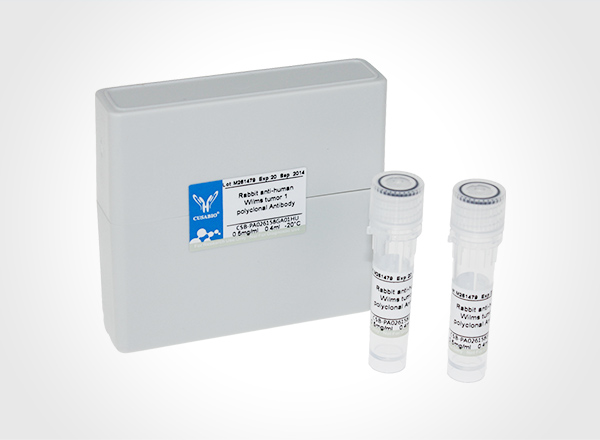
Liquid
Note: We will preferentially ship the format that we have in stock, however, if you have any special requirement for the format, please remark your requirement when placing the order, we will prepare according to your demand.
Upon receipt, store at -20°C or -80°C. Avoid repeated freeze.
Lead Time
Basically, we can dispatch the products out in 1-3 working days after receiving your orders. Delivery time maybe differs from different purchasing way or location, please kindly consult your local distributors for specific delivery time.
Note: All of our proteins are default shipped with normal blue ice packs, if you request to ship with dry ice, please communicate with us in advance and extra fees will be charged.
Usage
For Research Use Only. Not for use in diagnostic or therapeutic procedures.
Binds peptides derived from antigens that access the endocytic route of antigen presenting cells (APC) and presents them on the cell surface for recognition by the CD4 T-cells. The peptide binding cleft accommodates peptides of 10-30 residues. The peptides presented by MHC class II molecules are generated mostly by degradation of proteins that access the endocytic route, where they are processed by lysosomal proteases and other hydrolases. Exogenous antigens that have been endocytosed by the APC are thus readily available for presentation via MHC II molecules, and for this reason this antigen presentation pathway is usually referred to as exogenous. As membrane proteins on their way to degradation in lysosomes as part of their normal turn-over are also contained in the endosomal/lysosomal compartments, exogenous antigens must compete with those derived from endogenous components. Autophagy is also a source of endogenous peptides, autophagosomes constitutively fuse with MHC class II loading compartments. In addition to APCs, other cells of the gastrointestinal tract, such as epithelial cells, express MHC class II molecules and CD74 and act as APCs, which is an unusual trait of the GI tract. To produce a MHC class II molecule that presents an antigen, three MHC class II molecules (heterodimers of an alpha and a beta chain) associate with a CD74 trimer in the ER to form a heterononamer. Soon after the entry of this complex into the endosomal/lysosomal system where antigen processing occurs, CD74 undergoes a sequential degradation by various proteases, including CTSS and CTSL, leaving a small fragment termed CLIP (class-II-associated invariant chain peptide). The removal of CLIP is facilitated by HLA-DM via direct binding to the alpha-beta-CLIP complex so that CLIP is released. HLA-DM stabilizes MHC class II molecules until primary high affinity antigenic peptides are bound. The MHC II molecule bound to a peptide is then transported to the cell membrane surface. In B-cells, the interaction between HLA-DM and MHC class II molecules is regulated by HLA-DO. Primary dendritic cells (DCs) also to express HLA-DO. Lysosomal microenvironment has been implicated in the regulation of antigen loading into MHC II molecules, increased acidification produces increased proteolysis and efficient peptide loading.
Gene References into Functions
This study showed for the first time that HLA-DQB1 genotypes is genetic markers associated with disability progression in Slovak MS patients.PMID:29619906
Studied association of HLADQB1*03 genotype and perioperative blood transfusion with regards to prognosis in surgically treated gastric cancer patients.PMID:29667729
heightened expression of HLA-DQB1 and -DQB2 in pre-implantation biopsies are promising tools for pre-transplant risk assessment of poor late graft function in transplants with kidneys from 18 to 49-year-old donorsPMID:29800590
There was a significant association between HLA-DQB1*05 and (HLA-DRB1*14) and pemphigus vulgaris in Indian patients.PMID:29582787
In addition to the gene dosage effect confirmed in our report, and in contrast with previous studies, we found a raised risk for those patients with DQ2.2 heterodimers in trans configuration to DQ2.5 compared to DQ2.5 homozygous individuals. Therefore, in our population of patients with celiac disease (CD) the frequency of DQ2.2 acts as a factor that increases the genetic risk of developing CD.PMID:29361871
alleles DQB1*05:03 and DQB1*03:02 may be the susceptibility factors for pemphigus vulgaris;DQB1*05:01, DQB1*02, DQB1*06:01, and DQB1*03:03 are negatively associated with pemphigus vulgaris (Meta-Analysis)PMID:29182409
The significant differences in the frequency of HLA-DQ2 and HLA-DQ8 alleles in Syrian patients compared with controls demonstrated the importance role of these alleles in the development of CD and support the possibility of using HLA-DQ typing in confirmation of the disease.PMID:29793442
HLA-DRB1 and -DQB1 gene polymorphisms contribute to the development/protection of type 1 diabetes with/without autoimmune thyroiditis.PMID:29958949
This study suggests the involvement of rs6457617 locus as risk variant for susceptibility/severity to rheumatoid arthritis in Tunisian population. Secondly, it highlights the gene-gene interaction between HLA-DQB1 and HLA-DRB1.PMID:29321349
These data revealed that HLA-DQB1*06 had a protective effect on the course of HIV-1 and T-cell targeting of certain specific Nef epitopes, contributing to HIV-1 suppression. The results suggested the potential use of HLA-DQB1*06 and Nef core region in HIV-1 T-cell vaccine design.PMID:28771107
The patients with coexisting type 1 diabetes mellitus and celiac disease had an HLA-DRB1 and HLA-DQB1 profile that was more similar to diabetes patients than celiac disease patients.PMID:28247576
Bullous pemphigoid patients with the HLA-DQB1*03:01 allele show an increased T-cell avidity to several epitopes of BP180, particularly the BP180-NC16a domain. (Review)PMID:28101965
The presence of HLA-DQB1*0602 allele, but not HLA-DRB1*15 allele, was significantly associated with obstructive sleep apnea.PMID:28875928
these findings indicate that coronary artery disease in Southern Han Chinese is negatively associated with HLA-DQB1*03:01:01G and DQB1*05:03:01GPMID:28624488
in the Iranian population, HLA-DQB1*0201 appears to have protective rolePMID:28919585
Our results implicated HLA-DQB1 in the development of ankylosing spondylitisPMID:28743287
HLA-DRB1/DQB1 gene variants appeared to modulate the alteration of the left posterior cingulate volume, hence modulating the susceptibility of Alzheimer's disease.PMID:27056075
HLA-DQ4 positive patients have a higher risk of Vogt-Koyanagi-Harada disease.Risk factor is HLA-DQB1*0401, while protective ones may include HLA-DQB1*0301, 0402, 0601, 0603.PMID:29443768
Longevity and lipid homeostasis were associated with HLA-DQB1 and suggest that immune gene variants could be involved in maintaining homeostasis and anti-aging in longevity.PMID:29129831
The results confirm the association of HLA-DRB1*04, specifically HLA-DRB1*04:05 subtype, and DRB1*04-DQB1*03 haplotype with rheumatoid arthritis susceptibility in Tunisians.PMID:27580864
The AG/GG genotype of rs9275572 and HLA-DQB1 Block2 CCCCC haplotype may have protective effects in hepatitis B virus-related hepatocellular carcinoma patients receiving hepatic resection.PMID:27288300
No association was found between HLA-DRB1 or -DQB1 alleles and 25OHD concentrationPMID:27623983
the combination of rs6903608 and HLA-DQB1*05:03 may explain most of the HLA association signal in acquired thrombotic thrombocytopenic purpuraPMID:27762046
This meta-analysis demonstrates that DQB1*02 and DQB1*06 may be negatively associated with RA. Conversely, DQB1*04 may confer susceptibility to RA.PMID:28455285
these results confirm an association of HLA-DQB1 alleles and haplotypes with polycystic ovary syndrome susceptibility in BahrainiPMID:27505846
HLA-DRB1*08:03:02 and HLA-DQB1*06:01:01 are associated with house dust mites (HMD)-sensitive AR and may confer a risk for development of allergic rhinitis in Han Chinese subjects sensitized to HDM.PMID:27013183
The DQB1*05:03 allele was associated with pemphigus vulgaris in our study as well as in various populations.PMID:28197992
the frequencies of HLA-DRB1*03:01 (pc = 0.0378, OR = 4.8) and HLA-DQB1*02:01 (pc = 0.021, OR = 4.8) alleles were significantly higher in patients with JORRP than in controls. In addition, HLA-DRB1*03:01 allele significantly correlated with aggressive JORRPPMID:29106857
association of DR4/DR8 heterozygous genotype suggested the pathologic importance of trans-complementing DQalpha-beta heterodimer molecules encoded by DQA1 allele of one haplotype and the DQB1 allele of the other haplotype, as it was proposed in the HLA association studies of Type 1 diabetesPMID:29088299
This study shows that clearance of HCV is associated with DQB1*03:01:01:01 allele and chronicity of HCV infection associated with the risk allele: DQB1*02:01:01.PMID:27599887
HLA-DQB1*06:02 does not seem to be associated with hypoxic ventilatory response or hypercapnic ventilatory response; however there are point wise, uncorrected significant associations between two TASK2/KCNK5 variants (rs2815118 and rs150380866) and hypercapnic ventilatory responsePMID:28045995
we found that, among Caucasian patients treated with BoNT/A, DQB1*06:04 were higher in Ab-positive than in Ab-negative patients. The genetic linkage was on the threshold of corrected significance.PMID:28385185
HLA-DRB1*11, -DRB1*04 and -DQB1*03 allele frequencies between Black patients and healthy Black individuals revealed no significant difference in thrombotic thrombocytopenic purpura, but protective allele against TTP, HLA-DRB1*04, was dramatically decreased in Black individuals in comparison with White individualsPMID:27383202
HLA-DQbeta1 insertion confers achalasia risk in Polish and Swedish population. Frequency of the insertion shows a geospatial north-south gradient among Europeans.PMID:26733285
Amino-acid changes at position 66 and 67 confer susceptibility to age-related macular degeneration.PMID:26733291
Our study suggested no significant correlation between narcolepsy, MS and HLA-DQB1*06:02. The HLA-DQB1*06:02 allele alone was not sufficient to cause multiple sclerosis patients to develop narcolepsy.PMID:28658402
HLA-DRB1 and DQB1 genotyping reveals that X chromosome inactivation has a role in susceptibility to rheumatoid arthritis and systemic sclerosisPMID:27355582
Frequencies of DQB1*02:02 and DQB1*03:03 were not significantly different in juvenile-onset systemic sclerosis (SSc) versus controls. A marginally significant decrease in the frequency of DQB1*06 was observed in juvenile-onset SSc, mostly attributable to DQB1*06:02, which is in linkage disequilibrium with DRB1*15PMID:27214100
DRB1*04 DQB1*02 and DRB1*07 DQB1*02 haplotypes were absent in cutaneous leishmaniasis patients. DRB1*15 DQB1*06 haplotype was over represented in controls.PMID:27301744
We demonstrated that allele HLA-DQB1*06 is associated with susceptibility to generalized vitiligo.PMID:26769539
Anti-LGI1 encephalitis was associated with the DQB1 haplotypes.PMID:28026029
In respect of HLA genes, factors are involved in the incidence of Recurrent aphthous stomatitis ; various HLA-DRB and HLA-DQB1 alleles and the related haplotypes are suggested to be the three main Recurrent aphthous stomatitis susceptibility factors in our population study.PMID:27921409
An eight-residue insertion in HLA-DQ[beta]1 was associated with idiopathic esophageal achalasia in a European sample.PMID:26882171
The present study identified an association of HLA-DQB1*03:01 with predisposition to, and DQB1*03:02 with resistance to, bronchiectatic airway disease or emphysema in RA.PMID:27048628
The results show that HLA-DQB1*05:02, HLA-DRB1*16:02 and HLA-B*67:01, in linkage disequilibrium with each other, are associated with susceptibility to RPC.PMID:27241705
The frequency of haplotype DRB1*090102-DQB1*060101 was significantly higher, whereas that of HLA-DRB1*070101-DQB1*020101 was significantly lower compared with healthy controls. The study indicated that HLA-DQB1*060101 alleles may be a potential predictor of high-risk IgAN susceptibility in Chinese Han population.PMID:27896619
DQB1 contributes to the genetic predisposition to narcolepsy type 1 (NT1), type 2 (NT2), idiopathic hypersomnia (IH) and no central hypersomnia subjects (no-CH) in Czech patientsPMID:28083611
this study demonstrated that HLA class II allele DQB1*05:01 might contribute to clinical worsening in the cluster Guillain-Barre syndrome patients.PMID:27485170
HLA-DRB1*/DQB1* alleles and haplotypes strongly predispose South Indian population to ischaemic strokePMID:27105925
this study shows association of HLA-DQB1 alleles with lupus nephritis in Moroccan populationPMID:27611588
Show
More
Hide
All
Subcellular Location
Cell membrane; Single-pass type I membrane protein. Endoplasmic reticulum membrane; Single-pass type I membrane protein. Golgi apparatus, trans-Golgi network membrane; Single-pass type I membrane protein. Endosome membrane; Single-pass type I membrane protein. Lysosome membrane; Single-pass type I membrane protein. Note=The MHC class II complex transits through a number of intracellular compartments in the endocytic pathway until it reaches the cell membrane for antigen presentation.