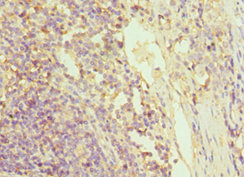
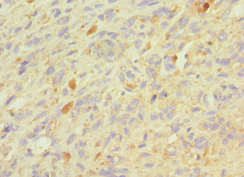
Acrogranin antibody; CLN11 antibody; GEP antibody; GP88 antibody; Granulin A antibody; Granulin B antibody; Granulin C antibody; Granulin D antibody; Granulin E antibody; Granulin epithelin antibody; Granulin F antibody; Granulin G antibody; Granulin-7 antibody; Granulins antibody; GRN antibody; GRN_HUMAN antibody; PC cell derived growth factor antibody; PCDGF antibody; PEPI antibody; PGRN antibody; Proepithelin antibody; Progranulin antibody
Raised in
Rabbit
Species Reactivity
Human
Immunogen
Recombinant Human Granulins protein (20-310AA)
Immunogen Species
Homo sapiens (Human)
Conjugate
Non-conjugated
Isotype
IgG
Purification Method
Antigen Affinity Purified
Concentration
It differs from different batches. Please contact us to confirm it.
Buffer
PBS with 0.02% sodium azide, 50% glycerol, pH7.3.
Tested Applications
ELISA, IHC
Recommended Dilution
Application
Recommended Dilution
IHC
1:20-1:200
Storage
Upon receipt, store at -20°C or -80°C. Avoid repeated freeze.
Lead Time
Basically, we can dispatch the products out in 1-3 working days after receiving your orders. Delivery time maybe differs from different purchasing way or location, please kindly consult your local distributors for specific delivery time.
Note: All of our proteins are default shipped with normal blue ice packs, if you request to ship with dry ice, please communicate with us in advance and extra fees will be charged.
Usage
For Research Use Only. Not for use in diagnostic or therapeutic procedures.
Secreted protein that acts as a key regulator of lysosomal function and as a growth factor involved in inflammation, wound healing and cell proliferation. Regulates protein trafficking to lysosomes and, also the activity of lysosomal enzymes. Facilitates also the acidification of lysosomes, causing degradation of mature CTSD by CTSB. In addition, functions as wound-related growth factor that acts directly on dermal fibroblasts and endothelial cells to promote division, migration and the formation of capillary-like tubule structures. Also promotes epithelial cell proliferation by blocking TNF-mediated neutrophil activation preventing release of oxidants and proteases. Moreover, modulates inflammation in neurons by preserving neurons survival, axonal outgrowth and neuronal integrity.; Promotes proliferation of the epithelial cell line A431 in culture.; Inhibits epithelial cell proliferation and induces epithelial cells to secrete IL-8.; Stabilizes CTSD through interaction with CTSD leading to maintain its aspartic-type peptidase activity.
Gene References into Functions
progranulin reduction might be the cause of multiple proteinopathies due to the accelerating accumulation of abnormal proteins including TDP-43 proteinopathy, tauopathy and alpha-synucleinopathy.PMID:28473694
Results suggest that serum PGRN levels are significantly higher in obese children in China and correlate significantly with obesity-related markers. Increased PGRN levels may be involved in the pathological mechanism of childhood obesity.PMID:30151059
Progranulin has a direct effect on tumor growth, migration, and invasion of human colon cancer cells. It may serve as a potential therapeutic target for human colon cancer.PMID:30060789
Accumulating evidence suggests that PGRN is essential for proper lysosomal function, but the precise mechanisms involved are not known. Here, we show that PGRN facilitates neuronal uptake and lysosomal delivery of prosaposin (PSAP), the precursor of saposin peptides that are essential for lysosomal glycosphingolipid degradation.PMID:28541286
miR-29b-3p bound to PGRN in a direct manner. Transfection with si-PGRN correlated with elevated E-cadherin expression, decreased snail and vimentin expressions, as well as less-motivated cell proliferation and cell metastasis. The H19/miR-29b-3p/PGRN axis modulated epithelial-mesenchymal transition of NSCLC cells via Wnt/beta-catenin signaling.PMID:29754471
SNPs in GRN are not related to ankylosing spondylitis susceptibility in a Chinese Han population.PMID:29230494
Plasma progranulin levels predict the presence of GRN null mutations independent of proximity to symptoms and brain atrophy.PMID:29146050
Serum progranulin may have potential to be used as a biomarker for the differentiation between early-onset pre-eclampsia and late-onset pre-eclampsia.PMID:28574293
CHI3L1 may be a previously unrecognized biomarker for diagnosing Gaucher Diseases (GD) and for evaluating the therapeutic effects of new GD drug.PMID:29396296
The increased serum progranulin concentrations were closely related to measures of adiposity, metabolic parameters, inflammatory marker and insulin resistance indices, suggesting that progranulin may be an excellent biomarker for obesity in childhood.PMID:29176029
This work identifies PGRN as an activator of lysosomal cathepsin D activity, and suggests that decreased cathepsin D activity due to loss of PGRN contributes to both FTD and NCL pathology in a dose-dependent manner.PMID:29036611
MiR-29b-3p promotes chondrocyte apoptosis and facilitates the occurrence and development of osteoarthritis by targeting PGRN.PMID:28609022
Results provide evidence that progranulin destabilizes sortilin via ubiquitination and lysosomal degradation to override the negative modulatory functions of sortilin thereby assuring the sustainable pro-tumorigenic actions of progranulin in castration-resistant prostate cancer.PMID:28433812
PGRN is a regulator of tumorigenesis because it stimulates cell proliferation, migration, invasion, angiogenesis, malignant transformation, resistance to anticancer drugs, and immune evasion. [review]PMID:29116422
PGRN regulated its own expression in a positive feedback loop via the AKT and ERK signaling pathways.PMID:29039535
PGRN is involved in lysosomal homeostasis and lipid metabolism.PMID:28903038
High serum GP88 concentrations are associated with poor prognosis in patients with DLBCLPMID:28823651
This study showed that endogenous levels of multiple GRNs are haploinsufficient in FTD-GRN patient fibroblasts and frontal cortex, mirroring full-length PGRN.PMID:28828399
HSPA5 (GRP78) and GEP were identified to interact. Clinical analysis showed that expression of GRP78 was up-regulated in hepatocellular carcinoma tumor and correlated with GEP expression.PMID:28601093
the expression of PGRN was significantly upregulated in Osteonecrosis of the Femoral Head patients' articular cartilage, and recombinant PGRN could promote expression of aggrecan and collagen II and the activation of ERK1/2.PMID:28247166
White matter hyperintensities are seen only in GRN mutation carriers in fronto-temporal dementia.PMID:28529873
The study provides solid evidence that there is the interaction between GRN A and ENO1 and the interaction is responsible for the effects of GRN A on glucose uptake as well as cancer cell migration and invasion.PMID:28415822
This study ascertained that PGRN expression in airway epithelial cells inhibits CS-induced apoptosis, presumably through regulation of the ER stress response and MAPK activation.PMID:28273689
This study describe a novel GRN, p.(Tyr229*) mutation, resulting in haploinsufficiency of GRN and a severe neuropathologic FTLD phenotype.PMID:27767988
This meta-analysis supported the T allele of rs5848 within progranulin, as a risk factor for Alzheimer's Disease.PMID:26820675
Our case report further corroborates the notion that, in addition to FTD, progranulin may be involved in the neurobiology of bipolar disorder type 1, and suggests to screen patients with late-onset bipolar disorder for GRN mutations.PMID:28664756
GRN SNPs likely influence disease course and relapse recovery in multiple sclerosis.PMID:26447062
This study revealed no patients presenting with typical clinical PSPS to have evidence of GRN mutations producing TDP-43 pathology.PMID:27163816
This study reported a novel pathogenic splice site mutation in GRN (c.709-2 A>T) causative for FTD and we show that 1) GRN LoF mutations are a rare cause of FTD in this Italian cohort.PMID:27258413
progranulin expression is critical for tumor growth in vivo, in both xenograft and orthotopic tumor modelsPMID:27220888
results revealed an important role of NF-kappaB signalling in PGRN-associated frontotemporal lobar degeneration-DNA-binding protein 43 and confirm that PGRN can bind to TNF-alpha receptors regulating the expression of WNT5A, suggesting novel targets for treatment of frontotemporal lobar degeneration-DNA-binding protein linked to GRN mutations.PMID:26624524
These results suggest an important role of Wnt activation inducing cell cycle disturbance-mediated neuronal loss in the pathogenesis of PGRN deficiency-linked frontotemporal lobar degeneration with TDP-43 protein inclusions.PMID:26676574
Study demonstrate that PGRN interacts with the lysosomal protease CTSD and maintains its proper activity in vivo. Therefore, by regulating CTSD activity, PGRN may modulate protein homeostasis. This could potentially explain the TDP-43 aggregation observed in frontotemporal lobar degeneration with GRN mutations.PMID:28493053
Data indicate significant correlation of granulin-epithelin precursor (GEP) with beta-catenin in hepatocellular carcinoma (HCC) cohort.PMID:26942873
We identified 3 novel GRN mutations (p.Q130X, p.317Afs*12, and p.K259Afs*23) in patients diagnosed with nonfluent-variant PPA or behavioral-variant FTD. The frequency of GRN mutations was 9.6% and that of MAPT mutations was 7.1%. Among familial cases of FTD, the frequency of GRN mutations was 31.5% and that of MAPT mutations was 10.5% in Brazil.PMID:27082848
Missense mutation in GRN gene affecting RNA splicing and plasma progranulin level in a family affected by frontotemporal lobar degeneration.PMID:28285794
existence of a founder effect for C157KfsX97 mutation in patients with frontotemporal lobar degeneration inSouthern Italy.PMID:27814992
GRN gene deletion is genetic etiology of familial frontotemporal dementia.PMID:28153380
Thisstudy has demonstrated the effect of inflammatory cytokine on cartilage graft as well as the protective role of PGRN on this graft. Without the anti-inflammatory effect from PGRN, hyaline cartilaginous extracellular matrices in living hyaline cartilage graft constructs could be easily remodeled into fibrotic or mineralized tissue and would no longer be able to fulfil the role of a cartilage graft.PMID:27465877
This study demonstrated that the GRN mutation carriers showed significant frontoparietal hypoperfusion compared with controls at follow-up.PMID:27625986
The GRN risk SNP (rs5848) was associated with variation in detected levels of CSF proteins previously implicated in CNS inflammation. The same GRN risk allele was also associated with increased CSF tau which may indicate directly related neurodegenerative changes.PMID:28189700
Granulin is deposited in specific brain regions that differ between Alzheimer's disease patients and Frontotemporal lobar degeneration patients.PMID:29044416
Mutation of GRN is a common cause of FTD in mainland China.PMID:27311648
the influence of the p.A152T MAPT variant on the clinical and neuropathological features of these Basque GRN families, is reported.PMID:28594853
Results indicate that central nervous progranulin reduction is not restricted to the relatively rare cases of frontotemporal dementia caused by progranulin gene (GRN) loss of function mutations, but also contributes to the more common GRN-negative forms of frontotemporal dementia.PMID:27760429
a complete screening for mutations in MAPT, GRN and C9ORF72 genes revealed a frequency of 5.4% of pathogenic mutations in a random cohort of 93 Turkish index patients with dementiaPMID:27632209
This Progress article reviews recent advances in progranulin biology emphasizing its roles in lysosomal function and brain innate immunity, and outlines future avenues of investigation that may lead to new therapeutic approaches for neurodegeneration--{REVIEW}PMID:28435163
serum progranulin levels had a positive correlation with pulmonary function in patients with asthma and a negative correlation with blood neutrophil counts.PMID:28073702
Progranulin (PGRN), a 593-amino-acid autocrine growth factor has multiple functions involved in cell proliferation, wound healing, neurodegeneration, insulin resistance, and tumorigenesis.PMID:27149013
progranulin is affected by a decrease in eGFR, being at a higher concentration in serum and lower in urine of DKD patients with T2DM and eGFR <60 mL/min/1.73m2. It is also associated with markers of obesity and inflammationPMID:27776152
Show
More
Hide
All
Subcellular Location
Secreted. Lysosome.
Protein Families
Granulin family
Tissue Specificity
In myelogenous leukemic cell lines of promonocytic, promyelocytic, and proerythroid lineage, in fibroblasts, and very strongly in epithelial cell lines. Present in inflammatory cells and bone marrow. Highest levels in kidney.