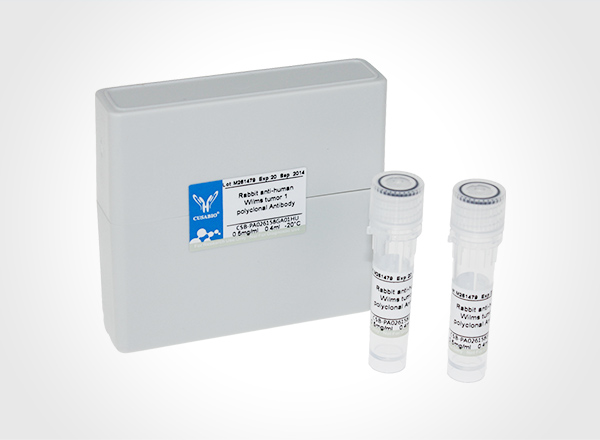
Liquid
Note: We will preferentially ship the format that we have in stock, however, if you have any special requirement for the format, please remark your requirement when placing the order, we will prepare according to your demand.
Upon receipt, store at -20°C or -80°C. Avoid repeated freeze.
Lead Time
Basically, we can dispatch the products out in 1-3 working days after receiving your orders. Delivery time maybe differs from different purchasing way or location, please kindly consult your local distributors for specific delivery time.
Note: All of our proteins are default shipped with normal blue ice packs, if you request to ship with dry ice, please communicate with us in advance and extra fees will be charged.
Usage
For Research Use Only. Not for use in diagnostic or therapeutic procedures.
Ionotropic glutamate receptor. L-glutamate acts as an excitatory neurotransmitter at many synapses in the central nervous system. Binding of the excitatory neurotransmitter L-glutamate induces a conformation change, leading to the opening of the cation channel, and thereby converts the chemical signal to an electrical impulse. The receptor then desensitizes rapidly and enters a transient inactive state, characterized by the presence of bound agonist. Modulates cell surface expression of NETO2.; Independent of its ionotropic glutamate receptor activity, acts as a thermoreceptor conferring sensitivity to cold temperatures. Functions in dorsal root ganglion neurons.
Gene References into Functions
results suggest that PKC SUMOylation is an important regulator of the 14-3-3 and GluK2a protein complex and may contribute to regulate the decay kinetics of kainate receptor-excitatory postsynaptic currentsPMID:28837400
these findings indicate that GRIK2 has a role in the maintenance of urothelial cancer stem cells and that GRIK2 and ALDH1 can be prognosis prediction markers for urinary tract carcinomasPMID:28418868
TTBK2 down-regulates GluK2 activity by decreasing the receptor protein abundance in the cell membrane via RAB5-dependent endocytosis.PMID:27607061
In the Han population in Central China, the polymorphisms of SNP rs9390754 in the GRIK2 gene may be associated with epilepsy susceptibility.PMID:27324535
Study demonstrates that co-assembly of recombinant kainate receptors (GluK1 and GluK2) with the Neto1 and Neto2 auxiliary subunits alters their onset and recovery from desensitization in a subunit-dependent mannerPMID:26277340
This study found in GRIK2 (glutamate receptor, ionotropic kainate 2) was most significant and also showed significant correlations with gene expression.PMID:24662927
This study showed that Gluk2 association with obsessive-compulsive disorder.PMID:24821223
Parkin interacts with the kainate receptor GluK2 subunit and regulates KAR function.PMID:25316086
High risk genetic markers of paranoid schizophrenia were GRIK2*ATG and GRIK2*TGG in Tatars.PMID:25842862
The present study reveals an additional mechanism for the regulation of GluK2-containing kainate receptors by Src family kinases, which may be of pathological significance in ischemic stroke.PMID:25201974
we found no association between rs1556995 in GRIK2 and clozapine-induced obsessive-compulsive (OC) symptoms, implying that that GRIK2 may not play a role in the development of OC symptoms in schizophrenia patientsPMID:23660601
Crosslinking the ligand-binding domain dimer interface locks kainate receptors out of the main open state.PMID:23713029
14-3-3 proteins are an important regulator of GluK2a-containing KARs and may contribute to the slow decay kinetics of native KAR-EPSCs.PMID:23861400
Kainate receptor GluK2a post-translational modifications differentially regulate association with 4.1N to control activity-dependent receptor endocytosisPMID:23400781
Eight chromosome 6 SNPs, having the most significant differences, were delineated: rs10499298, rs10499299, rs17827966, rs1224329, rs1150790, rs713050, rs2518344 and rs487083; all were associated with genes GRIK2.PMID:23037145
The ACAG haplotype in the 13th haplotype block of the GRIK2 gene was associated with somatic anxiety.PMID:22429480
Comprehensive analytical methods applied to a much larger sample than in previous studies do not support a role for GRIK2 as a genetic modifier of age at onset of clinical symptoms in Huntington's disease.PMID:22771793
Convergent functional genomics allowed the identification of novel candidate genes, GRIK2 and NPAS2, involved in glutamatergic neurotransmission and the circadian rhythm, respectively, that are potentially associated with CFS.PMID:21912186
Genotyping and linkage analysis excluded linkage of the GRIK2 gene and TUSC3 gene with mental retardation.PMID:21557188
This study supports previously reported findings of association between proximal GRIK2 single nucleotide polymorphism and obsessive-compulsive disorder in a comprehensive evaluation of the genePMID:20370803
human GluK2 is a slowly activating channel but more sensitive to glutamate, as compared to the rat ortholog; the M867I mutation does not affect the rate the equilibrium constants of the channel opening but does slow down the channel desensitization ratePMID:20863077
Spliced variants of ionotropic glutamate receptor GluR6 is associated with astrocytoma.PMID:20230879
phosphorylation of PKC sites on GluR6 regulates surface expression of GluR6 at distinct intracellular trafficking pathwaysPMID:19920140
Linkage and association of the glutamate receptor 6 gene with autismPMID:11920157
Specific alleles in GluR6 and CA150 locus were only observed in HD patients.PMID:12821179
describes the time course of the open-channel form of the receptor as a function of glutamate concentrationPMID:14567698
Using three single nucleotide polymorphisms in GRIK2 and one in GRIK3, we found no evidence for association with Obssessive-Compulsive disorder in case-control or family-based analyses.PMID:15094479
In this study, the maternal transmission disequilibrium of the glutamate receptor GRIK2 in schizophrenia.PMID:15305151
The modifier effect is actually due to the TAA repeat itself, possibly via a functional consequence on the GRIK2 mRNA.PMID:16959037
Our data on altered functional properties of GluR6(M836I) provide a functional basis for the postulated linkage of GluR6 to autism.PMID:17167233
phosphorylation of the C-terminal tail of GluR6 by PKA leads to potentiation of whole cell responsePMID:17379418
These results suggest a potential association between GRIK2 and autism in the Korean population.PMID:17428563
Mutations of GluR6 are unlikely to be associated with autism in the Indian population.PMID:17712621
report a complex mutation in the ionotropic glutamate receptor 6 gene (GRIK2, also called "GLUR6") that cosegregates with moderate-to-severe nonsyndromic autosomal recessive mental retardation in a large, consanguineous Iranian familyPMID:17847003
Overall, our data indicate that hGluR6c might have unique properties in non-nervous cells and in the first stages of CNS development.PMID:18289788
the apo state of GluR6 undergoes a cleft closure of 29-30 degrees upon binding full agonists, one of the largest observed in the glutamate receptor family.PMID:18658129
Mutations to GLUR6 binding pocket that selectively affect domoate binding are freported.PMID:18664604
nonconserved residues in GluR6 define the size of the agonist-binding pocket, exerting a steric influence on the bound agonist and the extent of binding-domain closurePMID:18690046
GluR6 C-terminal domain KRIP6 regulates kainate receptors by inhibiting PICK1 modulation via competition or a mutual blocking effectPMID:18692513
in silico ligand-docking predicted that most partial agonists select for the closed and not, as expected, the open or intermediate conformations of the GluK2 agonist binding domain.PMID:19225180
Results indicate that ions can contribute substantial free energy to active state stabilization in GluR6, and provide quantitative measurements of the energetic consequences of allosteric ion binding to a ligand-gated ion channel.PMID:19617541