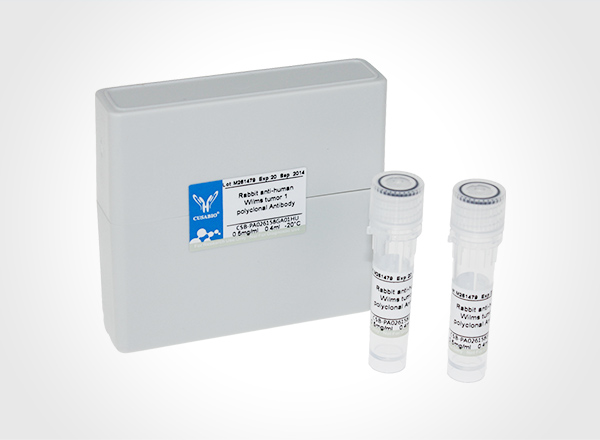
Liquid
Note: We will preferentially ship the format that we have in stock, however, if you have any special requirement for the format, please remark your requirement when placing the order, we will prepare according to your demand.
Upon receipt, store at -20°C or -80°C. Avoid repeated freeze.
Lead Time
Basically, we can dispatch the products out in 1-3 working days after receiving your orders. Delivery time maybe differs from different purchasing way or location, please kindly consult your local distributors for specific delivery time.
Note: All of our proteins are default shipped with normal blue ice packs, if you request to ship with dry ice, please communicate with us in advance and extra fees will be charged.
Usage
For Research Use Only. Not for use in diagnostic or therapeutic procedures.
Key regulator of inflammation, lipid metabolism and mitochondrion homeostasis that acts by inhibiting the activity of the ubiquitin-conjugating enzyme UBE2N/Ubc13, thereby inhibiting 'Lys-63'-linked ubiquitination. In the nucleus, can both acts as a corepressor and coactivator of transcription, depending on the context. Acts as a transcription coactivator in adipocytes by promoting the recruitment of PPARG to promoters: acts by inhibiting the activity of the ubiquitin-conjugating enzyme UBE2N/Ubc13, leading to stabilization of KDM4A and subsequent histone H3 'Lys-9' (H3K9) demethylation. Promotes cholesterol efflux by acting as a transcription coactivator. Acts as a regulator of B-cell development by inhibiting UBE2N/Ubc13, thereby restricting the activation of Toll-like receptors (TLRs) and B-cell antigen receptors (BCRs) signaling pathways. Acts as a key mediator of mitochondrial stress response: in response to mitochondrial depolarization, relocates from the mitochondria to the nucleus following desumoylation and specifically promotes expression of nuclear-encoded mitochondrial genes. Promotes transcription of nuclear-encoded mitochondrial genes by inhibiting UBE2N/Ubc13. Can also act as a corepressor as part of the N-Cor repressor complex by repressing active PPARG. Plays an anti-inflammatory role in macrophages and is required for insulin sensitivity by acting as a corepressor. Plays an anti-inflammatory role during the hepatic acute phase response by interacting with sumoylated NR1H2 and NR5A2 proteins, thereby preventing N-Cor corepressor complex dissociation. In the cytosol, also plays a non-transcriptional role by regulating insulin signaling and pro-inflammatory pathways. In the cytoplasm, acts as a negative regulator of inflammation by inhibiting the proinflammatory TNF-alpha pathway; acts by repressing UBE2N/Ubc13 activity. In the cytoplasm of adipocytes, restricts the activation of insulin signaling via inhibition of UBE2N/Ubc13-mediated ubiquitination of AKT. Able to suppress G-protein- and mitogen-activated protein kinase-mediated signal transduction. Acts as a tumor-suppressor in liposarcoma.; (Microbial infection) Required for efficient replication of hepatitis C virus (HCV) by promoting the interaction between VAPA and HCV virus protein NS5A.
Gene References into Functions
The study of adipose tissue from humans with and without obesity revealed correlations between reduced GPS2 expression in macrophages, elevated systemic and adipose tissue inflammation, and diabetic status.PMID:27270589
our studies identify GPS2 functions as a tumor suppressor in LPS and its downregulation is correlated to prognosis of LPS.PMID:27460081
Posttranslational modification of GPS2 by SUMOylation may serve as a key factor that regulates the function of GPS2 in vivo.PMID:24943844
regulation of GPS2 by posttranslational modifications provides an effective strategy for modulating its molecular function within the nuclear compartment.PMID:26070566
Chromosomal translocation in a pediatric undifferentiated spindle cell sarcoma have characterized this alteration to show rearrangement of the MLL4 and GPS2 genes, resulting in fusion gene MLL4-GPS2, the expression of which promotes independent growth.PMID:25139254
GPS2 is required for the association of viral NS5A with VAP-A and hepatitis C virus replication.PMID:24223774
expression of the transcriptional corepressor complex subunits GPS2 and SMRT was significantly reduced in obese adipose tissue, inversely correlated to inflammatory statusPMID:23221346
Results show for the first time that GPS-2 is differentially methylated at a site that lacks known methylation motifs and that the methylation state is detected by the immune systemPMID:19917673
metabolically important coregulator GPS2 functions as a hitherto unrecognized transrepression mediator of interactions between SUMOylated nuclear receptors and the N-CoR corepressor complexPMID:20159957
Results show that the N-CoR-HDAC3 complex inhibits JNK activation through the associated GPS2 subunit and thus could potentially provide an alternative mechanism for hormone-mediated antagonism of AP-1 function.PMID:11931768
the GPS2 might function in concert with hMSH4-hMSH5 during the process of homologous recombination.PMID:16122992
Direct interactions of GPS2 with hnf4alpha and farnesoid x receptor indicate alternative coregulator recruitment strategies to cause differential transcriptional outcomes in governing bile acid biosynthesis.PMID:17895379
GPS2 interacts with RFX4_v3 to modulate transactivation of genes involved in brain morphogenesis, including Cx3Cl1PMID:18218630
Data describe the requirement of GPS2 for ABCG1 gene transcription and cholesterol efflux from macrophages, and implicate GPS2 in facilitating LXRalpha/beta recruitment to an ABCG1-specific promoter/enhancer unit upon ligand activation.PMID:19481530