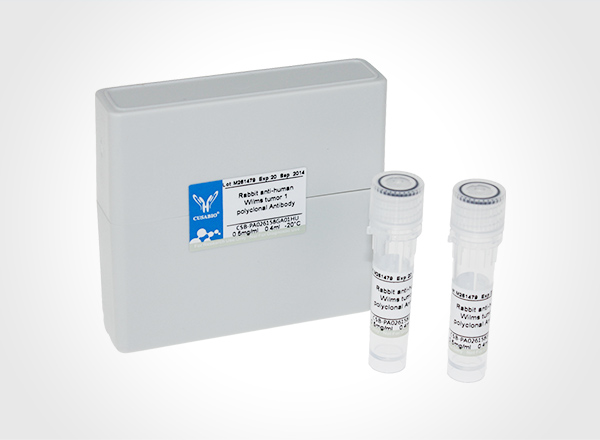
Liquid
Note: We will preferentially ship the format that we have in stock, however, if you have any special requirement for the format, please remark your requirement when placing the order, we will prepare according to your demand.
Upon receipt, store at -20°C or -80°C. Avoid repeated freeze.
Lead Time
Basically, we can dispatch the products out in 1-3 working days after receiving your orders. Delivery time maybe differs from different purchasing way or location, please kindly consult your local distributors for specific delivery time.
Note: All of our proteins are default shipped with normal blue ice packs, if you request to ship with dry ice, please communicate with us in advance and extra fees will be charged.
Usage
For Research Use Only. Not for use in diagnostic or therapeutic procedures.
G-protein coupled receptor which has an essential role in the development of hearing and vision. Couples to G-alpha(i)-proteins, GNAI1/2/3, G-alpha(q)-proteins, GNAQ, as well as G-alpha(s)-proteins, GNAS, inhibiting adenylate cyclase (AC) activity and cAMP production. Required for the hair bundle ankle formation, which connects growing stereocilia in developing cochlear hair cells of the inner ear. In response to extracellular calcium, activates kinases PKA and PKC to regulate myelination by inhibiting the ubiquitination of MAG, thus enhancing the stability of this protein in myelin-forming cells of the auditory pathway. In retina photoreceptors, the USH2 complex is required for the maintenance of periciliary membrane complex that seems to play a role in regulating intracellular protein transport. Involved in the regulation of bone metabolism.; Cleaved ADGRV1 beta-subunit couples with G-alpha(i)-proteins, GNAI1/2/3, and constitutively inhibits adenylate cyclase (AC) activity with a stronger effect than full ADGRV1.
Gene References into Functions
Data suggest that the ADGRV1 variation contributes to epilepsy with myoclonic seizures, although the inheritance pattern may be complex in many cases. In patients with 5q14.3 deletion and epilepsy, ADGRV1 haploinsufficiency likely contributes to seizure development.PMID:29266188
we found new causative mutations in heterozygous compound state, one missense and one nonsense mutation in the GPR98 gene in three deaf sibs. The first mutation located in exon7, corresponds to c.1054C > A, which causes a proline to threonine change at position 352 of the protein (p.Pro352Thr). The second mutation located within exon77 is c.16544delT that leads to a stop codon at position 5515of the protein (p.Leu5515*).PMID:28951997
7 patients clinically classified as having USH2, genetic tests confirmed the USH2 diagnosis in 5 cases. Of these, 4 patients showed mutations in the USH2A gene and 1 patient in the ADGRV1 gene. The mutation of the ADGRV1/GPR98 gene has an extremely rare incidence and is associated with a diagnosis of USH type 2C.PMID:28653555
We identified two novel truncation mutations in GPR98 causing Usher syndrome.PMID:26432996
our results suggest that low expression of VLGR1 is a significant risk factor of epileptic seizures in patients with low-grade gliomaPMID:25511798
Our findings also expand the spectrum of GPR98 mutations in USH and demonstrate that the long isoform of GPR98 might carry even more mutations of the GPR98 gene.PMID:25572244
Diagnosis of Usher Syndrome 2 caused by GPR98 mutations in advance of visual defects in the cohort of nonsyndromic HL patients highlights importane of genetic testing in the diagnosis.PMID:25743181
identified an independent Galphai signaling pathway of the VLGR1 beta-subunit and its regulatory mechanisms that may have a role in the development of Usher syndromePMID:24962568
In Spain, USH2A and GPR98 are responsible for 95.8% and 5.2% of Usher syndrome 2 mutated cases, respectively. DFNB31 plays a minor role in the Spanish population. There was a group of patients in whom no mutation was found.PMID:23441107
genetic association studies in postmenopausal Japanese women: Study found association between an SNP in GPR98 (rs10514346) and bone mineral density in this population; data suggest that Gpr98 signaling pathway regulates bone metabolism.PMID:22419726
Mutation found in USH2A, GPR98, or DFNB31 account for the vast majority of USH2 patients and their analysis provide a robust pathway for routine molecular diagnosis.PMID:22147658
A nonsense mutation (S2652X) causing a deletion of the C-terminal 126 amino acid residues was identified in one family with febrile and afebrile seizures.PMID:12402266
USH2C and USH2A manifest photoreceptor disease with rod- and cone-mediated visual losses and thinning of the outer nuclear layer.PMID:15671307
GPR98 genes and the phenotypic heterogeneity and particularly the severe ocular affection first observed in one Usher syndrome patient.PMID:18854872
study describes for the first time two male patients with Usher syndrome type 2 with novel GPR98 mutationsPMID:19357117
has seven copies of the EPTP repeat, a unifying protein sequence motif of a heterogenous group of proteins linked to epileptic diseases. The EPTP repeat probably forms a beta-propeller structure.PMID:12217514