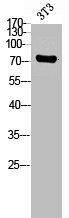
7 transmembrane protein with no EGF like N terminal domains 1 antibody; BFPP antibody; DKFZp781L1398 antibody; EGF TM7 like antibody; G protein coupled receptor 56 antibody; G-protein coupled receptor 56 antibody; GPR 56 antibody; Gpr56 antibody; GPR56_HUMAN antibody; Polymicrogyria bilateral frontoparietal antibody; Protein TM7XN1 antibody; TM7LN4 antibody; TM7XN1 antibody; TM7XN1 protein antibody
Raised in
Rabbit
Species Reactivity
Human
Immunogen
Synthesized peptide derived from the Internal region of Human GPR56.
Immunogen Species
Homo sapiens (Human)
Conjugate
Non-conjugated
Isotype
IgG
Purification Method
The antibody was affinity-purified from rabbit antiserum by affinity-chromatography using epitope-specific immunogen.
Concentration
It differs from different batches. Please contact us to confirm it.
Buffer
Liquid in PBS containing 50% glycerol, 0.5% BSA and 0.02% sodium azide.
Tested Applications
WB, IF, ELISA
Storage
Upon receipt, store at -20°C or -80°C. Avoid repeated freeze.
Lead Time
Basically, we can dispatch the products out in 1-3 working days after receiving your orders. Delivery time maybe differs from different purchasing way or location, please kindly consult your local distributors for specific delivery time.
Note: All of our proteins are default shipped with normal blue ice packs, if you request to ship with dry ice, please communicate with us in advance and extra fees will be charged.
Usage
For Research Use Only. Not for use in diagnostic or therapeutic procedures.
Receptor involved in cell adhesion and probably in cell-cell interactions. Mediates cell matrix adhesion in developing neurons and hematopoietic stem cells. Receptor for collagen III/COL3A1 in the developing brain and involved in regulation of cortical development, specifically in maintenance of the pial basement membrane integrity and in cortical lamination. Binding to the COL3A1 ligand inhibits neuronal migration and activates the RhoA pathway by coupling to GNA13 and possibly GNA12. Plays a role in the maintenance of hematopoietic stem cells and/or leukemia stem cells in bone marrow niche. Plays a critical role in cancer progression by inhibiting VEGFA production threreby inhibiting angiogenesis through a signaling pathway mediated by PRKCA. Plays an essential role in testis development.; Plays a critical role in cancer progression by activating VEGFA production and angiogenesis through a signaling pathway mediated by PRKCA.
Gene References into Functions
High GPR56 expression is associated with metastasis via epithelialmesenchymal transition carcinoma in colorectal cancer.PMID:30066935
The authors conclude that soluble GPR56 is present in vivo and is elevated in certain chronic inflammatory diseases such as rheumatoid arthritis. Hence, soluble GPR56 might be considered a potential biomarker for rheumatoid arthritis disease progression.PMID:28690029
Our data suggest that collagen III may be effective in optimising islet function to improve islet transplantation outcomes, and GPR56 may be a target for the treatment of type 2 diabetesPMID:29855662
that GPR56 might be an inhibitor of the mesenchymal transition across multiple tumor types beyond glioblastomaPMID:29166609
We report a clinical feature, electroclinical findings, and clinical course of a patient with a severe phenotype of MCPH2 including microcephaly, refractory infantile spasms and intellectual disability. We detected a new homozygous splicing variant c.3335+1G>C in the WD repeat domain 62 (WDR62) gene, and an additional new heterozygous missense mutation c.1706T>A of G protein-coupled receptor 56 (GPR56) genePMID:28756000
Stachel-independent modulation of GPR56/ADGRG1 signaling by synthetic ligands directed to its extracellular region.PMID:28874577
Brain MRI in the affected siblings as well as in the two previously reported individuals with bi-allelic COL3A1 mutations showed a brain phenotype similar to that associated with mutations in GPR56.PMID:28258187
GPR56 inhibits natural cytotoxicity of human NK cells.PMID:27184850
Functional relevance of GPR56 expression was validated in mice, in which co-expression of Gpr56 significantly accelerated HOXA9-induced leukemogenesisPMID:27063597
expression and activation of GPR56 may modulate melanoma progression in part by inducing IL-6 production after N-terminal fragment dissociation and C-terminal fragment self-activationPMID:27818281
Disease-associated extracellular loop mutations in the adhesion G protein-coupled receptor G1 (ADGRG1; GPR56) differentially regulate downstream signalingPMID:28424266
GPR56 regulates the proliferation and invasion capacity of osteosarcoma cells.PMID:27396430
High GPR56 expression was significantly associated with high-risk genetic subgroups and poor outcome in patients with acute myeloid leukemia and identifies cancer stem cells with high repopulating potential.PMID:26834243
Data suggest that agonist-induced signal transduction via either GPR56/ADGRG1 or BAI1/ADGRB1 does not require conserved membrane-proximal stalk region of these proteins; ADGRG1 may participate in stalk-dependent and stalk-independent signaling.PMID:26710850
Agonistic antibodies reveal the function of GPR56 in human glioma U87-MG cellsPMID:25832639
we knocked down GPR56 in cardiomyocytes and found that GPR56 promoted Ang II-induced cardiomyocyte hypertrophy and it contributed to PCBP2 effects on cardiomyocyte hypertrophyPMID:26116532
GPR56 and GPR110 are activated by exposure of a cryptic tethered agonistPMID:25918380
These findings demonstrate that reduced expression of GPR56 in lung fibroblasts may be an important link with pulmonary fibrosis, playing a role in regulating some important fibroblast functions.PMID:24742924
Data show that Gpr56, a G-coupled protein receptor, is required for hematopoietic cluster formation during transdifferentiation process in endothelial to hematopoietic cell transition (EHT).PMID:25547674
these data reveal a mechanism by which control of GPR56 expression pattern by multiple alternative promoters can influence stem cell proliferation, gyral patterning, and, potentially, neocortex evolution.PMID:24531968
GPR56, MT1G, and RASSF1 might be the potential methylation markers associated with acquired multidrug resistance of lung adenocarcinoma.PMID:23902976
Loss of GPR56 is associated with abnormal muscle development.PMID:24102982
GPR56 may represent an important GPCR for the maintenance of HSCs by acting as a co-ordinator of interactions with the BM osteosteal niche.PMID:23478665
The present study confirms the phenotypic overlap between GPR56-related brain dysgenesis and other cobblestone-like syndromes.PMID:23274687
Disease-associated mutations prevent GPR56-collagen III interaction.PMID:22238662
study reports a novel missense mutation of GPR56, E496K, identified in a consanguineous pedigree with bilateral frontoparietal polymicrogyriaPMID:21723461
GPR56 expression is a common trait of human cytotoxic lymphocytes and might affect the migratory properties of these cells.PMID:21724806
The N terminus of the adhesion G protein-coupled receptor GPR56 controls receptor signaling activity.PMID:21708946
consistent with its suppressive roles in melanoma progression, the expression levels of GPR56 are inversely correlated with the malignancy of melanomas in human subjectsPMID:21724588
GPR56 mutations cause bilateral frontoparietal polymicrogyria via multiple mechanismsPMID:21349848
Results suggest that the splicing of GPR56 may induce differential tumorigenic responses owing to their varied ability to activate transcription factors.PMID:19572147
A significant correlation between GPR56, TG2, and NF-kappaB was observed that correlated with nodal metastasis and tumor invasion in esophageal squamous cell carcinoma.PMID:20874003
Identify GPR56 as a novel marker capable of discriminating different natural killer cells subsets.PMID:20008459
results show that mutations in GPR56 cause a human brain cortical malformatin called bilateral frontoparietal polymicrogyria (BFPP); data suggest that GPR56 signaling plays an essential role in regional development of human cerebral cortexPMID:15044805
Increased expression of GPCR56 is associated with esophageal squamous cell carcinomaPMID:15916848
Results show that GPR56 binds specifically to tissue transglutaminase, TG2, a widespread component of tissue and tumor stroma previously implicated as an inhibitor of tumor progression.PMID:16757564
Review describes the expression of a ligand that interacts with GPR56 in metastatic melanoma cells as TG2, a major crosslinking enzyme in the tumor extracellular matrix.PMID:17314516
These results define the biochemical properties of GPR56 protein, and suggest that the expression of GPR56 protein is suppressed in human pancreatic cancer cells.PMID:17932623
We have shown that GPR56 GPS mutant protein is defective in cleavage and surface localization, while non-GPS mutant proteins are cleaved normally but still defective in surface localization.PMID:18042463
This study reported that three consanguineous families in which four affected individuals with Bilateral frontoparietal polymicrogyria and GPR56 mutations had Lennox-Gastaut syndrome.PMID:19016831
Our data suggest that GPR56 can be used as an NSC/NPC marker within the neural cell lineage, especially in combination with nestin.PMID:19525879
Widely distributed with highest levels found in thyroid gland, brain and heart. Expressed in a great number of tumor cells. Expression is down-regulated in different tumors from highly metastatic cells.