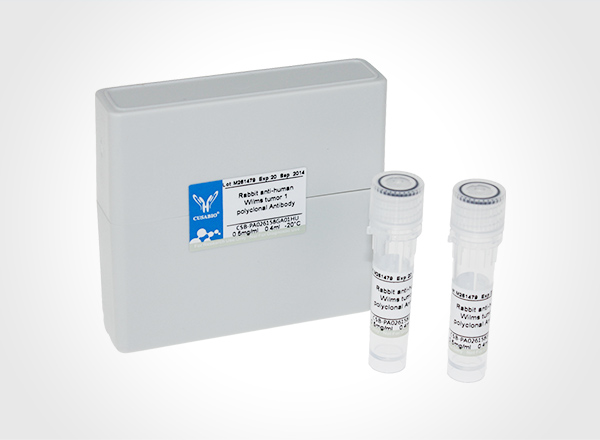
Upon receipt, store at -20°C or -80°C. Avoid repeated freeze.
Lead Time
Basically, we can dispatch the products out in 1-3 working days after receiving your orders. Delivery time maybe differs from different purchasing way or location, please kindly consult your local distributors for specific delivery time.
Note: All of our proteins are default shipped with normal blue ice packs, if you request to ship with dry ice, please communicate with us in advance and extra fees will be charged.
Usage
For Research Use Only. Not for use in diagnostic or therapeutic procedures.
G-protein coupled receptor expressed in lymphocytes that acts as a chemotactic receptor for B-cells, T-cells, splenic dendritic cells, monocytes/macrophages and astrocytes. Receptor for oxysterol 7-alpha,25-dihydroxycholesterol (7-alpha,25-OHC) and other related oxysterols. Mediates cell positioning and movement of a number of cells by binding the 7-alpha,25-OHC ligand that forms a chemotactic gradient. Binding of 7-alpha,25-OHC mediates the correct localization of B-cells during humoral immune responses. Guides B-cell movement along the B-cell zone-T-cell zone boundary and later to interfollicular and outer follicular regions. Its specific expression during B-cell maturation helps position B-cells appropriately for mounting T-dependent antibody responses. Collaborates with CXCR5 to mediate B-cell migration; probably by forming a heterodimer with CXCR5 that affects the interaction between of CXCL13 and CXCR5. Also acts as a chemotactic receptor for some T-cells upon binding to 7-alpha,25-OHC ligand. Promotes follicular helper T (Tfh) cells differentiation by positioning activated T-cells at the follicle-T-zone interface, promoting contact of newly activated CD4 T-cells with activated dendritic cells and exposing them to Tfh-cell-promoting inducible costimulator (ICOS) ligand. Expression in splenic dendritic cells is required for their homeostasis, localization and ability to induce B- and T-cell responses: GPR183 acts as a chemotactic receptor in dendritic cells that mediates the accumulation of CD4(+) dendritic cells in bridging channels. Regulates migration of astrocytes and is involved in communication between astrocytes and macrophages. Promotes osteoclast precursor migration to bone surfaces. Signals constitutively through G(i)-alpha, but not G(s)-alpha or G(q)-alpha. Signals constitutively also via MAPK1/3 (ERK1/2).
Gene References into Functions
These data suggest a significant role for EBI2 in human CD4(+) T cell migration, notably in patients with multiple sclerosis.PMID:28052250
Studies provide evidence that EBI2 and oxysterols are important players not only in the immune system but also in the central nervous system. Proper functioning of the EBI2/oxysterol system seems crucial for healthy physiology and prevention of the onset or progression of several neurodegenerative diseases. [review]PMID:26898310
Human EBI2 (GPR183) expression in mice leads to an abnormally expanded CD5+ B1a B-cell subset and chronic lymphocytic leukemia-like B-cell malignancies.PMID:28003273
On ligand engagement, EBI2 typically signals via inhibitory G-protein subunit alpha to induce intracellular calcium mobilization, mitogen-activated protein kinase (MAPK) activation, and cell proliferation.PMID:28125291
this study concludes that EBI2 expression is directly influenced by EBV infection and that BRRF1 is necessary and sufficient for EBI2 upregulation during infection.PMID:27902324
These results demonstrate a role for EBI2 in astrocyte function and suggest that modulation of this receptor may be beneficial in neuroinflammatory disorders.PMID:25297897
EBI2 is expressed in primary human monocytes and macrophages.PMID:24480442
Chronic rhinosinusitis with nasal polyps is characterized by B-cell inflammation and EBV-induced protein 2 expression.PMID:23473835
This model of ligand docking yields important structural insight into the molecular mechanisms mediating EBI2 function.PMID:22930711
Data indicate that EBI2 expression modulates CXCL13 binding affinity to CXCR5.PMID:22913878
Molecular characterization of oxysterol binding to the Epstein-Barr virus-induced gene 2 (GPR183).PMID:22875855
REVIEW: functional properties and in vivo biologyPMID:21261596
Based on the constitutive signaling and cellular expression pattern of EBI2, it is suggested that it may function in conjunction with BILF1 in the reprogramming of the cell during EBV infectionPMID:16540462
Structural motifs of importance for the constitutive activity of EBI2: analysis of receptor activation in the absence of an agonist.PMID:18628402
Show
More
Hide
All
Subcellular Location
Cell membrane; Multi-pass membrane protein.
Protein Families
G-protein coupled receptor 1 family
Tissue Specificity
Expressed abundantly in lymphoid tissues such as spleen and lymph node, and in B- and T-lymphocytes. Also highly expressed in lung, heart and gastrointestinal tract, and weakly expressed in the urogenital system and brain. Expressed in astrocytes.