GPR119 Antibody

Code: CSB-PA007283
Size:
50μg
50μg100μg
US$119
Quantity:
Species Reactivity: Human
Raised in: Rabbit
Application: WB, IF, ELISA
For inquiries on large quantities or another requirements
Send an Inquiry
Start an on-line Chat
Online ordering is currently available for U.S. customers only. For orders outside the U.S., please kindly submit an inquiry or start a chat with us.

Product Details

Uniprot NO.
Target Names
GPR119
Alternative Names
GPR119; Glucose-dependent insulinotropic receptor; G-protein coupled receptor 119
Raised in
Rabbit
Species Reactivity
Human
Immunogen
Synthesized peptide derived from the Internal region of Human GPR119.
Immunogen Species
Homo sapiens (Human)
Conjugate
Non-conjugated
Isotype
IgG
Purification Method
The antibody was affinity-purified from rabbit antiserum by affinity-chromatography using epitope-specific immunogen.
Concentration
It differs from different batches. Please contact us to confirm it.
Buffer
Liquid in PBS containing 50% glycerol, 0.5% BSA and 0.02% sodium azide.
Tested Applications
WB, IF, ELISA
Storage
Upon receipt, store at -20°C or -80°C. Avoid repeated freeze.
Lead Time
Basically, we can dispatch the products out in 1-3 working days after receiving your orders. Delivery time maybe differs from different purchasing way or location, please kindly consult your local distributors for specific delivery time.
Note: All of our proteins are default shipped with normal blue ice packs, if you request to ship with dry ice, please communicate with us in advance and extra fees will be charged.
Usage
For Research Use Only. Not for use in diagnostic or therapeutic procedures.
Datasheet & COA
Images
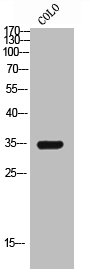
  • Western Blot analysis of COLO cells using GPR119 Polyclonal Antibody
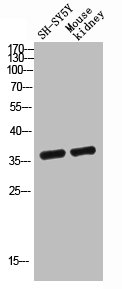
  • Western blot analysis of SH-SY5Y mouse-kidney lysis using GPR119 antibody.

Customer Reviews and Q&A

 Customer Reviews

Target Background

Function(From Uniprot)
Receptor for the endogenous fatty-acid ethanolamide oleoylethanolamide (OEA) and lysophosphatidylcholine (LPC). Functions as a glucose-dependent insulinotropic receptor. The activity of this receptor is mediated by G proteins which activate adenylate cyclase. Seems to act through a G(s) mediated pathway.
Gene References into Functions
  1. GPR119 is the oleoyl-lysophosphatidylinositol receptor that is required for GLP-1 secretion in enteroendocrine cells. PMID:29883799
  2. Angelica dahurica extract-treated cells showed significant increases in GPR119 activation, intracellular cAMP levels, GLP-1 levels and glucose-stimulated insulin secretion as compared with controls PMID:27391814
  3. Describe novel small-molecule GPR119 agonists with high receptor selectivity and capacity to induce glucose-stimulated insulin secretion. PMID:24681896
  4. The GPR119 agonist, HD0471042 increased intracellular cAMP levels in stably human GPR119 expressing CHO cells. PMID:23897163
  5. Oxidized-LDL significantly induces lincRNA-DYNLRB2-2 expression, which promotes ABCA1-mediated cholesterol efflux and inhibits inflammation through GPR119 in THP-1 cells. PMID:24493833
  6. Replacement of the three methyl groups in 1 with metabolically stable moieties led to the identification of compound 34, a potent and efficacious GPR119 agonist with improved pharmacokinetic (PK) properties. PMID:23648181
  7. transfection of GLUTag cells with recombinant human GPR119 results in a constitutive and apparently ligand-independent increase of proglucagon gene promoter activity and proglucagon mRNA content. PMID:23798572
  8. Results provide evidence of an islet-gastrointestinal distribution of GPR119, its expression in pancreatic beta and alpha cells, and its possible involvement in islet function. PMID:22883930
  9. Data suggest that GPR119 activation/up-regulation in skeletal muscle impairs fatty acid and glucose oxidation; diet-induced obesity appears to up-regulate skeletal muscle GPR119. PMID:23069642
  10. Data show that Phe-V:13 can serve as an aromatic lock for the proposed active conformation of the Trp-VI:13 rotameric switch, being involved in the global movement of TM-V and TM-VI in 7TM receptor activation. PMID:19920139
  11. findings show that N-oleoyldopamine (OLDA)& structurally related hydroxybenzyl amides are robust activators of GPR119; studies indicate that multiple, distinct classes of lipid amides, acting via GPR119, may be important modulators of glucose homeostasis PMID:19901198
  12. GPR119 therefore represents a novel and attractive potential target for the therapy of obesity and related metabolic disorders. PMID:16517404

Show More

Hide All

Subcellular Location
Cell membrane; Multi-pass membrane protein.
Protein Families
G-protein coupled receptor 1 family
Tissue Specificity
Predominantly expressed in the pancreas, especially in the islets.
Database Links

HGNC: 19060

UNIGENE: Hs.496762

KEGG: hsa:139760

STRING: 9606.ENSP00000276218

OMIM: 300513

icon of phone
Call us
301-363-4651 (Available 9 a.m. to 5 p.m. CST from Monday to Friday)

icon of address
Address
No. 269, Shendun 5th Road, Donghu Hi-Tech Development Area, Hubei Province, 430206, P.R.China
icon of social media
Join us with

Subscribe newsletter

Leave a message

* To protect against spam, please pass the CAPTCHA test below.
CAPTCHA verification
© 2007-2025 CUSABIO TECHNOLOGY LLC All rights reserved. 鄂ICP备15011166号-1
Select 0 Products