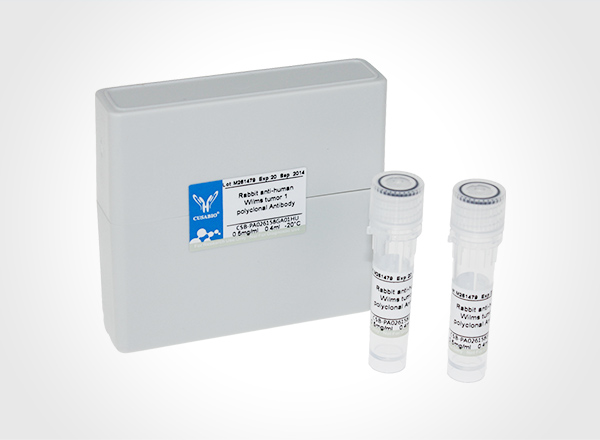
Upon receipt, store at -20°C or -80°C. Avoid repeated freeze.
Lead Time
Basically, we can dispatch the products out in 1-3 working days after receiving your orders. Delivery time maybe differs from different purchasing way or location, please kindly consult your local distributors for specific delivery time.
Note: All of our proteins are default shipped with normal blue ice packs, if you request to ship with dry ice, please communicate with us in advance and extra fees will be charged.
Usage
For Research Use Only. Not for use in diagnostic or therapeutic procedures.
Guanine nucleotide-binding proteins (G proteins) function as transducers downstream of G protein-coupled receptors (GPCRs) in numerous signaling cascades. The alpha chain contains the guanine nucleotide binding site and alternates between an active, GTP-bound state and an inactive, GDP-bound state. Signaling by an activated GPCR promotes GDP release and GTP binding. The alpha subunit has a low GTPase activity that converts bound GTP to GDP, thereby terminating the signal. Both GDP release and GTP hydrolysis are modulated by numerous regulatory proteins. Signaling is mediated via effector proteins, such as adenylate cyclase. Inhibits adenylate cyclase activity, leading to decreased intracellular cAMP levels. The inactive GDP-bound form prevents the association of RGS14 with centrosomes and is required for the translocation of RGS14 from the cytoplasm to the plasma membrane. Required for normal cytokinesis during mitosis. Required for cortical dynein-dynactin complex recruitment during metaphase.
Gene References into Functions
using cryo-electron microscopy, it is shown that the major interactions between activated rhodopsin and Gi are mediated by the C-terminal helix of the Gi alpha-subunit, which is wedged into the cytoplasmic cavity of the transmembrane helix bundle and directly contacts the amino terminus of helix 8 of rhodopsinPMID:29899450
3.5 A resolution cryo-electron microscopy structure of the mu-opioid receptor (muOR) bound to the agonist peptide DAMGO and nucleotide-free Gi; these results shed light on the structural features that contribute to the Gi protein-coupling specificity of the microORPMID:29899455
HL-60 neutrophil-like cells expressing Rap1a(G12V) or Radil have an elongated phenotype because of enhanced uropod adhesion as they attempt to migrate on fibronectin. This elongated phenotype driven by Rap1a(G12V) or Radil is reversed by Galphai1(Q204L), but not by WT Galphai1 expression, suggesting that Galphai-GTP also regulates adhesion in immune cells at the level of, or downstream of, Radil.PMID:29259127
complex between M2R and holo-Gi1 is an octamer comprising four copies of each, and that activation is accompanied by a decrease in the oligomeric size of Gi1PMID:27494760
GIV is a bifunctional modulator of G proteins; it serves as a guanine nucleotide dissociation inhibitor (GDI) for Galphas using the same motif that allows it to serve as a guanine-nucleotide exchange factor for GalphaiPMID:27621449
The authors demonstrate that Glu53, Glu60, and Glu118 of human Ngb are crucial for both the neuroprotective activity and interaction with Gi. Moreover, they show that Lys46, Lys70, Arg208, Lys209, and Lys210 residues of Gi are important for binding to human Ngb.PMID:27109834
GTP analogs leads to a rigid and closed arrangement of the Galphai1, whereas the apo and GDP-bound forms are considerably more open and dynamic.PMID:27298341
The results show ZIP9 is a specific Gi coupled-membrane AR mediating testosterone-induced MAP kinase and zinc signaling in PC3-ZIP9 cells.PMID:28219737
These data indicate that, unlike in taste cells, TAS2Rs couple to the prevalent G proteins, Galphai1, Galphai2, and Galphai3, with no evidence for functional coupling to Galphagust.PMID:28145731
testosterone rapidly increased whole-cell HCAEC SKCa and BKCa currents via a surface androgen receptor, Gi/o protein, and protein kinase APMID:28223151
These findings suggest that Gi1 interacts only with active GPCRs and that the well known high speed of GPCR signal transduction does not require preassembly between G proteins and GPCRs.PMID:28438833
Silencing of Galphai1 expression blocked the inhibitory effects of G-1 on prostate cancer cell growthPMID:27908592
biochemical and computational data indicate that the interactions between alpha5, alpha1, and beta2-beta3 are not only vital for GDP release during G protein activation, but they are also necessary for proper GTP binding (or GDP rebinding).PMID:27462082
In activation cluster I, helices alpha1 and alpha5 pack against strands beta1-beta3 to stabilize the nucleotide-bound states.PMID:26258638
The loss-of-function mutations of GNAI loci are rare or nonexistent in familial pituitary adenomas.PMID:25291362
Employed time-resolved FTIR difference spectroscopy to investigate the molecular reaction mechanisms of Galphai1. Mutants of the intrinsic arginine finger (Galphai1-R178S) affected exclusively the hydrolysis reaction.PMID:25979337
Data indicate that hydroxyurea (HU) induces SAR1 protein expression, which in turn activates gamma-globin expression, predominantly through the Gialpha/JNK/Jun pathway.PMID:24914133
We observed increased expression of Galphai1/3 in wounded human skin and keloid skin tissues, suggesting the possible involvement of Galphai1/3 in wound healing and keloid formation.PMID:25078664
Gi alpha subunit was found to be a key modulator of GABAB-receptors signaling in analgesia.PMID:25242222
AC5, by binding active Galphai1, interferes with G-protein deactivation and reassembly and thereby might sensitize its own regulation.PMID:23841650
Data indicate that focal adhesion kinase (FAK) activation and cell migration require Src, Gi/Go, COX-2 and LOXs activities.PMID:23179791
resistin contributes to the pro-inflammatory state of SMC by the up-regulation of CX3CL1 and CX3CR1 expression via a mechanism involving NF-kB, AP-1, and STAT1/3 transcription factors, (2) resistin employs TLR4 and Gi-protein signaling.PMID:23086480
leucine can directly facilitate insulin signaling through a Galphai protein-dependent intracellular signaling pathwayPMID:23404499
Data suggest that chemokine binding to CCX-CKR (a) recruits Gi proteins and beta-arrestin (beta-arr) with high affinity.PMID:23341447
This study support a role for RGS proteins as negative regulators of opioid supraspinal antinociception and also reveal a potential novel function of RGS proteins as positive regulators of opioid spinal antinociceptive pathways.PMID:23467353
Galpha(o) protein contributes to maximally efficient mu-opioid receptor signaling and antinociception in Galpha(o) null transgenic mice.PMID:21654736
CXCL12 signaling via CXCR7 is Gialpha independent.PMID:22070874
RGS14 can form complexes with GPCRs in cells that are dependent on Galpha(i/o) and these RGS14.Galpha(i1).GPCR complexes may be substrates for other signaling partners such as Ric-8APMID:21880739
analysis of a novel Gi, P2Y-independent signaling pathway mediating Akt phosphorylation in response to thrombin receptorsPMID:20586915
Data reveal a change in the repertoire of Galpha(i/o) subunits during T cell differentiation and suggest functional equivalence among Galpha(i/o) subunits irrespective of their relative abundance.PMID:20829352
The RET combination analysis revealed that stimulation of the alpha(2A)-adrenergic receptor (alpha(2A)AR) leads to the recruitment of GRK2 at a receptor still associated with the Galpha(i1)beta(1)gamma(2) complex.PMID:20696855
AGS3 receptor coupling to both Galphabetagamma and GPR-Galpha(i) offer additional flexibility for systems to respond and adapt to challenges and orchestrate complex behaviorsPMID:20716524
Nucleobindin 1 is a calcium-regulated guanine nucleotide dissociation inhibitor of G{alpha}i1.PMID:20679342
The chemotaxis signal pathway induced by chemokines CKbeta8 and CKbeta8-1 is mediated via the Gi/Go protein, phospholipase C (PLC) and protein kinase C delta (PKC delta).PMID:19951712
Structural determinants for GoLoco-induced inhibition of nucleotide release by Galpha subunitsPMID:11976690
An age-induced increase in G alpha i may have a role in depressing cardiac function in aged human atria.PMID:14576516
region of the third cytoplasmic loop of Dopamine D2 receptor is crucial for determining G(i) protein coupling specificity.PMID:14581469
Gi has a role in insulin attenuation of platelet functions by interfering with cAMP suppression along with IRS-1PMID:14602724
Gi, but not Gq or G12/13, signaling pathways are required for activation of Akt in plateletsPMID:14623889
Gi has a role in CXCL16 signaling that induces cell-cell adhesion and aortic smooth muscle cell proliferationPMID:14625285
the G(alpha)o/i-coupled cannabinoid receptor, by regulating the proteasomal degradation of Rap1GAPII, activates Rap1 to induce neurite outgrowth.PMID:15657046
Gialpha and Gbeta subunits both define selectivity of G protein activation by alpha2-adrenergic receptors.PMID:16371464
Nef protein of human immunodeficiency virus (HIV) reduces cell surface levels of eight different members of the CC- and CXC-family of Chemokine receptors (CKRs) by up to 92%.PMID:16775006
autotaxin induces uPA expression via the Gi-PI3K-Akt-NF-kappaB signaling pathway that might be critical for autotaxin-induced tumor cell invasion and metastasisPMID:17013094
Data show that Gi and RGS proteins provide biochemical control of androgen receptor exclusion from the cell nucleus.PMID:17416965
Selective induction of G alpha inhibiting subunit 1 (Gi alpha1) expression is a novel downstream event in hypertrophic signaling that may be a critical factor leading to cellular electrophysiological remodeling of the Ras transgenic mouse heart.PMID:17646583
Heretotrimeric G protein subunit Galphai is associated with mitochondria.PMID:18037379
The potency and efficacy of LPA-mediated inhibition of forskolin-stimulated adenylyl cyclase activity was enhanced in cells expressing RGSi G(i) (mutant) proteins as compared to RGSwt G(i).PMID:18083345
MUPP1 binds to the G protein-coupled MT(1) melatonin receptor and directly regulates its G(i)-dependent signal transductionPMID:18378672
analysis of structural determinants underlying the temperature-sensitive nature of a Galpha mutantPMID:18519563