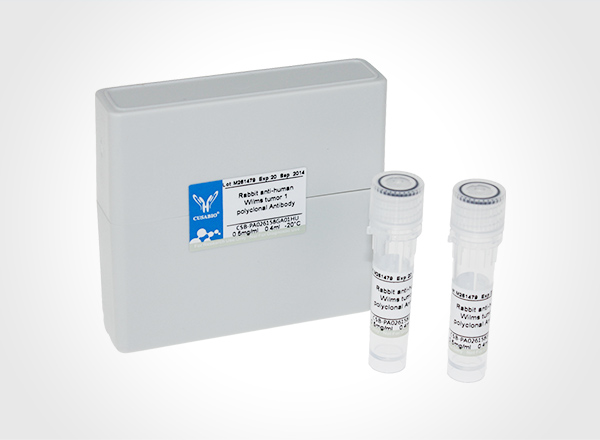
AGAL_HUMAN antibody; Agalsidase alfa antibody; Alpha D galactosidase A antibody; Alpha D galactoside galactohydrolase 1 antibody; Alpha D galactoside galactohydrolase antibody; Alpha gal A antibody; Alpha galactosidase A antibody; Alpha-D-galactosidase A antibody; Alpha-D-galactoside galactohydrolase antibody; Alpha-galactosidase A antibody; GALA antibody; Galactosidase; alpha antibody; GLA antibody; GLA protein antibody; Melibiase antibody
Raised in
Rabbit
Species Reactivity
Human
Immunogen
Recombinant Human Alpha-galactosidase A protein (32-429AA)
Immunogen Species
Homo sapiens (Human)
Conjugate
HRP
Clonality
Polyclonal
Isotype
IgG
Purification Method
>95%, Protein G purified
Concentration
It differs from different batches. Please contact us to confirm it.
Liquid
Note: We will preferentially ship the format that we have in stock, however, if you have any special requirement for the format, please remark your requirement when placing the order, we will prepare according to your demand.
Upon receipt, store at -20°C or -80°C. Avoid repeated freeze.
Lead Time
Basically, we can dispatch the products out in 1-3 working days after receiving your orders. Delivery time maybe differs from different purchasing way or location, please kindly consult your local distributors for specific delivery time.
Note: All of our proteins are default shipped with normal blue ice packs, if you request to ship with dry ice, please communicate with us in advance and extra fees will be charged.
Usage
For Research Use Only. Not for use in diagnostic or therapeutic procedures.
Catalyzes the hydrolysis of glycosphingolipids and participates in their degradation in the lysosome.
Gene References into Functions
GLA variants found included R118C (n = 2), D83N, and D313Y (n = 7); IVS6-22 C>T, IVS4-16 A>G, IVS2+990C>A, 5'UTR-10 C>T (n = 4), IVS1-581 C>T, IVS1-1238 G>A, 5'UTR-30 G>A, IVS2+590C>T, IVS0-12 G>A, IVS4+68A>G, IVS0-10 C>T, IVS2-81-77delCAGCC, IVS2-77delC. We found that patients with common heart disease did not contain a substantial number of patients with undiagnosed Fabry disease.PMID:29227985
GLA DNA screening protocols starting from the dialysis population and upstream extended to families of affected individuals may be an effective strategy to maximize the early identification of subjects with Fabry disease.PMID:30099469
family study with the classical phenotype of Fabry disease due to the novel nonsense mutation c.607G>T (p.E203X) of the GLA gene; the Fabry disease phenotype is highly variable in heterozygote females, even within the same familyPMID:28152533
It negatively regulates calcification of human aortic valve interstitial cells.PMID:29653899
Results from a study on gene variability markers in early-stage human embryos shows that GLA is a putative variability marker for the 3-day, 8-cell embryo stage.PMID:26288249
Presence of isolated heterozygous -10C >T SNP is not associated with clinically relevant symptoms or organ manifestations as seen in Fabry disease.PMID:29794742
The D313Y variant in the GLA gene was not Fabry disease causative in 2 Danish families.PMID:29037082
The mutation p.D313Y in the GLA gene may lead to organ manifestations and elevation of the Fabry-specific biomarker lyso-globotriaosylsphingosine.PMID:28276057
Four novel GLA pathogenic mutations are reported and evidence of pathogenicity of the D313Y mutation is provided.PMID:28988177
alpha-Galactosidase A genotype N215S does not lead to the development of a classical Fabry phenotype but induces a specific cardiac variant of Fabry disease mimicking nonobstructive hypertrophic cardiomyopathy.PMID:29018006
GLA c.196G>C variant is a genetic risk factor for cerebral small-vessel occlusion and non-cardioembolism in Japanese males but not in females.PMID:28275245
we presented the clinical characters of a Chinese FD pedigree mimicking familial episodic pain. Furthermore, our finding suggests that a novel double mutation of GLA (c.273_276del TGAT in cis with c.281G>T) is associated with FDPMID:27531472
Results showed that most Fabry disease patients carrying GLA IVS4+919A did not show abnormal cardiac phenotypes. The near-absence of GLA IVS4+919A in heart disease cohort suggested that this variant is not a frequent cause of overt heart diseases in Taiwan.PMID:28377241
This longitudinal Fabry Registry study analyzed data from patients with Fabry disease to determine the incidence and type of severe clinical events following initiation of enzyme replacement therapy (ERT) with agalsidase beta, as well as risk factors associated with occurrence of these eventsPMID:27510433
alpha-galactosidase A mutation, IVS4-type Fabry disease has features similar to those of classic Fabry disease and a higher frequency of deep white matter hyperintensities and a higher incidence of infarctions and pulvinar signs than in healthy controlsPMID:26869469
We demonstrate that the wild-type sequence harbors an hnRNP A1 and hnRNP A2/B1-binding exonic splicing silencer (ESS) overlapping the 5'splice site (5'ss) that prevents pseudoexon inclusion.we demonstrate that splice switching oligonucleotide (SSO) mediated blocking of the pseudoexon 3'ss and 5'ss effectively restores normal GLA splicingPMID:27595546
Four patients had non-amenable mutant forms of a-Gal based on the validated cell-based assay conducted after treatment initiation and were excluded from primary efficacy analyses only.PMID:27834756
Mesenchymal stem cells with reduced GLA activity are prone to apoptosis and senescence due to impaired autophagy and DNA repair capacity.PMID:28098348
we review the various types of GLA variants and recommend that pathogenicity be considered only when associated with elevated globotriaosylceramide in disease-relevant organs and tissues as analyzed by mass spectrometry.PMID:27195818
findings revealed the alternative splicing mechanism of GLA (IVS4+919G>A), and a potential treatment for this specific genetic type of Fabry disease by amiloride in the futurePMID:28430823
Results found a novel heterozygous stop codon mutation in exon 1 of the GLA gene in female patients with Fabry Disease with methylation in the non-mutated allele thought to be associated with the clinical severity of the disease.PMID:28087245
Study described the demographic data, wide clinical spectrum of phenotypes, and GLA mutation spectrum of Fabry disease in Korea. Most of the patients had classical Fabry disease, with a 4 times higher incidence than that of late-onset Fabry disease, indicating an underdiagnosis of mild, late-onset Fabry disease.PMID:28723748
we reviewed other small molecules that were reported to have a stabilizing effect on some GLA missense mutations in vitro and might be developed to act in synergy or as an alternative to 1-deoxygalactonojirimycinPMID:27916943
No pathogenic mutations in the coding regions of the GLA gene were identified in this group of patients and thus no Fabry disease was found in this study.PMID:26981927
High desphospho-uncarboxylated matrix Gla protein level, reflecting a poor vitamin K status, seems to be associated with kidney damage and may be also a marker of cardiovascular risk in CKD patientsPMID:27100101
Similar central nervous system manifestations in patients with the IVS4 mutation or classical Fabry mutations.PMID:28166746
Case Report: Kidney transplantation from a mother with unrecognized Fabry disease to her son with low alpha-galactosidase A activity.PMID:26971403
p.M187R GLA mutation in Fabry disease causes a severe systemic and ophthalmologic phenotype, in both male and female patients.PMID:28225726
The results of the current study suggest that the GLA haplotype D313Y does not lead to severe organ manifestations as seen in genotypes known to be causal for classical Fabry disease.PMID:27059467
We report a case of Fabry disease with a p.R301X (c.901 C>T) mutation in a 39-year-old man who was being treated for chronic sclerosing glomerulonephritis for 2 years. Family screening tests showed that the proband's mother, sister, and daughter had the same mutation with different phenotypes.PMID:27156739
Case Report: hypertrophic obstructive cardiomyopathy with Fabry disease with the GLA E66Q mutation.PMID:27160240
We conclude that a mild GLA variant is typically characterized by high residual enzyme activity and normal biomarker levels. We found evidence that these variants can still be classified as a distinctive, but milder, sub-type of FD.PMID:26415523
Fabry disease, an X-linked disorder of glycosphingolipids that is caused by mutations of the GLA gene that codes for alpha-galactosidase A, leads to dysfunction of many cell types and includes a systemic vasculopathy.PMID:26564084
Study describes 5 novel mutations found in the GLA gene of patients with clinical diagnosis of Fabry disease.PMID:26691501
The present study confirms the heterogeneity of mutations in Fabry disease and the importance of molecular analysis for genetic counseling, female heterozygotes detection as well as therapeutic decisions.PMID:26297554
GLA gene variations correlate with globotriaosylceramide and globotriaosylsphingosine analog levels in urine and plasmaPMID:26070511
results directly implicated the GLA mutation p.E66Q as the genetic etiology of the Chinese renal variant FD pedigree.PMID:26456105
This study indicated that the p.E66Q variant of GLA does not affect the progression of chronic kidney disease.PMID:24718812
Thus, inheritance of the CIH caused an mRNA deregulation altering the GLA expression pattern, producing a tissue glycolipid storage.PMID:26334996
data strongly suggest that the GLA p.(Arg118Cys) variant does not segregate with Fabry disease clinical phenotypes in a Mendelian fashion, but might be a modulator of the multifactorial risk of cerebrovascular diseasePMID:25468652
In Fabry disease patients, the alpha-galactosidase A-10T allele appears to be causal for neurological manifestations.PMID:25423912
Some clinical cases of some members of a Sicilian family to express phenotypical variability of Anderson-Fabry disease in subjects with the same genetic mutation in alpha galactosidase A gene, are reported.PMID:25281798
Case Report: immunohistologically detected synaptopodin upregulation in foamy podocytes in Fabry disease due to novel alpha-galactosidase A mutation.PMID:25295576
These data confirmed that the specific approach can effectively contribute to the identification of pathological mutations in GLA.PMID:25382311
The novel mutation p.M187R/g7219 T>G is associated with a particularly malignant cardiac phenotype in males and females over 40 years.PMID:24679964
OC follows a gene duplication strategy while MGP variability was obtained mostly by the use of multiple promoters and alternative splicing, leading to proteins with additional functional characteristics and alternative gene regulatory pathways. [review]PMID:25068814
It is clear that a certain intronic haplotype in males with cryptogenic stroke is associated with reduced GLA expression and function.PMID:25101867
GLA p.E66Q mutation is a genetic risk factor for cerebral small-vessel occlusion in elderly JapanesePMID:23724928
residues important for expression of the GLA activityPMID:24386359
A Fabry disease patient and his daughter had the mutation c.493 G > C in the 3d exon of the GLA gene. D165H substitution affects protein folding. This highly conserved AA may be a key amino acid for enzyme functionality.PMID:24398019