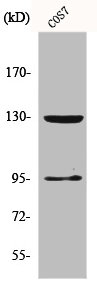
Synthesized peptide derived from the C-terminal region of Human GABAB R1.
Immunogen Species
Homo sapiens (Human)
Conjugate
Non-conjugated
Isotype
IgG
Purification Method
The antibody was affinity-purified from rabbit antiserum by affinity-chromatography using epitope-specific immunogen.
Concentration
It differs from different batches. Please contact us to confirm it.
Buffer
Liquid in PBS containing 50% glycerol, 0.5% BSA and 0.02% sodium azide.
Tested Applications
WB, IHC, ELISA
Storage
Upon receipt, store at -20°C or -80°C. Avoid repeated freeze.
Lead Time
Basically, we can dispatch the products out in 1-3 working days after receiving your orders. Delivery time maybe differs from different purchasing way or location, please kindly consult your local distributors for specific delivery time.
Note: All of our proteins are default shipped with normal blue ice packs, if you request to ship with dry ice, please communicate with us in advance and extra fees will be charged.
Usage
For Research Use Only. Not for use in diagnostic or therapeutic procedures.
Component of a heterodimeric G-protein coupled receptor for GABA, formed by GABBR1 and GABBR2. Within the heterodimeric GABA receptor, only GABBR1 seems to bind agonists, while GABBR2 mediates coupling to G proteins. Ligand binding causes a conformation change that triggers signaling via guanine nucleotide-binding proteins (G proteins) and modulates the activity of down-stream effectors, such as adenylate cyclase. Signaling inhibits adenylate cyclase, stimulates phospholipase A2, activates potassium channels, inactivates voltage-dependent calcium-channels and modulates inositol phospholipid hydrolysis. Calcium is required for high affinity binding to GABA. Plays a critical role in the fine-tuning of inhibitory synaptic transmission. Pre-synaptic GABA receptor inhibits neurotransmitter release by down-regulating high-voltage activated calcium channels, whereas postsynaptic GABA receptor decreases neuronal excitability by activating a prominent inwardly rectifying potassium (Kir) conductance that underlies the late inhibitory postsynaptic potentials. Not only implicated in synaptic inhibition but also in hippocampal long-term potentiation, slow wave sleep, muscle relaxation and antinociception (Probable). Activated by (-)-baclofen, cgp27492 and blocked by phaclofen.; Isoform 1E may regulate the formation of functional GABBR1/GABBR2 heterodimers by competing for GABBR2 binding. This could explain the observation that certain small molecule ligands exhibit differential affinity for central versus peripheral sites.
Gene References into Functions
GABA B receptor expression in myometriumPMID:30343129
Results show that pregnancy anxiety is associated with differential DNA methylation patterns in newborns and, reveal a potential role for GABBR1 methylation in association with stress in newborns.PMID:29026448
GABAB receptor modulation in Periodontal Ligament cells might become an important target in immunoinflammatory settings.PMID:27812916
There was no statistically significant association for the two SNPs of the GABBR1 gene (rs29230 and rs29267). However, a significant difference between AUD individuals and controls was observed at genotype level for rs2900512 of GABBR2 gene.PMID:28118741
The combined analysis confirmed evidence of genome-wide significant associations in the Han Chinese population for three loci, at 2p16.1 (rs1051061, in an exon of VRK2, P=1.14 x 10⁻¹², odds ratio (OR)=1.17), 6p22.1 (rs115070292 in an intron of GABBR1, P=4.96 x 10⁻¹⁰, OR=0.77) and 10q24.32 (rs10883795 in an intron of AS3MT, P=7.94 x 10⁻¹⁰, OR=0.87; rs10883765 at an intron of ARL3, P=3.06 x 10⁻⁹, OR=0.87).PMID:27922604
Genotype and allele frequencies of rs29230 in GABR1 were significantly different between cases and controls, especially for male patients, for obstructive sleep apnea risk in Chinese Han population.PMID:27509181
presynaptic gamma-aminobutyric acid type B receptor deficits contribute to altered neuronal excitability in fragile X syndromePMID:28213518
Results show that GABBR1 minor genotypes/alleles were protective against risk for alcoholism in 3 ethnically diverse cohorts.PMID:26727527
Cell surface ubiquitination precedes endocytosis, after which USP14 acts as an ubiquitin-binding protein that targets the ubiquitinated GABA B receptor to lysosomal degradation and promotes its deubiquitination.PMID:26817839
GABA(B)R stimulation promotes chemotaxis in RBL cells which is dependent on signaling via PI3-K/Akt, Src kinases and on rearrangement of both microtubules and actin cytoskeleton.PMID:25725285
GABBR1 receptors are expressed in aortic smooth muscle cells and regulate the [Ca(2+)]i via a Gi/o-coupled receptor pathway and a phospholipase C activation pathway.PMID:24682435
the first report of abnormal levels of GABA+ and Glx in mood-related brain regions of women with PMDD, indicating that dysregulation of the amino acid neurotransmitter system may be an important neurobiological mechanism in the pathogenesis of PMDD.PMID:25465316
Chronic alcohol altered exon/intron expression and splice junction levels.PMID:24209778
GABBR1 protein involved in phenylthiourea bitter taste detection.PMID:24006265
The endoplasmic reticulum retention signal of GBR1 is not part of the core coiled-coil structure, suggesting that it is sterically shielded by GBR2 upon heterodimer formation.PMID:24778228
Authors suggest GABBR1, GABA receptor B1, is implicated in schizophrenia based on a Human endogenous retrovirus long terminal repeat (HERV-W LTR) in the regulatory region of GABBR1.PMID:23391219
GABA may inhibit the growth of cholangiocarcinoma QBC939 cells through the GABAB receptor, and the anti-cancer effects may be partly mediated via the JAK/STAT3 pathwayPMID:23007731
Activation of GABA(B) receptors significantly inhibits Akt/GSK-3 signaling in a beta-arrestin-dependent pathway.PMID:23192081
We have discovered main triplets of amino acid residues in the GABAB1 receptor and several other neural receptors which seem to come from immunoglobulin chains and appear also as homologies in receptor heteromers.PMID:21932037
Results show that GABA(B) receptors R1 and R2 must be activated for the modulation of N-type (Ca(v)2.2) calcium channels by analgesic alpha-conotoxins Vc1.1 and RgIA.PMID:22613715
This study does not support that GBR1 is involved in essential tremor.PMID:22321358
Long interval intracortical inhibition is significantly reduced and the cortical silent period is significantly shortened in patients with succinic semialdehyde dehydrogenase (SSADH) deficiency compared to heterozygous parents and control groups.PMID:22722631
The GBR2 ectodomain directly interacts with the GBR1 ectodomain to increase agonist affinity by selectively stabilizing the agonist-bound conformation of GBR1.PMID:22660477
The present meta-analysis suggests that GABBR1 G1465A polymorphism is associated with the risk of temporal lobe epilepsy.PMID:21621395
The results of this study provided evidence of Gabbr1 Deficit in schizophrenia and mood disorders.PMID:21303731
Data suggest that the GABAB1 intron 4 containing N-terminal truncation is necessary for the inhibitory action of the new splice variants.PMID:21124972
This chapter summarizes current understanding of the molecular function of the GABA(B) receptor and recent developments in the identification of allosteric modulators.PMID:20655478
This chapter focuses on the recently emerged mechanisms of GABA(B) receptor exocytosis, endocytosis, recycling, and degradation.PMID:20655479
The role that this phosphorylation plays in determining GABA(B)R effector coupling and their trafficking within the endocytic pathway, is discussed.PMID:20655480
The relationships between the GABA(B) receptor, its effectors and associated proteins that mediate GABA(B) receptor function within the brain, is described.PMID:20655481
Current knowledge on a new role of GABA(B)R as an ambience-dependent regulator of synaptic signaling, is presented.PMID:20655482
This chapter reviews data suggesting that neurogliaform cells produce electrophysiological effects onto other neurons in the cortical cell network via GABA(B)R-mediated volume transmission that is highly regulated by GAT1 activity.PMID:20655483
The overexpression of one particular gene encoding for G-protein-activated inward rectifying potassium type 2 (GIRK2) channel subunit and its coupling to GABA(B) receptors may contribute to a range of mental and functional disabilities in Down syndrome.PMID:20655490
Significant reductions in GABA(B) receptor subunit 1 density are demonstrated in cingulate cortex and fusiform gyrus from patients with autism compared to controls.PMID:20557420
GABAB1 subunits interact with DGCR6 in the endoplasmic reticulum prior to their recruitment into functional GABAB receptors.PMID:20036641
Data show that GABA is a potent chemoattractant of HUCB stem/progenitor cells specifically through GABA(B)R activation.PMID:19327013
variants of GABBR1 and GABBR2 are associated with nicotine dependence in European- and African-American populationsPMID:19763258
Alterations in inhibitory synaptic transmission through GABA(B)R1 appears to affect differentially certain hippocampal circuits in a population of epileptic patients and could contribute to the pathophysiology of temporal lobe epilepsy.PMID:12115687
The intracellular loops of the GB2 subunit are crucial for G-protein coupling of the heteromeric gamma-aminobutyrate B receptor.PMID:12130687
evidence that the translated polymorphism of exon 7 may be functionally meaningful and impact cortical EEG oscillationsPMID:12555235
The GABA(B[1]) polymorphism (G1465A) confers a highly increased susceptibility to temporal lobe epilepsy. Moreover, it seems to influence the severity of this common epileptic disorderPMID:12601092
Post hoc analyses showed an association between EEG phenotype and exon 7 genotype in normal subjects only.PMID:12645817
GABBR1 gene might not be a susceptibility gene for childhood absence epilepsy at least in the Chinese populationPMID:12770685
GHB, administered in vivo, reduces MAP kinase phosphorylation via a direct activation of GABAB receptors by GHB, but was found ineffective on MAP kinase phosphorylation in brain slicesPMID:12923192
Increased expression of GABA(B) receptor subtype 1 indicates augmented presynaptic inhibition of glutamate release as a possible protective mechanism in temporal lobe epilepsy.PMID:14625043
Altered GABA(B1a) receptor mRNA expression occurs in human temporal lobe epilepsy; possibly the observed changes may also serve to counteract ongoing hyperexcitability.PMID:14643764
GABAB receptor cell surface stability is modulated by phosphorylation and chronic agonist treatmentPMID:14707142
GABA(B) receptor subunit GABA(B)R1 is found on the same neurons and follows the same distribution patterns in the basal ganglia as the GABABR2 receptor subunit.PMID:14961561
Association of the GABA(B)R1 with the GABA(A) receptor gamma2S subunit robustly promotes cell surface expression of GABA(B)R1 in the absence of GABA(B)R2, that is usually required for efficient trafficking of GABA(B)R1 to the cell surface.PMID:14966130
The GABA(B) receptor may be present as a heterodimer with subunits of GABA(B1) and GABA(B2) in the human colon.PMID:14978362
Highly expressed in brain. Weakly expressed in heart, small intestine and uterus. Isoform 1A: Mainly expressed in granular cell and molecular layer. Isoform 1B: Mainly expressed in Purkinje cells. Isoform 1E: Predominantly expressed in peripheral tissues