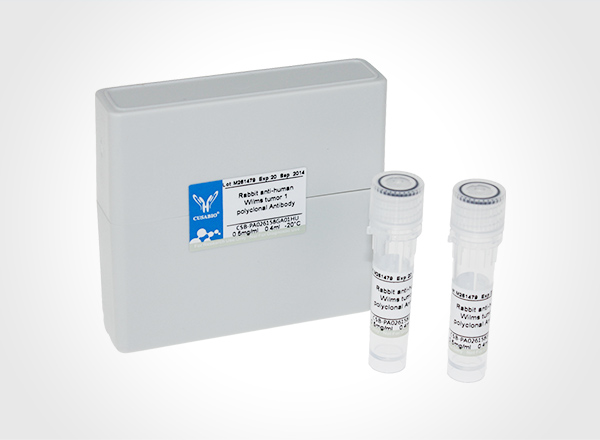
Liquid
Note: We will preferentially ship the format that we have in stock, however, if you have any special requirement for the format, please remark your requirement when placing the order, we will prepare according to your demand.
Upon receipt, store at -20°C or -80°C. Avoid repeated freeze.
Lead Time
Basically, we can dispatch the products out in 1-3 working days after receiving your orders. Delivery time maybe differs from different purchasing way or location, please kindly consult your local distributors for specific delivery time.
Note: All of our proteins are default shipped with normal blue ice packs, if you request to ship with dry ice, please communicate with us in advance and extra fees will be charged.
Usage
For Research Use Only. Not for use in diagnostic or therapeutic procedures.
Ubiquitin-like modifier involved in intra-Golgi traffic. Modulates intra-Golgi transport through coupling between NSF activity and SNAREs activation. It first stimulates the ATPase activity of NSF which in turn stimulates the association with GOSR1. Involved in autophagy. Plays a role in mitophagy which contributes to regulate mitochondrial quantity and quality by eliminating the mitochondria to a basal level to fulfill cellular energy requirements and preventing excess ROS production. Whereas LC3s are involved in elongation of the phagophore membrane, the GABARAP/GATE-16 subfamily is essential for a later stage in autophagosome maturation.
Gene References into Functions
This study reveals the important role of SERP1/Ysy6 and Atg8 in endoplasmic reticulum stress response and virulence in Candida albicans.PMID:29544880
Mechanism of cargo-directed Atg8 conjugation during selective autophagy has been described.PMID:27879200
rs12599322 in ATG8 was significantly associated with higher DNA damage levels in Chinese population.PMID:28512061
describe a protocol for the reconstituted conjugation systems for mammalian Atg8 homologs in vitro using purified recombinant Atg proteins and liposomes.PMID:25181299
Using X-ray crystallography and NMR spectroscopy, the structural transition centered on the C-terminus of GATE-16 protein was identified.PMID:26284781
Results showed that the mRNA and protein levels of GABARAPL1 and GATE-16 were decreased in the cerebellum of multiple system atrophy relative to controlsPMID:22959883
Lipidation of the LC3/GABARAP family of autophagy proteins relies on a membrane-curvature-sensing domain in Atg3.PMID:24747438
these results suggest that TRPML3 plays a role in autophagosome maturation through the interaction with GATE16, by providing Ca(2+) in the fusion process.PMID:24269818
low GABARAPL2/GATE-16 expression is associated with an immature myeloid leukemic phenotype and these proteins are necessary for neutrophil differentiation of APL cellsPMID:23891751
TP53INP1, a tumor suppressor, interacts with LC3 and ATG8-family proteins through the LC3-interacting region (LIR) and promotes autophagy-dependent cell death.PMID:22421968
ATG8 proteins act as scaffolds for assembly of the ULK complex at the phagophorePMID:23043107
Legionella pneumophila could interfere with autophagy by using the bacterial effector protein RavZ to directly uncouple Atg8 proteins attached to phosphatidylethanolamine on autophagosome membranes. [RavZ]PMID:23112293
Binding of the Atg1/ULK1 kinase to the ubiquitin-like protein Atg8 regulates autophagyPMID:22885598
identified 14 TBC domain-containing Rab GAPs that bind directly to ATG8 modifiers and that colocalize with LC3-positive autophagy membranes in cellsPMID:22354992
ORP7 negatively regulates GS28 protein stability via sequestration of GATE-16, and may mediate the effect of 25-OH on GS28 and Golgi function.PMID:21669198
The GATE-16 N termini in general and specific residues needed for the fusion activity are essential for the proteins role in autophagosome biogenesis.PMID:21497758
Atg4B possessed the broadest spectrum against all substrates, followed by Atg4A for ATG8 substratesPMID:21177865
The results indicate the essential role of the Atg8 system in the proper development of autophagic isolation membranes in mice.PMID:18768753
The autophagy-unrelated association of GFP-LC3 with protein aggregates is dependent on its interaction with p62.PMID:18776740
Ubiquitous. Expressed at high levels in the brain, heart, prostate, ovary, spleen and skeletal muscle. Expressed at very low levels in lung, thymus and small intestine.