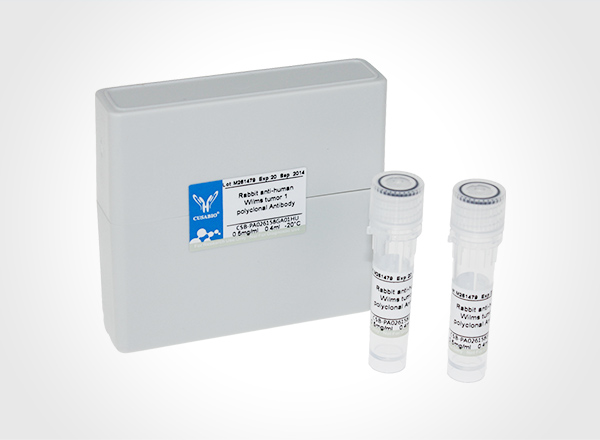
Liquid
Note: We will preferentially ship the format that we have in stock, however, if you have any special requirement for the format, please remark your requirement when placing the order, we will prepare according to your demand.
Upon receipt, store at -20°C or -80°C. Avoid repeated freeze.
Lead Time
Basically, we can dispatch the products out in 1-3 working days after receiving your orders. Delivery time maybe differs from different purchasing way or location, please kindly consult your local distributors for specific delivery time.
Note: All of our proteins are default shipped with normal blue ice packs, if you request to ship with dry ice, please communicate with us in advance and extra fees will be charged.
Usage
For Research Use Only. Not for use in diagnostic or therapeutic procedures.
Stores iron in a soluble, non-toxic, readily available form. Important for iron homeostasis. Iron is taken up in the ferrous form and deposited as ferric hydroxides after oxidation. Also plays a role in delivery of iron to cells. Mediates iron uptake in capsule cells of the developing kidney.
Gene References into Functions
Mossbauer spectra of human liver ferritin and its pharmaceutical analogues Ferrum Lek and Maltofer(R) measured at various temperatures, are reported.PMID:27372204
Determining serum ferritin is a convenient and nonexpensive method to determine the outcome of the treatment of the cases with oral squamous cell carcinoma . Its potential as prognostic marker could not be overlookedPMID:28862225
The functional significance of the observed patch of carboxylate side chains and resulting metallocluster for biomineralization emerges from the lower iron oxidation rate measured in the E60AE61AE64A variant of human L-ferritin, leading to the proposal that the observed metallocluster corresponds to the suggested, but yet unobserved, nucleation site of L-ferritinPMID:28202724
The clinical measurement of ferritin in cerebrospinal fluid is a better biomarker than serum levels of ferritin for diagnosing and assessing the progression of amyotrophic lateral sclerosis patients.PMID:27804118
Our patient's transferrin saturation was 27% and HFE analysis revealed that she had neither H63D nor C282Y mutations that are known to predispose to hemochromatosis. Besides being an iron storage protein, ferritin is also one of the so-called acute phase proteinsPMID:28636169
This is the first Australian report of the c.-167 C>T mutation in a large family with multiple affected individuals.PMID:27096259
Baseline serum ferritin (SF) did not influence bloodstream infections (BSIs), but higher levels resulted in more invasive fungal infections (IFIs)PMID:28585071
High serum ferritin expression is associated with metabolic syndrome.PMID:27390880
Hepatitis E virus ORF1 encoded macro domain protein interacts with light chain subunit of human ferritin and inhibits its secretion.PMID:27170377
indicate an important role of ferritin light chains in neurodegenerationPMID:26994418
This study demostrated that FTL mutation progressive brain iron dysregulation, morphological signs of early neurodegeneration and motor coordination deficits showPMID:25447222
FTL expression was higher in glioblastoma than in low-grade glioma, and decreased expression of FTL correlated with increased survival in glioblastoma patients.PMID:26871431
FTL gene mutation and persistent hyperferritinemia without iron deficiency anemia after phlebotomyPMID:25720123
Ferritin plasma levels increased significantly following stem cell transplantation in graft rejection patients.PMID:26611853
Single nucleotide polymorphisms in HAMP, BMP2, FTL and SLC40A1 genes have phenotype-modifying roles in hereditary hemochromatosis type 1.PMID:25976471
Genome-wide association study identifies variants in PMS1 associated with serum ferritin in a Chinese population.PMID:25162662
Urine ferritin levels are elevated significantly in systemic lupus erythematosus and correlate with disease activity.PMID:22871034
findings expand the genetic and clinical diversity of neuroferritinopathy and suggest CSF ferritin levels as a novel potential biochemical marker for the diagnosis of neuroferritinopathy.PMID:24825732
Plasma hepcidin-25 and ferritin light chain levels correlate with a malignant breast cancer diagnosis.PMID:24306042
provide a new mechanism for selective autophagy of ferritin and reveal a previously unappreciated role for autophagy and NCOA4 in the control of iron homeostasis in vivoPMID:25327288
Genetic testing confirmed the diagnosis of hereditary hyperferritinemia cataract syndrome (HHCS), demonstrating a C39>G (c.-161C>G) mutation into FTL gene.PMID:24983587
A c.-171C>G mutation in the iron-regulatory element of FTL was found in 2 members of a Spanish family with hyperferritinemia-cataract syndrome.PMID:24022025
Elevated cerebrospinal ferritin reliably (but unspecifically) indicates severe central nervous system disease.PMID:24821637
Through combining serum ferritin and MS spectral data, the diagnosis sensitivity and specificity of our model for prewarning severe aGVHD (III~IV degrees aGVHD) before transplant all increased to 90.0%PMID:24195075
Increased levels of ferritin light chain protein is associated with breast cancer.PMID:23969999
Together, our results suggest that iron can increase gamma-secretase activity through promoting the level of FTL that interacts with and stabilizes PEN-2PMID:23685131
Elevated levels of ferritin are associated with type 2 diabetes mellitus.PMID:23381919
Data show the transcriptional regulation of the human ferritin gene by coordinated regulation of Nrf2 and protein arginine methyltransferases PRMT1 and PRMT4.PMID:23699174
Noncoding G-to-T transversion (c.-168G>T) located in the iron response element (IRE) of the gene coding for ferritin light chain (FTL) cosegregated with cataract in the family.PMID:23592921
The Badalona 36C > U and Heidelberg 52 G > C mutations within the L-ferritin Iron-Responsive Element only mildly alter the binding capacity of the Iron Regulatory Proteins but are still causative for hyperferritinaemia cataract syndrome.PMID:23421845
Elevation in ferritin is associated with response to trastuzumab in breast cancer.PMID:23300545
Plasma levels of FLT and S100A9 proteins are up-regulated and CNDP1 levels are down-regulated in patients with glioblastoma.PMID:23029420
data demonstrate an enhanced propensity of mutant ferritin to undergo iron-catalyzed oxidative damage and support this as a mechanism causing disruption of ferritin structure and iron mishandling that contribute to pathology of hereditary ferritinopathyPMID:22348978
Two novel missense L-ferritin variants are associated with hyperglycosylation, p.Gln26Ile and p.Ala27Val, and with benign hyperferritinemia in two unrelated patients.PMID:22535864
High ferritin is associated with poor treatment response in hematological neoplasms.PMID:22248276
The data strongly suggest that FTL and SCCA1 may serve as coreceptors in HBV cellular attachment and virus entry into hepatocytes.PMID:22359459
Molecular genetic analysis revealed point mutations within the FTL IRE.PMID:22020773
genetic variations in the HFE gene, but not plasma ferritin may have a role in coronary heart disease in ChinesePMID:21696736
Genetic analysis revealed mutation G32A in Pedigree 1 and mutation G32T in Pedigree 2, both heterozygous and located in the iron-responsive element of the ferritin light chain mRNA in hyperferritinemia cataract syndrome.PMID:21907119
FTL is a target gene of the BACH1 transcription factor according to ChIP-seq analysis in HEK 293 cells.PMID:21555518
In the family with hyperferritinemia cataract syndrome a G-->C heterozygous mutation at position +32 of FTL was identified.PMID:21541272
Somatic mutations in the iron response elements (IRE) of the L-ferritin gene are infrequent in the age-related cataract.PMID:21139976
This protein has been found differentially expressed in thalami from patients with schizophrenia.PMID:20471030
biochemical and crystallographic characterization of pathogenic FTL mutant p.Phe167SerfsX26 showing that it is a functional ferritin with an altered conformation of the C terminusPMID:20159981
This protein has been found differentially expressed in the anterior cingulate cortex from patients with schizophreniaPMID:20381070
indicate that cellular iron imbalance and oxidative damage produced by the over-expression in of two pathogenic L-ferritin variants are primary causes of cell death, while aggregate formation is a secondary effectPMID:19781644
the x-ray crystallographic structure and report functional studies of ferritin homopolymers formed from the mutant FTL polypeptidePMID:19923220
Finding not only supports direct evidence for a regulatory role of L-ferritin in neuroectodermal cell pigmentation but also integrates a new player within a complicated network governing iron homeostasis in the dopamine neurons of substantia nigra.PMID:19318681
The genetic defects in the FTL gene are unlikely to be a common cause of typical PD, at least in a North America population.PMID:12459518