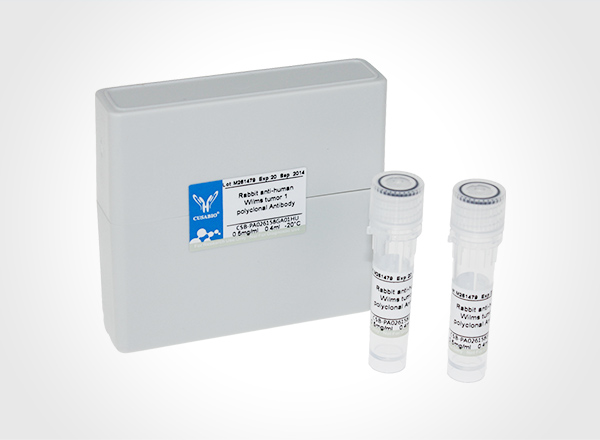
Liquid
Note: We will preferentially ship the format that we have in stock, however, if you have any special requirement for the format, please remark your requirement when placing the order, we will prepare according to your demand.
Storage
Upon receipt, store at -20°C or -80°C. Avoid repeated freeze.
Lead Time
Basically, we can dispatch the products out in 1-3 working days after receiving your orders. Delivery time maybe differs from different purchasing way or location, please kindly consult your local distributors for specific delivery time.
Note: All of our proteins are default shipped with normal blue ice packs, if you request to ship with dry ice, please communicate with us in advance and extra fees will be charged.
Usage
For Research Use Only. Not for use in diagnostic or therapeutic procedures.
this study shows FGFRL1 promotes ovarian cancer progression by crosstalk with Hedgehog signalingPMID:29675438
FGFRL1 is a transmembrane receptor that can induce the fusion of CHO cells to multinucleated syncytia. This cell fusion activity has been attributed to the extracellular Ig3 domain of the receptor. The Ig3 domain from humans, mice, chicken and fish stimulates fusion of CHO cells, while the Ig3 domain from lancelet and sea urchin does not.PMID:28596102
Both in vitro and in vivo studies determined that miR-210 promoted hepatocellular carcinoma (HCC), angiogenesis, and the corresponding mechanism was identified to be the direct targeting and inhibition of fibroblast growth factor receptor-like 1 (FGFRL1) expressionPMID:27666683
functional evidence for a novel FGFRL1 poly-miRTS rs4647940 in a previously known 4p16.3 locus, and experimental and clinical genetics studies have shown both FGFRL1 and hsa-miR-140-5p are important for bone formation.PMID:25941324
Cell-cell fusion induced by the Ig3 domain of receptor FGFRL1PMID:26025674
The signaling complex appears to integrate the input from FGFR and EphA4, and release the output signal through FRS2alpha.PMID:20184660
study identified a novel region of deletion mapping to 4p16.3 in 15 percent of bladder tumors and 24 percent of bladder cancer cell lines; FGFRL1, which maps within this region, was investigated as putative deletion target; average FGFRL1 protein expression was lower in bladder tumors compared to normal tissue, but downregulation was independent from 4p16.3 LOH statusPMID:23775577
Interaction of FGFRL1 with Spred1 increases the proportion of the receptor at the plasma membrane.PMID:21616146
an important role for miR-210 as a tumor-suppressive microRNA with effects on cancer cell proliferationPMID:21044961
FGFRL1 is capable of inducing syncytium formation of heterologous cells in vitro.PMID:20851884
FGFRL1 is indeed a decoy receptor for FGFs.PMID:19920134
analysis of FGF18 and FGFR5(FGFRL1) expression in primary endothelial cells and vascular smooth muscle cellsPMID:16019430
Screening of 241 different human tumors with the help of a cancer profiling array suggested major alterations in the relative expression of FGFRL1 in ovarian tumorsPMID:16273302
The extracellular domain of recombinant FGFRL1 promoted cell adhesion, but not cell spreading. Adhesion was mediated by heparan sulfate glycosaminoglycans located at the cell surface.PMID:18061161
mutant FGFRL1 contributes to the skeletal malformations of the patientPMID:19056490
Show
More
Hide
All
Subcellular Location
Membrane; Single-pass type I membrane protein. Note=Predominantly localized in the plasma membrane but also detected in the Golgi and in secretory vesicles.
Tissue Specificity
Expressed preferentially in cartilaginous tissues and pancreas. Highly expressed in the liver, kidney, heart, brain and skeletal muscle. Weakly expressed in the lung, small intestine and spleen.