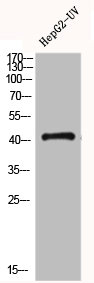
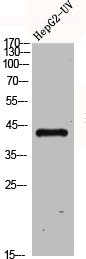
Synthesized peptide derived from the Internal region of Human GPR120.
Immunogen Species
Homo sapiens (Human)
Conjugate
Non-conjugated
Isotype
IgG
Purification Method
The antibody was affinity-purified from rabbit antiserum by affinity-chromatography using epitope-specific immunogen.
Concentration
It differs from different batches. Please contact us to confirm it.
Buffer
Liquid in PBS containing 50% glycerol, 0.5% BSA and 0.02% sodium azide.
Tested Applications
WB, IF, ELISA
Storage
Upon receipt, store at -20°C or -80°C. Avoid repeated freeze.
Lead Time
Basically, we can dispatch the products out in 1-3 working days after receiving your orders. Delivery time maybe differs from different purchasing way or location, please kindly consult your local distributors for specific delivery time.
Usage
For Research Use Only. Not for use in diagnostic or therapeutic procedures.
G-protein-coupled receptor for long-chain fatty acids (LCFAs) with a major role in adipogenesis, energy metabolism and inflammation. Signals via G-protein and beta-arrestin pathways. LCFAs sensing initiates activation of phosphoinositidase C-linked G proteins GNAQ and GNA11 (G(q)/G(11)), inducing a variety of cellular responses via second messenger pathways such as intracellular calcium mobilization, modulation of cyclic adenosine monophosphate (cAMP) production, and mitogen-activated protein kinases (MAPKs). After LCFAs binding, associates with beta-arrestin ARRB2 that acts as an adapter protein coupling the receptor to specific downstream signaling pathways, as well as mediating receptor endocytosis. In response to dietary fats, plays an important role in the regulation of adipocyte proliferation and differentiation. Acts as a receptor for omega-3 polyunsaturated fatty acids (PUFAs) at primary cilium of perivascular preadipocytes, initiating an adipogenic program via cAMP and CTCF-dependent chromatin remodeling that ultimately results in transcriptional activation of adipogenic genes and cell cycle entry. Induces differentiation of brown adipocytes probably via autocrine and endocrine functions of FGF21 hormone. Activates brown adipocytes by initiating intracellular calcium signaling that leads to mitochondrial depolarization and fission, and overall increased mitochondrial respiration. Consequently stimulates fatty acid uptake and oxidation in mitochondria together with UCP1-mediated thermogenic respiration, eventually reducing fat mass. Regulates bi-potential differentiation of bone marrow mesenchymal stem cells toward osteoblasts or adipocytes likely by up-regulating distinct integrins. In response to dietary fats regulates hormone secretion and appetite. Stimulates GIP and GLP1 secretion from enteroendocrine cells as well as GCG secretion in pancreatic alpha cells, thereby playing a role in the regulation of blood glucose levels. Negatively regulates glucose-induced SST secretion in pancreatic delta cells. Mediates LCFAs inhibition of GHRL secretion, an appetite-controlling hormone. In taste buds, contributes to sensing of dietary fatty acids by the gustatory system. During the inflammatory response, promotes anti-inflammatory M2 macrophage differentiation in adipose tissue. Mediates the anti-inflammatory effects of omega-3 PUFAs via inhibition of NLRP3 inflammasome activation. In this pathway, interacts with adapter protein ARRB2 and inhibits the priming step triggered by Toll-like receptors (TLRs) at the level of TAK1 and TAB1. Further inhibits the activation step when ARRB2 directly associates with NLRP3, leading to inhibition of proinflammatory cytokine release. Mediates LCFAs anti-apoptotic effects.; Receptor for LCFAs decoupled from G-protein signaling. May signal through beta-arrestin pathway. After LCFAs binding, associates with beta-arrestin ARRB2 that may act as an adapter protein coupling the receptor to specific downstream signaling pathways, as well as mediating receptor endocytosis.
Gene References into Functions
An increased level of GPR120 in esophageal cancer tissues.PMID:29901155
Data suggest that cytokines TNFalpha and interleukin-1b markedly reduce GPR120/FFAR4 expression in adipocytes; in contrast, these cytokines induce expression of GPR84 and GPR41/FFAR3 in adipocytes. These studies were conducted in adipocytes cultured from subcutaneous adipose tissue. (GPR = G-protein coupled receptor; FFAR = free fatty acid receptor)PMID:28835131
Fatty acids are capable of directly acting on visceral adipocytes to modulate differently TNF-alpha, IL-6, IL-10 and adiponectin expression, with a different and greater effect in morbidly obese subjects. These effects are largely annulled when GPR120 expression was silenced, which suggests that they could be mediated by GPR120.PMID:27299582
The results of this study suggest that n-3 PUFA protect hepatic steatosis by activating FFA4 in hepatocytes, and its signaling cascade sequentially involves FFA4, Gq/11 proteins, CaMKK, AMPK, and SREBP-1c suppression.PMID:29126901
Studied action of linoleic acid (LA) on cell migration and neoplasm invasiveness of breast cancer cells. Findings show Akt2 activation requires EGFR and PI3K activity, whereas migration and invasion are dependent on FFAR4, EGFR and PI3K/Akt activity.PMID:28456993
Eicosapentaenoic acid prevents TNF-alpha-induced decrease of alpha-methylglucose uptake and AMPK phosphorylation in Caco-2 cells via GPR120 and AMPK activation.PMID:28771713
P.R270H of FFAR4 impairs Gq and Gi signalling of FFAR4 in vitro.PMID:27068006
G protein-coupled receptor 120 (GPR120) represents a promising target for the treatment of obesity-related metabolic disorders for its involvement in the regulation of adipogenesis, inflammation, glucose uptake, and insulin resistance. This review summarizes recent studies and advances regarding the systemic role of GPR120 in adipose tissue, including both white and brown adipocytes. [review]PMID:28285320
p.R270H variant of GPR120 modulates the risk of type 2 diabetes in interaction with dietary fat intake.PMID:27212621
These results indicated that GPR120 enhanced and GPR40 inhibited the cell motile activity of highly migratory osteosarcoma cells.PMID:28159555
LPA1 plays a critical role in EGF responses and that FFA4 agonists inhibit proliferation by suppressing positive cross-talk between LPA1 and the EGF receptorPMID:27474750
Ligands for FFAR4 comprise the family of long chain polyunsaturated fatty acids, suggesting that many of the long-known beneficial effects of these fats may be receptor mediated. (Review)PMID:26827942
It promotes the secretion of glucagon-like peptide-1 (GLP-1) in the intestine, and also acts as a lipid sensor in adipose tissue to sense dietary fat and control energy balance.(review)PMID:26028412
demonstrated a GPR120-mediated novel anti-inflammatory pathway in specific intestinal epithelial cell types that could be of therapeutic relevance to intestinal inflammatory disordersPMID:26791484
GPR120 negatively and GPR40 positively regulate cellular functions during tumor progression in lung cancer cells.PMID:26968637
the low-frequency p.R270H variant which inhibits GPR120 activity might influence fasting glucose levels in a normal physiological range.PMID:26025001
GPR120 functions as a receptor for omega-3 fatty acid, involving in regulating the secretion of gastrointestinal peptide hormone, adipogenesis, adipogenic differentiation and anti-inflammatory process. [review]PMID:26230883
Characterizing pharmacological ligands to study the long-chain fatty acid receptors GPR40/FFA1 and GPR120/FFA4PMID:25131623
Findings demonstrate the novel functional properties of GPR120 on human eosinophils and indicate the previously unrecognized link between nutrient metabolism and the immune system.PMID:25790291
These results suggest that distinct effects of GPR120 and GPR40 are involved in the acquisition of malignant property in pancreatic cancer cells.PMID:26282200
TNFa decreases GLP-2 expression by up-regulating GPR120 in Crohn diseasePMID:25447053
Morbidly obese subjects had lower GPR120 mRNA and protein levels in visceral adipose tissue and a lower mRNA expression after a high-fat meal in peripheral blood mononuclear cells.PMID:24913719
a significant interaction effect on alanine transaminase levels suggesting a driving effect of the PNPLA3 148M allele on liver injury in children with obesity carrying this variant.PMID:25250621
GPR120 is predominantly expressed in the microvillous membrane (MVM) of placenta and the expression level of this receptor in MVM is not altered by maternal body mass indexPMID:24844436
GPR120 may have a positive role in the management of diabetes;GPR120 activation supports metabolic homeostasis by inhibiting inflammation in macrophages and regulating glucose and/or lipid metabolism in adipose, liver, and muscle tissuesPMID:25114508
Authors show that oleic acid stimulates lipid droplet formation by activating the long-chain fatty acid receptor FFAR4, which signals through a pertussis-toxin-sensitive G-protein signalling pathway involving PI3-kinase, AKT and (PLD) activities.PMID:24876224
G protein-coupled receptor 120 (GPR 120) levels are reduced in pediatric obstructive sleep apnea and obesity (particularly when both are present) and may play a role in modulating the degree of insulin resistancePMID:24790272
Phosphorylation and structural elements within the C-terminal tail of FFA4 allow for the recruitment of arrestin-3.PMID:24817122
detailed mode of binding of both long-chain fatty acid and synthetic agonist ligands at FFA4 by integrating molecular modeling, receptor mutagenesis, and ligand structure-activity relationship approaches in an iterative formatPMID:24860101
Free fatty acids and protein kinase C activation induce GPR120 phosphorylation.PMID:24239485
GPR120 is a nutrient sensor that is activated endogenously by both saturated and unsaturated long chain fatty acids.PMID:24742677
this study demonstrates the expression of GPR120 in pancreas and shows the distribution of GPR120 in human and rat pancreas.PMID:23993698
CD36 and GPR120 have nonoverlapping roles in taste bud cell signaling during orogustatory perception of dietary lipids; these are differentially regulated by obesity.PMID:24412488
Basal and heterologous phosphorylation of FFA4 is mediated by protein kinase C.PMID:24412271
these results demonstrate that GPR120 functions as a tumor-promoting receptor in colorectal carcinoma and, therefore, shows promise as a new potential target for cancer therapeutics.PMID:23851494
Our results show that EPA, DHA and AA elicit the same signalling events, but with different kinetics and efficiency through GPR120 in Caco-2 cells.PMID:23849180
Our data suggest that the combination of common genetic variations in the GPR120 gene and dietary fat intake is a possible determinant of body mass index.PMID:23594480
GPR120 may participate in human gustatory fatty acid perception.PMID:21868624
agonist-stimulated GPR120S and GPR120L receptors both recruited beta-arrestin2 and underwent robust internalization.PMID:22282525
GPR120 expression in adipose tissue is significantly higher in obese individuals than in lean controls; GPR120 exon sequencing in obese subjects reveals a deleterious non-synonymous mutation (p.R270H) that inhibits GPR120 signalling activityPMID:22343897
Observational study of gene-disease association. (HuGE Navigator)PMID:20677014
These are the first results which demonstrate specific phosphorylation of GPR120 isoforms upon agonism by free fatty acids and the first which distinguish the phosphorylation profiles of the two GPR120 isoforms.PMID:20471368
possible significance of the alternate splice variant of GPR120 in human is discussedPMID:19723586
[Isoform 2]: The predominant isoform in human tissues. Expressed in adipose tissue, pancreatic islets, lung and brain. Expressed in alpha cells of pancreatic islets. Expressed in primary cilia of perivascular preadipocytes of white adipose tissue (at prot