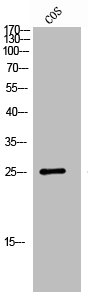
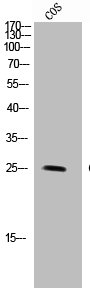
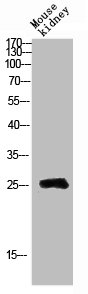
Synthesized peptide derived from the Internal region of Human GPR40.
Immunogen Species
Homo sapiens (Human)
Conjugate
Non-conjugated
Isotype
IgG
Purification Method
The antibody was affinity-purified from rabbit antiserum by affinity-chromatography using epitope-specific immunogen.
Concentration
It differs from different batches. Please contact us to confirm it.
Buffer
Liquid in PBS containing 50% glycerol, 0.5% BSA and 0.02% sodium azide.
Tested Applications
WB, IF, ELISA
Storage
Upon receipt, store at -20°C or -80°C. Avoid repeated freeze.
Lead Time
Basically, we can dispatch the products out in 1-3 working days after receiving your orders. Delivery time maybe differs from different purchasing way or location, please kindly consult your local distributors for specific delivery time.
Usage
For Research Use Only. Not for use in diagnostic or therapeutic procedures.
G-protein coupled receptor for medium and long chain saturated and unsaturated fatty acids that plays an important role in glucose homeostasis. Fatty acid binding increases glucose-stimulated insulin secretion, and may also enhance the secretion of glucagon-like peptide 1 (GLP-1). May also play a role in bone homeostasis; receptor signaling activates pathways that inhibit osteoclast differentiation. Ligand binding leads to a conformation change that triggers signaling via G-proteins that activate phospholipase C, leading to an increase of the intracellular calcium concentration. Seems to act through a G(q) and G(i)-mediated pathway. Mediates the anti-inflammatory effects of omega-3 polyunsaturated fatty acids (PUFAs) via inhibition of NLRP3 inflammasome activation.
Gene References into Functions
Study reports the 2.76-A crystal structure of human GPR40 complexed with compound 1 bound in a second structurally distinct allosteric site, located at the receptor side facing the membrane lipophilic environment. Binding of compound 1 stabilizes the intracellular loop 2 (ICL2) of GPR40 in a helical conformation. Mutagenesis studies in ICL2 shows that this loop is important for Gs alpha subunit coupling.PMID:29695780
Data indicate that 20-HETE and FFAR1 function together in a positive feedback loop to enhance glucose-stimulated insulin secretion (GSIS).PMID:29330456
Comparison with an additional 2.2-A structure of the human GPR40-MK-8666 binary complex reveals an induced-fit conformational coupling between the partial agonist and AgoPAM binding sites, involving rearrangements of the transmembrane helices 4 and 5 (TM4 and TM5) and transition of the intracellular loop 2 (ICL2) into a short helix.PMID:28581512
Results show that GPR40 negatively regulated the cell motile and invasive activities of HT1080 cells suggesting that GPR40 negatively regulates the tumor progression of fibrosarcoma cells.PMID:26331585
Brain free long-chain fatty acids-GPR40/FFA1 signaling might have an important role in the modulation of endogenous pain control systems. (review)PMID:28154332
It regulates insulin secretion in pancreatic beta-cells. (review)PMID:26028412
Data from molecular docking simulations suggest that the binding pocket of GPR40 exhibits binding of free fatty acids (FFA) with chain lengths of C15 or fewer; for FFA with lengths longer than C15, part of alkyl chain extends out of binding pocket.PMID:26974599
GPR120 negatively and GPR40 positively regulate cellular functions during tumor progression in lung cancer cells.PMID:26968637
These data demonstrate that R104 in GPR40 is critically involved in the normal receptor functions. Interestingly, R104P is a registered single-nucleotide polymorphism of GPR40.PMID:26505901
Characterizing pharmacological ligands to study the long-chain fatty acid receptors GPR40/FFA1 and GPR120/FFA4PMID:25131623
results suggest that FFAR1 is the functionally dominant free fatty acid receptor in both human and guinea pig airway smooth muscle.PMID:26342087
upregulation of GPR40 expression enhances the mitogenic response to epoxyeicosatrienoic acidsPMID:25679385
Palmitic acid boosted inflammatory response of microvascular endothelial cells to LPS via GPR40 and nSMase.PMID:25795558
knocking down the expression of the regulatory subunit PKAR1alpha, thereby reproducing the effects of IL-1beta and PGE on VSMCs, we demonstrated the contribution of PKA activity to the observed behavior of VSMCsPMID:26408932
These results suggest that distinct effects of GPR120 and GPR40 are involved in the acquisition of malignant property in pancreatic cancer cells.PMID:26282200
GPR40 functions via both G protein-mediated and beta-arrestin-mediated mechanisms; endogenous and synthetic ligands differentially engage these pathways to promote insulin secretion.PMID:26157145
GPR40 and PPARgamma can function as an integrated two-receptor signal transduction pathway, a finding with implications for rational antidiabetic drug development.PMID:26105050
the activation of GPR40 attenuates cisplatin-induced apoptosis.PMID:25092426
arrestin-3 and GRK2 play an essential role in the regulation of agonist-mediated GPR40 internalization, but are not involved in the regulation of constitutive GPR40 internalization.PMID:25038452
In a neuroblastoma cell line, GPR40 was activated by docosahexaenoic acid and selective agonists, yet not by palmitic acid. Its activation provoked the phosphorylation of CREB.PMID:24550142
the crystal structure of hGPR40 receptor bound to TAK-875 at 2.3 A resolutionPMID:25043059
Potent free fatty acid 1 receptor agonist TUG-469 may be promising candidate for the treatment of type 2 diabetes mellitus.PMID:23861168
It was concluded that FFAR1 in the pancreatic beta-cell plays a substantial role not only in acute potentiation of insulin secretion by palmitate but also in the negative long-term effects of palmitate on insulin metabolism.PMID:24035997
FFAR1 agonists support beta-cell function, but variation in FFAR1 influences NEFA effects on insulin secretion and therefore could affect therapeutic efficacy of FFAR1 agonists.PMID:23378609
A review of the physiological role of GPR40 and potential antidiabetic drugs targeting GPR40. [Review]PMID:23023155
Propionate-stimulated GPR41 strongly coupled to ERK1/2 activation, while the coupling of linoleic acid-activated GPR40 and acetate-activated GPR43 was weaker.PMID:22712802
GPR41 gene expression is mediated by internal ribosome entry site (IRES)-dependent translation of bicistronic mRNA encoding GPR40 and GPR41 proteinsPMID:22493486
Phytanic acid and pristanic acid activate the free fatty acid receptor GPR40, a G-protein-coupled receptor which is involved in the Ca2+ signaling of fatty acids.PMID:21570468
GPR40/FFA1 influences both insulin and glucagon secretion in rat islets, but only insulin secretion in human islets.PMID:22106100
differences in body composition and lipids associated with common SNPs in the FFAR1 genePMID:21552566
Results describe agonist-receptor interactions of GPR40 using molecular dynamics simulations.PMID:20227312
results show expression of GPR40 in pancreatic islets which are regulated by FFA; finding that T2DM islets have lower GPR40 expression & correlation with insulin secretion raises possibility of involvement of GPR40 in diabetes beta-cell dysfunctionPMID:19758793
Free fatty acids regulate insulin secretion from pancreatic beta cells through GPR40PMID:12629551
Results suggest that GPR40 is implicated in the control of breast cancer cell growth by fatty acids and that GPR40 may provide a link between fat and cancer.PMID:15695516
results suggest that the Arg211His polymorphism in the GPR40 protein gene may contribute to the variation of insulin secretory capacity in Japanese menPMID:15736105
study provides evidence for GPR40 gene expression in pancreatic beta cells and implicates GPR40 in insulin secretion in humans.PMID:16525841
GPR40 responded to fatty acids with different on-rates, and could be occupied by endogenous agonists before assay, masking the pharmacology of the receptorPMID:17200419
cell-specific expression of the GPR40 gene involves a characteristic chromatin organization of the locus and is controlled at the transcriptional level through HR2, a potent beta cell-specific enhancerPMID:17525159
analysis of residues important for agonist recognition and activation in GPR40PMID:17699519
Variation in the FFAR1 gene may contribute to impaired beta cell function in type 2 diabetesPMID:17987108
This newly identified GPR40 variant results in a loss of function that prevents the beta-cell ability to adequately sense lipids as an insulin secretory stimulus because of impaired intracellular Ca2+ concentration increase.PMID:18583466
A flow cytometry-based binding assay for FFAR1 is reported.PMID:18927207
In this review, the mechanism of receptor activation, pharmacology, and the physiological functions of the fatty acid binding receptors GPR40, GPR41, GPR43, and GPR119 are discussed.PMID:19009545
Two arginine-glutamate ionic locks near the extracellular surface of FFAR1 gate receptor activation.PMID:19068482
Transfection of GPR40 into mice may provide a novel insulin secretagogue beneficial for the treatment of type 2 diabetes.PMID:19401434
This paper predicts the 5' structure of the human GP40 gene based on alignments between mouse and human genomic DNA.PMID:17525159
Show
More
Hide
All
Subcellular Location
Cell membrane; Multi-pass membrane protein.
Protein Families
G-protein coupled receptor 1 family
Tissue Specificity
Detected in brain and pancreas. Detected in pancreatic beta cells.