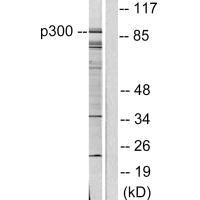
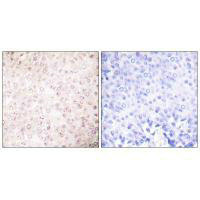
The antibody was affinity-purified from rabbit antiserum by affinity-chromatography using epitope-specific immunogen.
Concentration
It differs from different batches. Please contact us to confirm it.
Tested Applications
ELISA,WB,IHC
Storage
Upon receipt, store at -20°C or -80°C. Avoid repeated freeze.
Lead Time
Basically, we can dispatch the products out in 1-3 working days after receiving your orders. Delivery time maybe differs from different purchasing way or location, please kindly consult your local distributors for specific delivery time.
Note: All of our proteins are default shipped with normal blue ice packs, if you request to ship with dry ice, please communicate with us in advance and extra fees will be charged.
Usage
For Research Use Only. Not for use in diagnostic or therapeutic procedures.
Functions as a histone acetyltransferase (HAT) to promote transcriptional activation. Has significant histone acetyltransferase activity with core histones (H3 and H4), and also with nucleosome core particles. Also acetylates non-histone proteins, such as ACLY, PLK4, RRP9/U3-55K and TBX5. Inhibits cell-cycle progression and counteracts the mitogenic activity of the adenoviral oncoprotein E1A. Acts as a circadian transcriptional coactivator which enhances the activity of the circadian transcriptional activators: NPAS2-ARNTL/BMAL1 and CLOCK-ARNTL/BMAL1 heterodimers. Involved in heart and limb development by mediating acetylation of TBX5, acetylation regulating nucleocytoplasmic shuttling of TBX5. Acts as a negative regulator of centrosome amplification by mediating acetylation of PLK4. Acetylates RRP9/U3-55K, a core subunit of the U3 snoRNP complex, impairing pre-rRNA processing. Also acetylates spermidine.; (Microbial infection) In case of HIV-1 infection, it is recruited by the viral protein Tat. Regulates Tat's transactivating activity and may help inducing chromatin remodeling of proviral genes.
Gene References into Functions
KAT2A/2B acetylation of PLK4 prevents centrosome amplificationPMID:27796307
The effects of acetylated Lin28B on let-7a-1 and let-7g are similar to that of stable knockdown of Lin28B in H1299 cells. The new role of PCAF in mediating Lin28B acetylation and the specific release of its target microRNAs in H1299 cells may shed light on the potential application of let-7 in the clinical treatment of lung cancer patientsPMID:29301498
Data indicate lysine acetyltransferase 2B (KAT2B) as a susceptibility gene for kidney and heart disease in adducin 3 (gamma) protein (ADD3)-associated disorders.PMID:29768408
PCAF/GCN5-mediated lysine 163 acetylation of RPA1 is crucial for nucleotide excision repair.PMID:28854354
PCAF and ADA3 transcriptionally regulate PACS1 and PACS1 is a key regulator of BAX/BAK oligomerization and the intrinsic (mitochondrial) pathway to apoptosis.PMID:28060382
Knockdown of the acetyltransferase Kat2b erases H3K9ac signals, disrupts Sox2 binding, and fails the differentiation during human neuroectodermal commitment.PMID:28475175
GCN5 upregulation is especially common in UCCs. GCN5 knockdown impeded growth of specific UCCs, whereas PCAF knockdown elicited minor effects.PMID:28678170
histone H3K9 acetyltransferase PCAF plays a critical role in osteogenic differentiation of mesenchymal stem cells.PMID:27300495
cancer associated fibroblasts (CAFs) promoted hepatocellular cancer (HCC) growth via IL-6/STAT3/AKT pathway and TIMP-1 over-expression driven by IL-6/STAT3 pathway in HCC cells brought in more CAFs through activating liver fibroblasts.PMID:27297362
These results uncover p300 as a direct target of mTORC1 and suggest that the mTORC1-p300 pathway plays a pivotal role in cell metabolism by coordinately controlling cell anabolism and catabolismPMID:29033323
TNF-alpha and LPS promoted the interaction between MKL1 and PCAF.PMID:28571745
PCAF is a novel modulator of autophagy in hepatocellular carcinoma.PMID:27711074
a mechanism of transcriptional regulation mediated by p27, Pax5, and PCAFPMID:28158851
The studies identify a P/CAF-PAX3-FOXO1 signalling node that promotes oncogenesis and may contribute to MyoD dysfunction in Alveolar rhabdomyosarcoma (ARMS).PMID:27453350
results strongly support our hypothesis that PCAF is induced and activated by ATRA, and the subsequent acetylation of PCAF substrates promotes granulocytic differentiation in leukemia cellsPMID:28053092
Our findings demonstrated a novel epigenetic mechanism of IL-10 dysregulation in inflammatory bowel disease. Down-regulation of KAT2B may disrupt the innate and adaptive inflammatory responses due to the suppression of this crucial anti-inflammatory cytokine.PMID:26802082
Acetyltransferase p300/CBP-associated factor (PCAF) interacts with and acetylates HOXB9 both in vivo and in vitro.PMID:27613418
Results suggest that increase in nuclear expression of p300, as well as the presence of cytoplasmic but loss of nuclear expression of p300/CBP-associated factor (PCAF), could play an important role in the development and progression of cutaneous squamous cell carcinomas (SCC).PMID:27019369
Loss of p300 reduced repair of mismatches in DNA mismatch repair-deficient cells, but did not have evident effects on Base Excision Repair (BER) mechanisms, including the long patch BER pathway.PMID:27104361
Kat2b is a crucial transcriptional regulator for adaptive betaeta cell function during metabolic stress by controlling Unfolded Protein Response and represents a promising target for type 2 diabetes prevention and treatment.PMID:27117420
data define an essential motif cNM in N-terminal E1A as an acetyl-CoA entry blocker that directly associates with the entrance of acetyl-CoA binding pocket to block the HAT domain access to its cofactorPMID:27143356
PCAF protein and mRNA were not expressed in normal brain, but were expressed in pediatric astrocytoma in levels decreasing with tumor grade.PMID:23407894
Notch signaling was altered in almost half of the clear-cell renal cell carcinoma patients and copy number variances in MAML1 and KAT2B were predominant changes.PMID:26662507
Results show that PCAF can induce cell apoptosis by modulating a GLI1/Bcl-2/BAX axis that in turn suppresses HCC progression.PMID:25855960
low expression of PCAF in hepatocellular carcinoma tissues facilitates tumor cells migration and invasion which is achieved via Gli1-driven epithelial-mesenchymal transition phenotypes.PMID:26945969
p300HAT activated by p38MAPK plays a pivotal role in regulating the expression of prosurvival molecules following photodynamic therapy.PMID:26001729
The Gcn5 is important for turning on genes in cancers that overexpress Myc.PMID:26728851
CBP and p300 as lysine acetyltransferases responsible for the regulation of MRPMID:25707758
PCAF, HIF-1alpha, and VEGF expression were not upregulated by hypoxic stimulation of KD-MSCs. These results suggest that the hypoxic response may be blunted in MSCs from ESKD patientsPMID:25025381
These results illustrate the novel activity of the C5a-C5aR axis that promotes human NPC cell proliferation through PCAFmediated STAT3 acetylation.PMID:25174320
Gcn5 and PCAF repress IFN-beta production in an enzymatic activity-independent and non-transcriptional manner: by inhibiting the innate immune signaling kinase TBK1 in the cytoplasm.PMID:25269644
these results highlight an important role for p21 and p/CAF in promoting breast cancer cell migration and invasion at the transcriptional level and may open new avenues for breast cancer therapy.PMID:22995475
identified that PCAF interacts with and acetylates EZH2 mainly at lysine 348PMID:25800736
PCAF and ADA3 regulate Bid processing via PACS2, to modulate the mitochondrial cell death pathway in response to hGrzB.PMID:24464226
The mutually exclusive associations of HDAC1/p300, p300/histone, and HDAC1/histone on chromatin contribute to the dynamic regulation of histone acetylation.PMID:24722339
Reduced expression of p300/CBP associated factor plays an important role in the development of intestinal-type gastric carcinoma and correlates with a poor clinical outcome.PMID:20026908
KLF10, functions as a toggle to integrate antagonistic signals regulating FOXP3 via Sin3-HDAC/PCAF pathway and, thus, immune activation.PMID:24944246
PCAF participates in a regulatory mechanism in pancreatic neoplasm, binding to the BCL2 promoter and required for TGFbeta- and GLI1-stimulated gene expression.PMID:24739390
Study presents two dimeric structures of the PCAF acetyltransferase (HAT) domain; structural and biochemical studies indicate that PCAF appears to be a dimer in its functional Ada-Two-A containing complex complex.PMID:24423233
Our results suggest that truncated p300 proteins contribute to diffuse large B-cell lymphoma cell growth by affecting the expression of specific genesPMID:24529102
PCAF promotes cell apoptosis and functions as a hepatocellular carcinoma repressor through acetylating histone H4 and inactivating AKT signaling.PMID:23981651
These data unveil a p53/PCAF/Gli1 circuitry centered on PCAF that limits Gli1-enhanced mitogenic and prosurvival response.PMID:24013724
Decreased expression of nuclear p300 is associated with disease progression and worse prognosis of melanoma patients.PMID:24098694
polyQ-expanded ataxin-7 directly bound the Gcn5 catalytic core of SAGA while in association with its regulatory proteins, Ada2 and Ada3.PMID:24129567
HOXA10-PCAF association impairs embryo implantation by inhibiting ITGB3 protein expression in endometrial epithelial cells.PMID:24037888
Acetylation mediated by the p300/CBP-associated factor determines cellular energy metabolic pathways in cancer.PMID:23591450
CSB and PCAF play cooperative roles to establish the active state of rRNA genes by histone acetylationPMID:23667505
Data suggest that expression of p300 and interaction of p300/Sp1 (transcription factor Sp1) with HSD11B2 (hydroxysteroid [11-beta] dehydrogenase 2) promoter play crucial role in histone acetylation in syncytiotrophoblasts during placentation.PMID:23714681
TIP150-EB1 interaction governs kinetochore microtubule plus-end plasticity and establish that the temporal control of the TIP150-EB1 interaction by PCAF acetylation ensures chromosome stability in mitosis.PMID:23595990
Show
More
Hide
All
Subcellular Location
Nucleus. Cytoplasm, cytoskeleton, microtubule organizing center, centrosome. Cytoplasm.
Protein Families
Acetyltransferase family, GCN5 subfamily
Tissue Specificity
Ubiquitously expressed but most abundant in heart and skeletal muscle. Also expressed in the skin, in keratinocytes (at protein level).