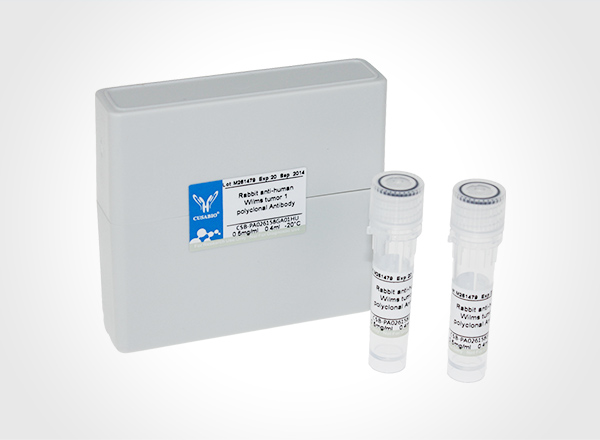
Upon receipt, store at -20°C or -80°C. Avoid repeated freeze.
Lead Time
Basically, we can dispatch the products out in 1-3 working days after receiving your orders. Delivery time maybe differs from different purchasing way or location, please kindly consult your local distributors for specific delivery time.
Note: All of our proteins are default shipped with normal blue ice packs, if you request to ship with dry ice, please communicate with us in advance and extra fees will be charged.
Usage
For Research Use Only. Not for use in diagnostic or therapeutic procedures.
Polycomb group (PcG) protein. Component of the PRC2/EED-EZH2 complex, which methylates 'Lys-9' and 'Lys-27' of histone H3, leading to transcriptional repression of the affected target gene. Also recognizes 'Lys-26' trimethylated histone H1 with the effect of inhibiting PRC2 complex methyltransferase activity on nucleosomal histone H3 'Lys-27', whereas H3 'Lys-27' recognition has the opposite effect, enabling the propagation of this repressive mark. The PRC2/EED-EZH2 complex may also serve as a recruiting platform for DNA methyltransferases, thereby linking two epigenetic repression systems. Genes repressed by the PRC2/EED-EZH2 complex include HOXC8, HOXA9, MYT1 and CDKN2A.
Gene References into Functions
we present a patient with a clinical diagnosis of Weaver syndrome and novel de novo sequence variant in EED. Our observation together with previous reports [2, 3, 5] suggests that EED gene testing is warranted in patients with the overgrowth syndrome features and suspicion of Weaver syndrome with normal results for EZH2 gene sequencing.PMID:29410511
Data suggest the polycomb repressive complex 2 subunits EZH2, SUZ12, and EED protein axis as promising therapeutic target for treating sarcoma.PMID:29415665
These findings support that Weaver syndrome is a disorder with locus heterogeneity and can be due to pathogenic variants in either EZH2 or EED. This case highlights the utility of exome sequencing as a clinical diagnostic tool for novel gene discovery as well as the importance of re-examination of exome data as new information about gene-disease associations becomes available.PMID:27868325
we have found two unrelated families of different ethnicities, with a similar rare phenotype, both associated with de novo mutations in this member of the PRC2 complex, we are confident that EED is indeed a novel overgrowth gene.PMID:27193220
Mutations of SUZ12 and EED are reported to have tumor suppressive functions. (Review)PMID:27000413
These results suggest that the SNPs of the EED gene might not be associated with susceptibility to CRC.PMID:23709348
An integral role for EED as an epigenetic exchange factor coordinating the activities of PRC1 and 2, is reported.PMID:24457600
Data show that overall enhancer of zeste 2 (EZH2), embryonic ectoderm development (EED) and suppressor of zeste 12 homolog (SUZ12) expression in the colorectal cancer (CRC) tissues was significantly increased than in the non-cancerous tissue.PMID:25326896
EED, a component of Polycomb repressive complex-2 (PRC2) that catalyzes methylation of lysine 27 of histone H3 (H3K27), was involved in epithelial-mesenchymal transition (EMT) of cancer cells induced by Transforming Growth Factor-beta (TGF-beta).PMID:25264103
Polycomb repressive complex 2 is recurrently inactivated through EED or SUZ12 loss in malignant peripheral nerve sheath tumors.PMID:25240281
EZH2-EED is necessary and sufficient for binding to the lncRNA HOTAIR.PMID:24320048
Although inactivating mutations in PRC2-encoding genes EZH2, EED, and SUZ12 are present in T-cell acute lymphoblastic leukemia and in myeloid malignancies, gain-of-function mutations in EZH2 are frequently observed in B-cell lymphoma.PMID:23982173
EED mutants impair polycomb repressive complex 2 and is associated with myelodysplastic syndrome and related neoplasmsPMID:22733077
Promoter polymorphism of the EED gene is associated with the susceptibility to ulcerative colitis.PMID:22271413
Genetic defects in PRC2 components other than EZH2 are not common in myeloid malignancies.PMID:22308284
The authors found that Sox2 and Eed positively regulate each other's expression and contribute to the maintenance of self-renewal in embryonic stem cells by controlling histone methylation and acetylation.PMID:21540835
molecular basis of EED-methyllysine recognition, and the biochemical characterization of how the activity of a histone methyltransferase is oppositely regulated by two histone marks.PMID:20974918
histone modification including PRC2-mediated repressive histone marker H3K27me3 and active histone marker acH4 may involve in CD11b transcription during HL-60 leukemia cells reprogramming to terminal differentiation[polycomb repressive complex 2 ]PMID:19578722
EED is a nuclear factor and repressor of transcription and is recruited to the plasma membrane by HIV-1 nefPMID:14759364
EED exerted an antiviral activity at the late stage of HIV-1 replication, which included genomic RNA packaging and virus assembly, resulting possibly from a mistrafficking of viral genomic RNA (gRNA) or gRNA/Gag complex.PMID:17547741
NIPP1 is present in a complex with EED and EZH2 in vivo and has distinct binding sites for these proteins.PMID:17804093
Identification of antibody-, MA-, IN- and EZH2-binding sites at EED's surface provides a global picture of the immunogenic and protein-protein interacting regions in the EED C-terminal domain, organized as a seven-bladed beta-propeller protein.PMID:18302803
the carboxy-terminal domain of EED specifically binds to histone tails carrying trimethyl-lysine residues associated with repressive chromatin marks, and this leads to the allosteric activation of the methyltransferase activity of PRC2.PMID:19767730
Show
More
Hide
All
Subcellular Location
Nucleus. Chromosome. Note=Transiently colocalizes with XIST at inactive X chromosomes.
Protein Families
WD repeat ESC family
Tissue Specificity
Expressed in brain, colon, heart, kidney, liver, lung, muscle, ovary, peripheral blood leukocytes, pancreas, placenta, prostate, spleen, small intestine, testis, thymus and uterus. Appears to be overexpressed in breast and colon cancer.