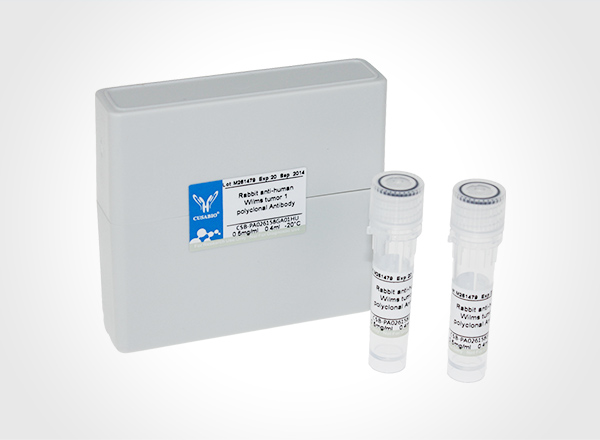
Liquid
Note: We will preferentially ship the format that we have in stock, however, if you have any special requirement for the format, please remark your requirement when placing the order, we will prepare according to your demand.
Storage
Upon receipt, store at -20°C or -80°C. Avoid repeated freeze.
Lead Time
Basically, we can dispatch the products out in 1-3 working days after receiving your orders. Delivery time maybe differs from different purchasing way or location, please kindly consult your local distributors for specific delivery time.
Note: All of our proteins are default shipped with normal blue ice packs, if you request to ship with dry ice, please communicate with us in advance and extra fees will be charged.
Usage
For Research Use Only. Not for use in diagnostic or therapeutic procedures.
Primordial germ cell (PGCs)-specific protein involved in epigenetic chromatin reprogramming in the zygote following fertilization. In zygotes, DNA demethylation occurs selectively in the paternal pronucleus before the first cell division, while the adjacent maternal pronucleus and certain paternally-imprinted loci are protected from this process. Participates in protection of DNA methylation in the maternal pronucleus by preventing conversion of 5mC to 5hmC: specifically recognizes and binds histone H3 dimethylated at 'Lys-9' (H3K9me2) on maternal genome, and protects maternal genome from TET3-mediated conversion to 5hmC and subsequent DNA demethylation. Does not bind paternal chromatin, which is mainly packed into protamine and does not contain much H3K9me2 mark. Also protects imprinted loci that are marked with H3K9me2 in mature sperm from DNA demethylation in early embryogenesis. May be important for the totipotent/pluripotent states continuing through preimplantation development. Also involved in chromatin condensation in oocytogenesis.
Gene References into Functions
Super-enhancers at the Nanog locus differentially regulate neighboring pluripotency-associated genes, in particular, DPPA3.PMID:27681417
We conclude that heterogeneous population of the HEK293T cells might be easily shifted towards expression of the pluripotency markers by ectopic expression of the SON factors or by growth in serum depleted media.PMID:27794480
Data suggest enforced expression of Stella into normal cells induces not only global DNA demethylation but also neoplastic transformation and increases metastatic ability; these changes involve altered regulation of neoplastic gene expression.PMID:26608031
Considering that impaired DNA methylation profiles are associated with various developmental or disease phenomena, Stella may be a powerful tool with which to study the biological effects of global DNA hypomethylationPMID:25280994
a role for STELLA in facilitating germline and endodermal differentiation of human ES cellsPMID:23457636
human adult tissue-specific transcripts originate via retrotransposition of the pluripotent cell-specific gene, Dppa3PMID:16291741
These results demonstrate that PGC7/Stella is indispensable for the maintenance of methylation involved in epigenetic reprogramming after fertilization.PMID:17143267
In mice, this gene may play a role in oogenesis and primordial germ cell development.PMID:11900980
In mice, a targeted mutation results in reduced female fertility and may function as a mammalian maternal effect gene.PMID:14654002
In mice, knockout experiments show this gene may be a maternal factor in cleavage stage embryogenesis.PMID:15018652
Show
More
Hide
All
Subcellular Location
Nucleus. Cytoplasm.
Tissue Specificity
Low expression in testis, ovary and thymus. Expressed in embryonic stem and carcinoma cells. Highly expressed in testicular germ cell tumors.