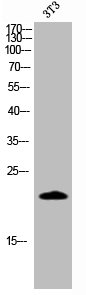
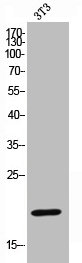
Synthesized peptide derived from the Internal region of Human Caspase-4 p20.
Immunogen Species
Homo sapiens (Human)
Conjugate
Non-conjugated
Isotype
IgG
Purification Method
The antibody was affinity-purified from rabbit antiserum by affinity-chromatography using epitope-specific immunogen.
Concentration
It differs from different batches. Please contact us to confirm it.
Buffer
Liquid in PBS containing 50% glycerol, 0.5% BSA and 0.02% sodium azide.
Tested Applications
WB, IHC, ELISA
Storage
Upon receipt, store at -20°C or -80°C. Avoid repeated freeze.
Lead Time
Basically, we can dispatch the products out in 1-3 working days after receiving your orders. Delivery time maybe differs from different purchasing way or location, please kindly consult your local distributors for specific delivery time.
Note: All of our proteins are default shipped with normal blue ice packs, if you request to ship with dry ice, please communicate with us in advance and extra fees will be charged.
Usage
For Research Use Only. Not for use in diagnostic or therapeutic procedures.
Inflammatory caspase that acts as an essential effector of NLRP3 inflammasome-dependent CASP1 activation and IL1B and IL18 secretion in response to non-canonical activators, such as UVB radiation, cholera enterotoxin subunit B and cytosolic LPS. Thiol protease that cleaves a tetrapeptide after an Asp residue at position P1. Independently of NLRP3 inflammasome and CASP1, promotes pyroptosis, through GSDMD cleavage and activation, followed by IL1A, IL18 and HMGB1 release in response to non-canonical inflammasome activators. Plays a crucial role in the restriction of Salmonella typhimurium replication in colonic epithelial cells during infection: in later stages of the infection, LPS from cytosolic Salmonella triggers CASP4 activation, which catalyzes cleavage of GSDMD, resulting in pyroptosis of infected cells and their extrusion into the gut lumen, as well as in IL18 secretion. Cleavage of GSDMD is not strictly dependent on the consensus cleavage site but depends on an exosite interface on CASP4 that recognizes and binds the Gasdermin-D, C-terminal (GSDMD-CT) part. Pyroptosis limits bacterial replication, while cytokine secretion promotes the recruitment and activation of immune cells and triggers mucosal inflammation. Involved in LPS-induced IL6 secretion; this activity may not require caspase enzymatic activity. Involved in cell death induced by endoplasmic reticulum stress and by treatment with cytotoxic APP peptides found Alzheimer's patient brains. Activated by direct binding to LPS without the need of an upstream sensor. Does not directly process IL1B. During non-canonical inflammasome activation, cuts CGAS and may play a role in the regulation of antiviral innate immune activation.
Gene References into Functions
Results implicate pyroptosis induced by the CASP11/4-GSDMD pathway in the pathogenesis of alcoholic hepatitisPMID:29108122
Results indicate functional differences between human caspase-4 and murine caspase-11.PMID:29339744
The last four amino acids of the NleF carboxy terminus are essential in inhibiting caspase-4-dependent inflammatory cell death.PMID:28593173
Pathophysiological studies showed that the overexpression of the CASP4 gene was involved in the loss of proximal tubules and renal injury in nephropathic cystinosis patients. Considering kidney's key roles in sodium filtration and reabsorption CASP4 genes are involved in Blood Pressure regulation.PMID:27271309
We propose that microglial caspase-4 expression contributes to the cognitive impairments in Alzheimer's disease (AD), and that further study of caspase-4 will enhance our understanding of AD pathogenesis and may lead to novel therapeutic targets in AD.PMID:27516385
this study shows that activation of caspase-4 is mediated by interactions with endotoxin-rich membrane interfaces rather than by endotoxin monomersPMID:28409545
apoptosis is induced by rhein traditional Chinese medicine via induction of endoplasmic reticulum stress, caspase-4 and intracellular calcium in primary human hepatic HL-7702 cellsPMID:27003256
Caspase-4 and caspase-5 mediate IL-1alpha and IL-1beta release from human monocytes after lipopolysaccharides stimulation.PMID:26508369
both caspase-4 and caspase-5 are functionally important for appropriate responses to intracellular Gram-negative bacteria.PMID:26173988
caspase-4 activation alone is sufficient to induce pyroptosis, this process depends on the NLRP3 inflammasome activation to drive IL-1beta maturation.PMID:26174085
This study reveled that CASP4 having a central role in the bipolar disease and schizophrenia manifestation.PMID:25487697
NF-kappaB can mediate Fas-induced apoptosis through caspase-4 proteasePMID:25695505
implicate caspase-4 as a critical regulator of noncanonical inflammasome activation that initiates defense against bacterial pathogens in primary macrophagesPMID:25964352
this study has identified epithelial-expressed caspases-4 and -5 as biomarkers with diagnostic and therapeutic potential in colorectal cancer.PMID:25943872
Authors observed increases in the endoplasmic reticulum stress markers BiP and cleaved caspase-4 in Duchenne muscular dystrophy patient biopsies, compared with controls.PMID:24879640
The caspase-4/11 inflammasome also governs activation of the proinflammatory cytokine, interleukin (IL)-18, in response to intracellular and extracellular enteric pathogens.PMID:25121752
function of caspase-4/5/11 represents a new mode of pattern recognition in immunity and also an unprecedented means of caspase activationPMID:25119034
caspase-4 can support activation of caspase-1 and secretion of IL-1beta and IL-18 in response to priming signals (LPS or Pam3CSK4) alonPMID:24879791
TLR3 stimulation in keratinocytes induces a caspase-4 dependent release of pro-IL-1beta, but further processing to active IL-1beta is limited. Furthermore, TLR3 stimulation results in pyroptotic- and apoptotic cell death.PMID:23845419
Shigella OspC3 interacts with the caspase-4-p19 subunit and inhibits its activation by preventing caspase-4-p19 and caspase-4-p10 heterodimerization.PMID:23684308
TMEM214 is essential for endoplasmic reticulum (ER) stress-induced apoptosis by acting as an anchor for recruitment of procaspase 4 to the ER and its subsequent activation.PMID:23661706
Loss of heterozygosity contributes to tumor progression of oral squamous cell carcinoma, and a specific role for PDCD4, CTNNB1, and CASP4 was found.PMID:21781452
These experiments identify caspase 4 as a novel regulator of TNF-alpha-induced NF-kappaB signaling that is required for the activation of I-kappaB kinase.PMID:22733992
Caspase-4 expression is essential for efficient nucleotide-binding domain leucine-rich repeat containing, Pyrin domain containing-3 and for absent in melanoma 2 inflammasome-dependent proIL-1beta activation in macrophagesPMID:22246630
Levels of c-Rel directly modulated expression of caspase-4 as well as other endoplasmic reticulum stress genes.PMID:21984918
Data suggest that Casp4, Casp 6 and TNFSF10 are differentially expressed in potentially fertile and subfertile men and represent useful biomarkers for predicting male fertility in combination with P1 and P2.PMID:21317160
results suggest that caspase-4 directly activates caspase-9 by the processing of procaspase-9 at Asp-315 in endoplasmic reticulum stress-induced neuronal apoptosisPMID:21282934
Neuronal cell death is induced via cleavage of caspase-4 in endoplasmic reticulum cells under stress in vitro.PMID:20816908
This study suggests a possible role of caspase-4 in the apoptotic loss of proximal tubular cells.PMID:19705160
results show that activation of caspase-4 contributes to TRAIL-induced apoptosis and is associated with induction of ER stress by TRAIL in melanoma cellsPMID:20514521
Caspase-4 can function as an ER stress-specific caspase in humans, and may be involved in pathogenesis of Alzheimer's disease.PMID:15123740
caspase-12 and caspase-4 are not required for the induction of ER stress-induced apoptosis and that caspase-4-like activity is not always associated with an initiating event.PMID:15975932
the familial Alzheimer's disease-linked presenilin 1 mutation accelerates the cleavage of caspase-4 under the endoplasmic reticulum stressPMID:17942194
These results demonstrate that induction of GADD153/CHOP plays a pivotal role in mechanism of ER stress-induced cell death in SH-SY5Y cells, on the other hand, cleavage of pro-caspase-4 by activation of calpain play a crucial role in SK-N-SH cells.PMID:18029041
TRAF6-caspase-4 interaction, triggered by LPS, leads to NF-kappaB-dependent transcriptional up-regulation and secretion of important cytokines and chemokines in innate immune signaling in human monocytic cells.PMID:18056395
somatic mutation of the CASP4 gene is common in gastrointestinal stromal tumor & suggest a possibility that CASP4 mutation might lead to alteration of apoptotic or inflammatory function & contribute to pathogenesis of some gastrointestinal stromal tumorsPMID:19269008