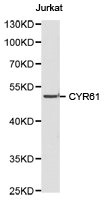
Upon receipt, store at -20°C or -80°C. Avoid repeated freeze.
Lead Time
Basically, we can dispatch the products out in 1-3 working days after receiving your orders. Delivery time maybe differs from different purchasing way or location, please kindly consult your local distributors for specific delivery time.
Note: All of our proteins are default shipped with normal blue ice packs, if you request to ship with dry ice, please communicate with us in advance and extra fees will be charged.
Usage
For Research Use Only. Not for use in diagnostic or therapeutic procedures.
Promotes cell proliferation, chemotaxis, angiogenesis and cell adhesion. Appears to play a role in wound healing by up-regulating, in skin fibroblasts, the expression of a number of genes involved in angiogenesis, inflammation and matrix remodeling including VEGA-A, VEGA-C, MMP1, MMP3, TIMP1, uPA, PAI-1 and integrins alpha-3 and alpha-5. CCN1-mediated gene regulation is dependent on heparin-binding. Down-regulates the expression of alpha-1 and alpha-2 subunits of collagen type-1. Promotes cell adhesion and adhesive signaling through integrin alpha-6/beta-1, cell migration through integrin alpha-v/beta-5 and cell proliferation through integrin alpha-v/beta-3.
Gene References into Functions
CYR61 could be an adjuvant biomarker associated with the inflammatory activity of Graves' orbitopathy (GO).PMID:28548552
Serum CCN1 concentrations in Acute Heart Failure patients were significantly increased compared with those in individuals without Acute Heart Failure (237 pg/ml vs. 124.8 pg/ml, p< 0.001).PMID:30045012
Results show that mRNA and serum expression levels of Cyr61, CTGF, and VEGF in muscle tissues of patients with polymyositis (PM)/dermatomyositis (DM). These data suggest that these genes may be involved in the pathogenesis mainly by affecting the formation of blood vessels and promoting inflammatory response.PMID:30142763
the CC genotype of CYR61significantly increased the risk of acute myeloid leukemia (AML) in the dominant inheritance and the recessive inheritance. Additionally, it was shown that the rs2297141 and rs6576776 genotypes were associated with AML-M5 and AML-M2, respectively. Our findings indicated that genetic polymorphisms in the CYR61 gene may be considered potential AML risk factors in the Han Chinese populationPMID:30142822
Study describes how cysteine-rich 61 (CCN1) promotes monocyte migration by upregulating monocyte chemoattractant protein-1 (CCL2) expression in osteoblasts in rheumatoid arthritis (RA) disease. CCN1 could serve as a potential target for RA treatment.PMID:28341837
MiR-365 acts as a tumor suppressor in OS, partly, by targeting CYR61 expression.PMID:29287201
CCN1 may be involved in the progression of the hepatic cirrhosishepatocellular carcinoma axis through regulating Hepatic stellate cells.PMID:29286082
study is the first to reveal that Cyr61 is elevated in ALL and promotes cell survival through the AKT/NF-kappaB pathway by up-regulating Bcl-2.PMID:27725691
PPARgamma agonists may have beneficial effects on the migration and invasion of rheumatoid arthritis-fibroblast-like synoviocytes via the downregulation of Cyr61.PMID:27456070
CCN1 stimulates CCL20 production in vitro and in vivo, and thus supports the notion that overexpressed CCN1 in hyperproliferating keratinocyte is functionally involved in the recruitment of inflammatory cells to skin lesions affected by psoriasis.PMID:28602508
Plasma Cyr61 concentration in pulmonary arterial hypertension (PAH)patients was highly increased. Cyr61 could promote pulmonary arterial smooth muscle cells proliferation via AKT pathway, indicating that Cyr61 may play a role in the pathogenesis of PAH.PMID:28824319
Cyr61 and VEGF expressions were independent prognostic indicators of overall survival and may serve as important prognostic predictors in patients with osteosarcoma.PMID:28647210
our study suggests that suppression of Cyr61 in cancer stem cell-like cells in PDAC may inhibit tumor cell metastasis after resection of the primary tumor.PMID:27705906
CYR61 promotes breast cancer lung metastasis by facilitating tumor cell extravasation and protecting from anoikis during initial seeding to the lung.PMID:27911269
Knockdown of CYR61 in gastric cancer AGS cells impairs the cancer cell migration and invasion, suggesting a driver role of CYR61 in metastasis.PMID:27105510
This study is the first to describe how CCN1 promotes VEGF expression in osteoblasts and increased endothelial progenitor cells angiogenesis in rheumatoid arthritis disease.PMID:27465842
Two interacting partners of urokinase-type plasminogen activator (uPA) receptor, the cysteine-rich angiogenic inducer 61 (Cyr61) and the Y-box-binding protein 1 (YB-1) were identified and their differential expression demonstrated in the triple-negative breast cancer (TNBC) cells as well as in tumors.PMID:27286449
collagen II-activated phosphorylated-DDR2 induces CYR61 through activation of transcription factor activator protein 1 (AP-1). The elevated CYR61, in turn, accelerates MMP1 production via ETS1 (ETS proto-oncogene 1).PMID:27653023
Cyr61 stimulated MMP-3 production in fibroblast-like synoviocytes of rheumatoid arthritis patients.PMID:27585710
Low CCN1 expression is associated with esophageal cancer.PMID:29055676
this study found that expression of Cyr61 was higher in the ectopic endometrium than in the eutopic endometrium and that Cyr61 expression in the endometrium was correlated with age, number of natural labors, blood loss, uterine volume, adenomyosis type, and concurrent endometriosisPMID:27644084
The role of CYR61 in aromatase inhibitors resistance in estrogen receptor positive breast cancer patientsPMID:27113745
CYR61 is a TGF-beta-induced stromal-derived factor that regulates gemcitabine sensitivity in pancreatic ductal adenocarcinoma.PMID:27604902
These studies support previously unrecognized, cooperative interaction between the CCN1 matricellular protein and canonical TGF-beta1/SMAD3 signaling that promotes lung fibrosis.PMID:26884454
Our data indicate a potential functional impact of Cyr61 in development and the progression of cervical cancerPMID:28476813
results highlight both CYR61 and TAZ genes as potential predictive biomarkers for stratification of the risk for development of adenocarcinoma and suggest a potential mechanistic route for Barrett's esophagus neoplastic progressionPMID:27583562
Reduced levels of CCN1 and CCN3, as found in early-onset preeclampsia, could contribute to a shift from invasive to proliferative extravillous trophoblasts and may explain their shallow invasion properties in this disease.PMID:26744771
Promoter activity was determined as well as CYR61 mRNA and protein expression.PMID:28322825
Our results not only reveal a novel mechanism illustrating the role of Cyr61 in epidermis pathogenesis but also suggest that therapies targeting Cyr61 may represent a novel strategy in the treatment of psoriasis vulgaris.PMID:27856305
Results provide evidence that CCN1 can stimulate the proliferation and differentiation of osteoblasts in vitro and contribute to bone remodeling in vivo in myeloma bone disease.PMID:28035364
these data suggest that the WNT/beta-catenin signaling pathway enhances pancreatic cancer development and malignancy in part via up-regulation of CYR61.PMID:27889647
CCN1 RNAi reduced the mRNA and protein expression levels of CCN1, Akt and VEGF in the HUVECs (P<0.05). Furthermore, LY294002 reduced the mRNA and protein expression levels of CCN1 in the hypoxic cells (P<0.05). Therefore, CCN1 RNAi may offer a novel therapeutic strategy, which may aid in the treatment of pathological angiogenesis via inhibition of the PI3K/AktVEGF pathwayPMID:27666419
High CYR61 expression is associated with colorectal cancer.PMID:27743169
Following the treatment of B16 cells with epirubicin and IFN-a, CYR61 levels increased, cell growth was inhibited, and proliferating cell nuclear antigen expression decreased. Thus, CYR61 could become a therapeutic target for malignant melanoma patients with high CYR61 expression.PMID:27665942
The present study aimed to examine the clinical relevance of NOV along with CYR61 and CTGF in gastric cancer by analysing their transcript levels...the expression of NOV and CYR61 was increased in gastric cancer. The elevated expression of CYR61 was associated with poorer survival. NOV promoted proliferation and invasion of gastric cancer cellsPMID:27633176
Taken together, our results provide novel insights into the possible protective role of 7,8-DHF by activating Cyr61 signaling and suppressing ER stress in hypoxic HK-2 cells which have potential clinical implications for the treatment of AKI.PMID:28116298
up-regulated in epithelial cells of salivary glands of primary Sjogren's syndrome patientsPMID:26630293
Data show that RNA silencing of CCN family member 1 protein (CCN1) inhibits umbilical vein endothelial cell (HUVEC) proliferation under hypoxic conditions by inhibiting phosphoinositide 3-kinase (PI3K)/AKT protein signaling.PMID:26459773
Studies indicate that the CYR61 CTGF NOV matricellular proteins (CCN family of proteins) comprises the members CCN1, CCN2, CCN3, CCN4, CCN5 and CCN6 and have been identified in various types of cancer.PMID:26498181
Results suggest that Cyr61 is induced by EGF through the ERK/CREB signal pathway and that it plays a crucial role in the migration and invasion of anaplastic thyroid cancer cells.PMID:25773758
CCN1 is an injury response protein that functions not only to restrict fibrosis in the liver, but also to suppress hepatocarcinogenesis by inhibiting EGFR-dependent hepatocyte compensatory proliferationPMID:26028023
we demonstrate that NF2 negatively controls the invasiveness of Glioblastoma multiforme through YAP-dependent induction of CYR61/CCN1 and miR-296-3p.PMID:26923924
It promotes cell growth and angiogenesis in cancers through its interaction with several integrins and proved to be an independent prognostic factor for patient survival.PMID:26201842
c-Src regulates secreted proteins, including the exosomal Cyr61, which are involved in modulating the metastatic potential of triple negative breast cancer cells.PMID:25980494
Report shows evidence that CCN1 is O-fucosylated at Threonine 242 and that O-fucosylation of CCN1 regulates its secretion.PMID:26424659
Reactive oxygen species increased c-Jun, a critical member of transcription factor AP-1 complex, and increased c-Jun binding to the AP-1 site of the CCN1 promoter.PMID:25536346
Overexpression of Cyr61 may induce epithelial-mesenchymal transition and therefore leads to laryngeal squamous- cell carcinoma invasion and metastasis and poor prognosis.PMID:25854342
Cyr61 promotes CD204 expression and the migration of macrophages via MEK/ERK pathway in esophageal squamous cell carcinomaPMID:25620088
Report is first to suggest a relationship between a genetic variant p.R47W in CCN1 and atrial septal defects in humans.PMID:25135600
SYK is downstream of CYR61 and contributes to CYR61-mediated mitoxantrone resistance. The CYR61-SYK pathway represents a potential target for reducing stroma-induced chemoresistancePMID:25974135