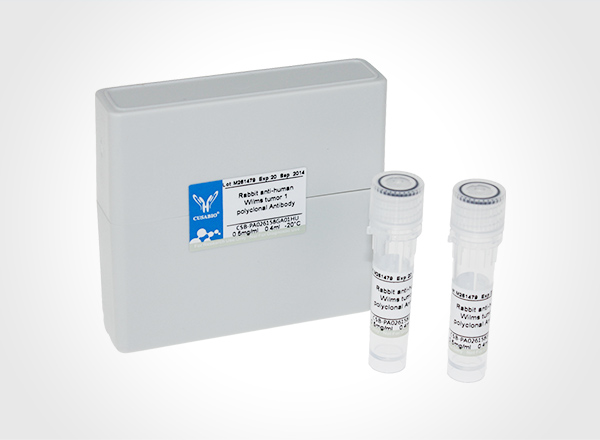
Alpha 1 type I collagen antibody; Alpha 2 type I collagen antibody; alpha 2 type I procollagen antibody; alpha 2(I) procollagen antibody; alpha 2(I)-collagen antibody; Alpha-1 type I collagen antibody; alpha1(I) procollagen antibody; CO1A1_HUMAN antibody; COL1A1 antibody; COL1A2 antibody; collagen alpha 1 chain type I antibody; Collagen alpha-1(I) chain antibody; collagen alpha-1(I) chain preproprotein antibody; Collagen I alpha 1 polypeptide antibody; Collagen I alpha 2 polypeptide antibody; collagen of skin; tendon and bone; alpha-1 chain antibody; collagen of skin; tendon and bone; alpha-2 chain antibody; Collagen type I alpha 1 antibody; Collagen type I alpha 2 antibody; EDSC antibody; OI1 antibody; OI2 antibody; OI3 antibody; OI4 antibody; pro-alpha-1 collagen type 1 antibody; type I proalpha 1 antibody; type I procollagen alpha 1 chain antibody; Type I procollagen antibody
Raised in
Rabbit
Species Reactivity
Human
Immunogen
Peptide sequence from Human Collagen alpha-1(I) chain protein (1306-1323AA)
Immunogen Species
Homo sapiens (Human)
Conjugate
Biotin
Clonality
Polyclonal
Isotype
IgG
Purification Method
>95%, Protein G purified
Concentration
It differs from different batches. Please contact us to confirm it.
Liquid
Note: We will preferentially ship the format that we have in stock, however, if you have any special requirement for the format, please remark your requirement when placing the order, we will prepare according to your demand.
Upon receipt, store at -20°C or -80°C. Avoid repeated freeze.
Lead Time
Basically, we can dispatch the products out in 1-4 working days after receiving your orders. Delivery time maybe differs from different purchasing way or location, please kindly consult your local distributors for specific delivery time.
Note: All of our proteins are default shipped with normal blue ice packs, if you request to ship with dry ice, please communicate with us in advance and extra fees will be charged.
Usage
For Research Use Only. Not for use in diagnostic or therapeutic procedures.
Type I collagen is a member of group I collagen (fibrillar forming collagen).
Gene References into Functions
results strengthen the evidence for the association between polymorphisms of -1997 G/T, +1245 G/T of the COL1A1 gene in the genetic etiology of keloid scarsPMID:27511505
Structural basis of homo- and heterotrimerization of COL1A1/ COL1A2 has been reported.PMID:28281531
patients with OI have homogenously thinner corneas compared with controls, we observed that a collagen I chain mutation was not responsible for corneal curvature alterations in OI.PMID:30272615
Our findings demonstrate that collagen I could enhance the aggressive progression of residual hepatocellular carcinoma cells after suboptimal heat treatment and sorafenib may be a treatment approach to thwart this process.PMID:30227844
Cellular expression of COL1A1 could promote breast cancer metastasis. COL1A1 is a new prognostic biomarker and a potential therapeutic target for breast cancer, especially in ER+ patients.PMID:29906404
miR-129-5p level was decreased in fibrotic liver of human, and reduced by rOPN treatment. In contrast, miR-129-5p was induced in HSCs transfected by OPN siRNA. These data suggested that OPN induces Col 1 expression via suppression of miR-129-5p in hepatic stellate cells.PMID:29196165
Depletion of MRTF-A abolished the upregulation of COL1A1 in response to the TGF-beta or Wnt signaling.PMID:29807221
Mutations in the COL1A1 and COL1A2 genes associated with osteogenesis imperfecta (OI) types I or III.PMID:29543922
DNMT1 was downregulated in the Lung Cancer group and its expression was further reduced in the presence of increasing malignant burden as indicated by the endobronchial findings further suggesting an Lung Cancer-specific signature.PMID:29568927
our results indicated that COL1A1 promotes tumor metastasis, and that its inhibition may suppress CRC cell migration. In addition, the role of COL1A1 in CRC metastasis seems to be associated with the regulation of the WNT/PCP pathway.PMID:29393423
miR378b represses the mRNA expression levels of COL1A1 via interference with SIRT6 in human dermal fibroblasts.PMID:28983623
Exogenous proline stimulates type I collagen and HIF-1alpha expression and the process is attenuated by glutamine in human skin fibroblasts.PMID:28526934
the efficacy of pamidronate treatment does not seem to be related to the genotype of type I collagen in patients with osteogenesis imperfecta.PMID:28528406
High urine collagen is associated with renal dysfunction in lupus nephritis.PMID:28339802
MiR-133a-3p could inhibit the proliferation and migration of oral squamous cell carcinoma cells through directly targeting COL1A1 and reducing its expression.PMID:28569392
COL1A1 gene mutation is associated with osteogenesis imperfecta.PMID:28810924
Elevation of serum alpha1(I) collagen DNA levels in scleroderma patients may be useful as the diagnostic marker, reflecting the presence of vasculopathy.PMID:28370352
study showed that GG homozygotes were underrepresented in the ACL-rupture group compared with the control group, which suggests an association with reduced risk of anterior cruciate ligament injuryPMID:27632864
Review/Meta-analysis: possible relationship between GG genotype of COL1A1 +1245G/T polymorphism and osteoporosis risk in post-menopausal women.PMID:28261929
These results support an activation mechanism of DDR1 whereby collagen induces lateral association of DDR1 dimers and phosphorylation between dimers.PMID:28590245
This study identified collagen gene sets related to self-reported depression scores in healthy participants.PMID:28334615
an endoplasmic reticulum complex of resident chaperones that includes HSP47, FKBP65, and BiP regulating the activity of LH2.PMID:28177155
Although serum procollagen type-1 N-terminal propeptide (PINP) levels were not found to be different, tartrate-resistant acid phosphatase type 5b isoform (TRACP 5b) levels were significantly higher in the control group.PMID:27840329
mutations of the COL1A1 and COL1A2 genes probably underlie the disease in the four familiesPMID:28981938
Our results indicated that COL1A1 rs1800012 polymorphism may be associated with the reduced risk of sports-related tendon or ligament injuries, especially in ACL injuries, and that rare TT may played as a protective role.PMID:28206959
Significance was detected for GG homozygous carriers (P=0.043); this genotype might be a risk factor for this type of low-density lesion (odds ratio 1.643, 95% confidence interval 1.016-2.658).PMID:27371342
Breast cancer cells alter the dynamics of stromal fibronectin-collagen interactions.PMID:27503584
COL1a1 crystal structure of fibronectin type III domain shows an immunoglobulin-like fold containing a beta-sandwich structure, which is formed by a three-stranded beta-sheet.PMID:29199991
Alterations in the extracellular matrix microenvironment, particularly type I collagen, likely contributes to bladder cancer progression.PMID:27655672
Strong correlations between the expression of type I, II, IV collagen and osteopontin and the clinical stage of tympanosclerosis indicate the involvement of these proteins in excessive fibrosis and pathological remodeling of the tympanic membrane.PMID:29068597
The results support the association of COL1A1 gene polymorphisms with fracture and with low BMD at the hip in Mexican populationPMID:26423565
urinary N-telopeptide measured in early postmenopause is most strongly associated with rates of bone loss across the menopause transition.PMID:27322414
Abnormal regulation of COL1 and COL3 may contribute to the early predisposition to POP in premenopausal women.PMID:27636223
Genetic variation in COL1A1 and COL1A2 associated with osteogenesis imperfect in Vietnamese patients.PMID:27519266
2 patients with osteogenesis imperfecta (father and daughter) had a previously undescribed c.3607C>T (p.Gln1203*) change in the COL1A1 gene.PMID:27178384
In the patient diagnosed with PCG and retinal detachment, analysis of WES data identified compound heterozygous variants in COL1A1 (p.Met264Leu; p.Ala1083Thr).PMID:27484908
These data, together with those available in literature, suggest that vascular events are not a diagnostic handle to differentiate patients with the p.(Arg312Cys) COL1A1 mutation from those with COL5A1 and COL5A2 defects, and highlight that during the diagnostic process the presence of at least the p.(Arg312Cys) substitution in COL1A1 should be investigated in cEDS patients without type V collagen mutations.PMID:28102596
we report an infant with severe OI born following a twin pregnancy in whom the bone disease is caused by a heterozygous pathogenic mutation, c.4160C >T, p.(Ala1387Val) located in the C-propeptide region of COL1A1. Our case adds to the growing evidence of the literature on mutations in the C-propeptide region being associated with a severe OI phenotype.PMID:27549894
We conducted a retrospective analysis of data from clinical, laboratory, and radiographic information from children evaluated for child abuse in which molecular testing for COL1A1 and COL1A2 genes was conducted. A total of 43 patients underwent molecular testing for Osteogenesis imperfecta (OI)PMID:27090748
our data revealed that COL1A1, UCP2, and PRPF40A are novel players implicated in the complex network of hypoxia response in non-small cell lung cancerPMID:28258342
In the individuals with a COL1A1 mutation, 70% (7/10) of those with a glycine substitution located C-terminal of p.Gly305 exhibited DGI in both dentitions while no individual (0/7) with a mutation N-terminal of this point exhibited DGI in either dentitionPMID:28498836
Large COPII vesicles are transport carriers of intracellular carriers of procollagen I.PMID:28428367
we established a new regulatory model of COL1A1 regulation by HIF-1, and bring out its relationship with Sp3 transcription factor. In a fundamental level, these findings give insights in the mechanisms controlling COL1A1 gene expression.PMID:27521280
UBQLN4, APP, CTNNB1, SHBG, and COL1A1 might be involved in the development of nonalcoholic fatty liver disease, and are proposed as the potential markers for predicting the development of this conditionPMID:28796060
The levels of the bone formation marker PICP in premenopausal rheumatoid arthritis women were significantly higher than in healthy premenopausal controls. There was a highly significant difference between postmenopausal patients with RA and control pre- and postmenopausal women. Furthermore, postmenopausal RA women had significantly higher plasma PICP concentrations than premenopausal women with RAPMID:27775453
Depletion of FKBP65 and inhibition of FKBP65 activity reduced the dimeric (active) form of LH2 but did not affect the binding of monomeric (inactive) LH2 to procollagen Ialpha1.PMID:27298363
This is the first study to quantitatively relate pressure-induced microstructural changes in resistance arteries to the mechanics of their wall. Principal findings using a pig model system were confirmed in human arteries. The combined methods provide a strong tool for future hypothesis-driven studies of microvascular pathologies.PMID:28432057
COL11A1 as a highly specific biomarker of activated cancer-associated fibroblasts in epithelial cancers.PMID:27609069
miR-29b can reduce collagen biosynthesis during skin wound healing likely via post-transcriptional inhibition of HSP47 expression.PMID:27477081
The study shows that circCOL3A1-859267 RNA regulate type I collagen expression in photoaged human dermal fibroblasts, suggesting it may be a novel target for interfering with photoaging.PMID:28286269