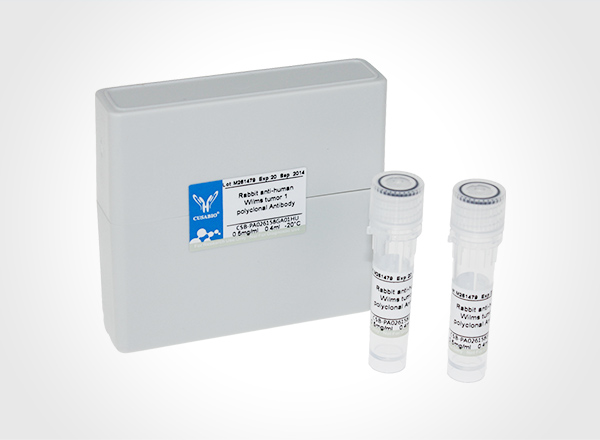
Liquid
Note: We will preferentially ship the format that we have in stock, however, if you have any special requirement for the format, please remark your requirement when placing the order, we will prepare according to your demand.
Storage
Upon receipt, store at -20°C or -80°C. Avoid repeated freeze.
Lead Time
Basically, we can dispatch the products out in 1-3 working days after receiving your orders. Delivery time maybe differs from different purchasing way or location, please kindly consult your local distributors for specific delivery time.
Note: All of our proteins are default shipped with normal blue ice packs, if you request to ship with dry ice, please communicate with us in advance and extra fees will be charged.
Usage
For Research Use Only. Not for use in diagnostic or therapeutic procedures.
Probable peripherally associated component of the endosomal sorting required for transport complex III (ESCRT-III) which is involved in multivesicular bodies (MVBs) formation and sorting of endosomal cargo proteins into MVBs. MVBs contain intraluminal vesicles (ILVs) that are generated by invagination and scission from the limiting membrane of the endosome and mostly are delivered to lysosomes enabling degradation of membrane proteins, such as stimulated growth factor receptors, lysosomal enzymes and lipids. The MVB pathway appears to require the sequential function of ESCRT-O, -I,-II and -III complexes. ESCRT-III proteins mostly dissociate from the invaginating membrane before the ILV is released. The ESCRT machinery also functions in topologically equivalent membrane fission events, such as the terminal stages of cytokinesis and the budding of enveloped viruses (HIV-1 and other lentiviruses). ESCRT-III proteins are believed to mediate the necessary vesicle extrusion and/or membrane fission activities, possibly in conjunction with the AAA ATPase VPS4. Involved in cytokinesis. Involved in recruiting VPS4A and/or VPS4B to the midbody of dividing cells. May also be involved in chromosome condensation. Targets the Polycomb group (PcG) protein BMI1/PCGF4 to regions of condensed chromatin. May play a role in stable cell cycle progression and in PcG gene silencing.
Gene References into Functions
Letter: rs6860 polymorphism of the CHMP1A gene, is associated with fibromyalgia susceptibility in southern Spanish women.PMID:29247346
we identified Ser(179) and Ser(182) located in the C-terminal region of the CHMP1A as major phosphorylation sites that cause a mobility shift.PMID:23748770
Study reports the discovery of a chimeric RNA between ZC3HAV1L and CHMP1A in human, located on chromosome 7 and 16, respectively. The fusion occurs at an exon-exon boundary, and was detected both computationally and experimentally from different cells or tissue types.PMID:23273016
Our results suggest that CHMP1A serves as a critical link between cytoplasmic signals and BMI1-mediated chromatin modifications that regulate proliferation of central nervous system progenitor cells.PMID:23023333
our results demonstrate that Chmp1A functions as a tumor suppressor gene in renal cellsPMID:22261332
Chmp1A regulates tumor growth through ATM sugnaling and that neclear locaization of Chmp1A is reqired for the growth inhibition and ATM activation.PMID:21705858
UBPY MIT domain and another ubiquitin isopeptidase, AMSH, reveals common interactions with CHMP1A and CHMP1B but a distinct selectivity of AMSH for CHMP3/VPS24, a core subunit of the ESCRT-III complex, and UBPY for CHMP7.PMID:17711858
Chmp1A is a novel tumor suppressor, especially in pancreas and that Chmp1A regulates tumor growth potentially through p53 signaling pathway.PMID:18787405
Both Vps4A and CHMP1A localized in the vicinity of viral cytoplasmic assembly compartments, sites of viral maturation that develop in Cytomegalovirus-infected cells. Thus, ESCRT machinery is involved in the final steps of HCMV replication.PMID:19640981
Show
More
Hide
All
Subcellular Location
Cytoplasm. Endosome membrane; Peripheral membrane protein. Nucleus matrix. Note=The cytoplasmic form is partially membrane-associated and localizes to early endosomes. The nuclear form remains associated with the chromosome scaffold during mitosis. On overexpression, it localizes to nuclear bodies characterized by nuclease-resistant condensed chromatin.
Protein Families
SNF7 family
Tissue Specificity
Expressed in placenta, cultured skin fibroblasts and in osteoblast cell line MG-63.