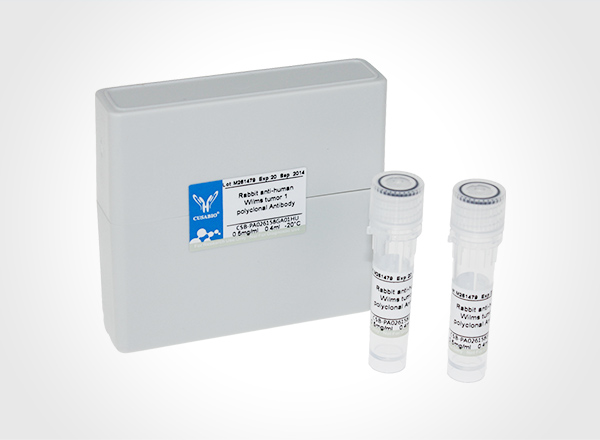
Upon receipt, store at -20°C or -80°C. Avoid repeated freeze.
Lead Time
Basically, we can dispatch the products out in 1-3 working days after receiving your orders. Delivery time maybe differs from different purchasing way or location, please kindly consult your local distributors for specific delivery time.
Note: All of our proteins are default shipped with normal blue ice packs, if you request to ship with dry ice, please communicate with us in advance and extra fees will be charged.
Usage
For Research Use Only. Not for use in diagnostic or therapeutic procedures.
ATP-dependent chromatin-remodeling factor which functions as substrate recognition component of the transcription regulatory histone acetylation (HAT) complex SAGA. Regulates polymerase II transcription. Also required for efficient transcription by RNA polymerase I, and more specifically the polymerase I transcription termination step. Regulates negatively DNA replication. Not only involved in transcription-related chromatin-remodeling, but also required to maintain a specific chromatin configuration across the genome. Is also associated with histone deacetylase (HDAC) activity. Required for the bridging of SNF2, the FACT complex, the PAF complex as well as the U2 snRNP complex to H3K4me3. Functions to modulate the efficiency of pre-mRNA splicing in part through physical bridging of spliceosomal components to H3K4me3. Required for maintaining open chromatin and pluripotency in embryonic stem cells.
Gene References into Functions
CHD1 loss is associated with an increased sensitivity to PARP inhibition and anti-cancer drugs that induce DNA intercross-strand links in prostate tumors.PMID:28383660
Increased CHD1L protein expression was significantly associated with poor overall survival in pancreatic cancer patients.PMID:28646284
CHD1 facilitates substrate handover from XPC to the downstream TFIIH (transcription factor IIH).PMID:29018037
CHD1 is required for the induction of osteoblast-specific gene expression, extracellular-matrix mineralization and ectopic bone formation in vivo. Genome-wide occupancy analyses revealed increased CHD1 occupancy around the transcriptional start site of differentiation-activated genes.PMID:28475736
examined the role of CHD1 in DNA double-strand break (DSB) repair in prostate cancer cells; findings show that CHD1 is required for the recruitment of CtIP to chromatin and subsequent end resection during DNA DSB repair; data support a role for CHD1 in opening the chromatin around the DSB to facilitate the recruitment of homologous recombination (HR) proteinsPMID:27596623
In PTEN-deficient prostate and breast cancers, CHD1 depletion profoundly and specifically suppressed cell proliferation, cell survival and tumorigenic potential.PMID:28166537
The authors have identified an additional conserved domain C-terminal to the SANT-SLIDE domain and determined its structure by multidimensional heteronuclear NMR spectroscopy. They have termed this domain the CHD1 helical C-terminal (CHCT) domain as it is comprised of five alpha-helices arranged in a variant helical bundle topology.PMID:27591891
These results indicate that CHD1 is a positive regulator of influenza virus multiplication and suggest a role for chromatin remodeling in the control of the influenza virus life cycle.PMID:26792750
These data link the assembly of methylated KDM1A and CHD1 with AR-dependent transcription and genomic translocations, thereby providing mechanistic insight into the formation of TMPRSS2-ERG gene fusions during prostate-tumor evolution.PMID:26751641
The double chromodomains of CHD1 adopt an 'open pocket' to interact with the free N-terminal amine of H3K4, and the open pocket permits the NS1 mimic to bind in a distinct conformation.PMID:24853335
identify coordinate loss of MAP3K7 and CHD1 as a unique driver of aggressive prostate cancer developmentPMID:25770290
CHD1 and CHD2 act as positive regulators of HIV-1 gene expression.PMID:25297984
results demonstrate the ability of confocal microscopy and FISH to identify the cell-to-cell differences in common gene fusions such as TMPRSS2-ERG that may arise independently within the same tumor focusPMID:25175909
Data indicate that chromodomain-helicase-DNA-binding protein CHD1, neoplasm protein GREB1 and karyopherin alpha 2 protein KPNA2 as critical mediators of miR-26a and miR-26b elicited cell growth.PMID:24735615
CHD1 is the 5q21 tumor suppressor gene in prostate cancerPMID:23492366
findings suggest that CHD1 deletion may underlie cell invasiveness in a subset of prostate cancers, and indicate a possible novel role of altered chromatin remodeling in prostate tumorigenesisPMID:22179824
findings collectively suggest that distinct CHD1-associated alterations of genomic structure evolve during and are required for the development of prostate cancerPMID:22139082
CHD1, was the most "dietary sensitive" genes, as methylation of their promoters was associated with intakes of at least two out of the eight dietary methyl factors examined.PMID:22048254
that hPaf1/PD2 in association with MLL1 regulates methylation of H3K4 residues, as well as interacts and regulates nuclear shuttling of chromatin remodeling protein CHD1, facilitating its function in pancreatic cancer cellsPMID:22046413
Mediator coactivator complex, which controls PIC assembly, is also necessary for CHD1 recruitmentPMID:21979373
associates with NCoR and histone deacetylase as well as with RNA splicing proteinsPMID:12890497
yeast and human CHD1 have diverged in their ability to discriminate covalently modified histones and link histone modification-recognition and non-covalent chromatin remodeling activities within a single human proteinPMID:16263726
the structure of the tandem arrangement of the human CHD1 chromodomains, and its interactions with histone tailsPMID:16372014
analysis of chromodomains in human and fungal Chd1PMID:17098252
overexpression of CHD1L could sustain tumor cell survival by preventing Nur77-mediated apoptosisPMID:19441106
Show
More
Hide
All
Subcellular Location
Nucleus. Cytoplasm.
Protein Families
SNF2/RAD54 helicase family
Tissue Specificity
Expressed in many tissues including in the brain, where the highest level of expression is found in the cerebellum and basal ganglia.