It differs from different batches. Please contact us to confirm it.
Buffer
-20°C, pH7.4 PBS, 0.05% NaN3, 40% Glycerol
Tested Applications
ELISA,WB,IHC
Storage
Upon receipt, store at -20°C or -80°C. Avoid repeated freeze.
Lead Time
Basically, we can dispatch the products out in 1-3 working days after receiving your orders. Delivery time maybe differs from different purchasing way or location, please kindly consult your local distributors for specific delivery time.
Note: All of our proteins are default shipped with normal blue ice packs, if you request to ship with dry ice, please communicate with us in advance and extra fees will be charged.
Usage
For Research Use Only. Not for use in diagnostic or therapeutic procedures.
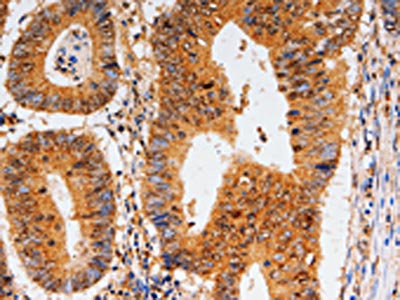
The image on the left is immunohistochemistry of paraffin-embedded Human colon cancer tissue using CSB-PA871419(CDK6 Antibody) at dilution 1/10, on the right is treated with fusion protein. (Original magnification: ×200)
Gel: 10%SDS-PAGE, Lysate: 40 μg, Lane: Jurkat cells, Primary antibody: CSB-PA871419(CDK6 Antibody) at dilution 1/150, Secondary antibody: Goat anti rabbit IgG at 1/8000 dilution, Exposure time: 10 seconds
Review:
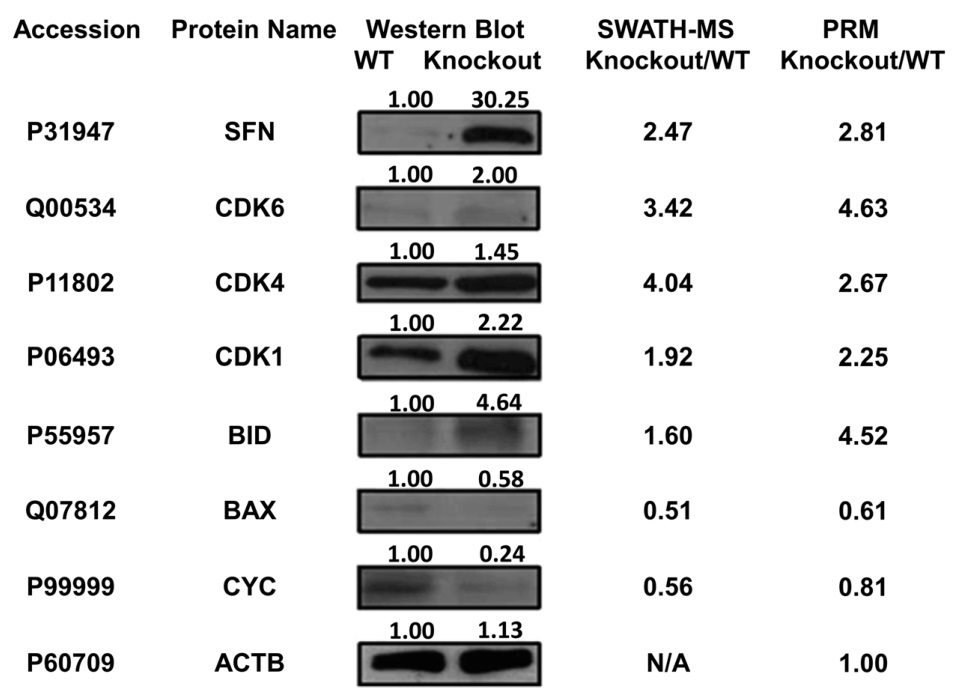
Relative quantitation of miR-26a-regulated proteins that were involved in the p53 signaling pathway using sequential window acquisition of all theoretical mass spectra (SWATH-MS), parallel reaction monitoring (PRM), and western blot. The SWATH-MS and PRM results are presented as ratios (mean ± standard error).
Serine/threonine-protein kinase involved in the control of the cell cycle and differentiation; promotes G1/S transition. Phosphorylates pRB/RB1 and NPM1. Interacts with D-type G1 cyclins during interphase at G1 to form a pRB/RB1 kinase and controls the entrance into the cell cycle. Involved in initiation and maintenance of cell cycle exit during cell differentiation; prevents cell proliferation and regulates negatively cell differentiation, but is required for the proliferation of specific cell types (e.g. erythroid and hematopoietic cells). Essential for cell proliferation within the dentate gyrus of the hippocampus and the subventricular zone of the lateral ventricles. Required during thymocyte development. Promotes the production of newborn neurons, probably by modulating G1 length. Promotes, at least in astrocytes, changes in patterns of gene expression, changes in the actin cytoskeleton including loss of stress fibers, and enhanced motility during cell differentiation. Prevents myeloid differentiation by interfering with RUNX1 and reducing its transcription transactivation activity, but promotes proliferation of normal myeloid progenitors. Delays senescence. Promotes the proliferation of beta-cells in pancreatic islets of Langerhans. May play a role in the centrosome organization during the cell cycle phases.
Gene References into Functions
CDK6 inhibition and MiR-320c overexpression attenuated IL-1beta-induced increases in expression of inflammatory products such as iNOS and MMP13 and decreased the expression of anabolic products such as COL2A1 and aggrecan.PMID:30466085
Our data suggested that miR-29a could play an important role in inhibiting proliferation and motility of cancerous Schwann cells, and may suppress tumor growth through upregulation of CDK6.PMID:29023945
High CDK6 Expression is associated with Oral Squamous Cell Carcinomas.PMID:29693970
The results indicate that C-glycosyl flavone may exert induction of apoptosis, cell cycle arrest and inhibition of angiogenesis via CDK6. Thus, targeting CDK6 using C-glycosyl flavone may serve as a novel therapeutic approach for the treatment of breast, hepatic and colon cancers.PMID:29806604
the miR494/CDK6 axis has a significant tumorsuppressive effect on osteosarcoma.PMID:28990071
High CDK6 expression is associated with bladder carcinoma.PMID:27484176
Molecular dynamics simulations showed that the free energy barrier of the transition from open to closed state decreased ~47.2% after Thr177 phosphorylation, increasing the flexibility around the ATP-binding pocket. Binding preferences of 10 different inhibitors to open or closed state were also investigated.PMID:29108955
miRNA-195 was associated with tumor malignancy grade and might be involved in the development and progression of OVC. In addition, CDK6 was predicted to be a target gene of miRNA-195 and obviously increased in both OVC and OSCC.PMID:28621315
Results show that miR-218-5p is increased in bone metastases and promotes breast cancer cell proliferation by activating wnt signaling.PMID:27738322
Upregulation of CDK6 may be an important mechanism in overcoming fulvestrant-mediated growth inhibition in breast cancer cells.PMID:27252418
the MYU/hnRNP-K/CDK6 pathway functions downstream of Wnt/c-Myc signaling and plays a critical role in the proliferation and tumorigenicity of colon cancer cells.PMID:27568568
The deletion of CBX3 directly enforces the expression of CDK6 and p21.PMID:28193906
CDK6-mediated suppression of CD25 is required for initiation of T-ALL by activated Notch1PMID:26707936
CDK6 overexpression is associated with cancer.PMID:27206849
High CDK6 expression is associated with Melanoma.PMID:26988987
Palbociclib can overcome mutations in cyclin dependent kinase 6 that break hydrogen bonds between the drug and the proteinPMID:28168755
Our study proved that the CDK6 gene is a target of miR-637, and demonstrated the regulatory association between miR-637 and CDK6PMID:27794186
miR-1299 inhibited CDK6 expression and bound to the 3'UTR of CDK6.PMID:27490780
Results show that NEAT1 regulated CDK6 expression in laryngeal squamous cell cancer (LSCC) cells which was mediated by miR-107; NEAT1 plays an oncogenic role in the tumorigenesis of LSCC.PMID:26822763
lower expression in cisplatin-resistant non-small-cell lung carcinomaPMID:25703099
three uniquely identified proteins (CDK6 , galectin-3-binding protein and LDH C) were found, which show tight connection with prostate cancer and presence of all of them was previously linked to certain aspects of prostate cancerPMID:26503549
These data enhance our understanding of the important role that GAS5 plays in the molecular etiology of GC and suggest a potential of GAS5 as a new therapeutic target for GC treatment.PMID:26278580
MiR-26a and mir-584 inhibit the binding of hnRNP A1-CDK6 mRNA and induce colorectal cancer cell apoptosis.PMID:26494299
only miR-34a was prognostic for RFS (RR, 11.5; P = 0.027). miR-34a expression was inversely correlated with that of c-MET and CDK6 in non-small cell lung cancer , and had prognostic significance for RFS, especially in adenocarcinoma patients.PMID:26104764
We conclude that Bz-surviving MM cells display a GRP78(HIGH)/p21(HIGH)/CDK6(LOW)/P-Rb(LOW) profile, and these markers may identify quiescent MM cells capable of fueling recurrences.PMID:26025442
differential expression of CDK6 underlies heterogeneity in stem cell quiescence states that functionally regulates this highly regenerative systemPMID:25704240
LINE-1 hypomethylation was associated with a higher cancer recurrence and CDK6 messenger RNA expression levels were inversely associated with LINE-1 methylation in hepatocellular carcinomas.PMID:25319577
miR-320c could inhibit the proliferation, migration and invasion of bladder cancer cells via regulating CDK6.PMID:25178497
SUMO1 modification stabilizes CDK6 protein and drives the cell cycle and glioblastoma progression.PMID:24953629
Cooperation of DLC1 and CDK6 affects breast cancer clinical outcomePMID:25425654
Our data suggest that miR-377 can suppress proliferation in MG-63 cells in part by targeting CDK6.PMID:25577249
genetic variants in CDK6 and PADI4 were associated with anti-citrullinated cyclic peptide status in rheumatoid arthritis DRB1*04 negative patientsPMID:25138370
CDK6 is a direct target of MLL fusion proteins, playing an important role in the proliferation advantage of MLL-rearranged ALL cells.PMID:24736461
The addition of CDK4/6 inhibitor palbociclib to letrozole in this phase 2 study significantly improved progression-free survival in women with advanced oestrogen receptor-positive and HER2-negative breast cancer.PMID:25524798
results suggest that DCK6 is a putative target of miR504 in of hypopharyngeal squamous cell carcinoma.PMID:24647829
cases with CDK6-positive expression experienced worse clinical outcome compared with those with CDK6-negative expression, supporting the oncogenic role of CDK6 in ESCC.PMID:24423610
these findings identify a direct relationship between control of the cell cycle by CDK6 and SAMHD1 activity, which is important for replication of lentiviruses, as well as other viruses whose replication may be regulated by intracellular dNTP availability.PMID:25015816
Findings begin to elucidate the role of miR-145 as an important regulator of chemoresistance in ovarian cancer by controlling both Cdk6 and Sp1.PMID:24510775
overexpression of hsa-miR-4516 downregulates STAT3, p-STAT3, CDK6, and UBE2N proteins that are consistently upregulated in psoriasis and induces apoptosis in HaCaT cells.PMID:24610393
An evolving tumor can only derive full benefit from from overexpression of CDK6 in the absence of P16INK4A.PMID:24161991
MYC-dependent breast cancer cells possess high MYC expression and high level of MYC phosphorylation, but are not sensitive to inhibition of CDK6.PMID:24444383
This interaction suggests that CDK6 regulates EYA2 activity, a mechanism that could be important in development and in cancer.PMID:24196439
Gas5 negatively regulates CDK6 (cyclin-dependent kinase 6) expression in vitro and in vivo in pancreatic cancer cells.PMID:24026436
data identify CDK6 as critical effector of MLL fusions in leukemogenesis that might be targeted to overcome the differentiation block associated with MLL-rearranged acute myeloid leukemiaPMID:24764564
Data indicate CDK6 as a putative target of miR-105 which is likely a main contributor to the inhibition of tumour cell growth observed in our assays.PMID:23950948
CDK6 rs42041 was associated with a remitting course of juvenile idiopathic arthritis.PMID:24347572
We propose that the identified CDK6 mutation leads to reduced cell proliferation and impairs the correct functioning of the centrosome in microtubule organization and its positioning near the nucleus which are key determinants during neurogenesis.PMID:23918663
Downregulation of GAS5 promotes bladder cancer cell proliferation, partly by regulating CDK6.PMID:24069260
results showed that let-7a acted as a tumor suppressor in ES by targeting CDK6, and it may provide novel diagnostic and therapeutic options for human Ewing sarcoma clinical operation in futurePMID:24383407
CDK6 was identified as a novel functional target of miR200a. Our data indicate that miR200a functions as a potential tumor suppressor in HCC.PMID:24009066
Protein kinase superfamily, CMGC Ser/Thr protein kinase family, CDC2/CDKX subfamily
Tissue Specificity
Expressed ubiquitously. Accumulates in squamous cell carcinomas, proliferating hematopoietic progenitor cells, beta-cells of pancreatic islets of Langerhans, and neuroblastomas. Reduced levels in differentiating cells.