CDH3 Antibody

Code: CSB-PA10715A0Rb
Size:
20μg
20μg50μg100μg
US$83
Quantity:
Species Reactivity: Human
Raised in: Rabbit
Application: ELISA, IHC, IF
For inquiries on large quantities or another requirements
Send an Inquiry
Start an on-line Chat
Online ordering is currently available for U.S. customers only. For orders outside the U.S., please kindly submit an inquiry or start a chat with us.

Product Details

Uniprot NO.
Target Names
CDH3
Alternative Names
CDH3; CDHP; Cadherin-3; Placental cadherin; P-cadherin
Raised in
Rabbit
Species Reactivity
Human
Immunogen
Recombinant Human Cadherin-3 protein (117-360AA)
Immunogen Species
Homo sapiens (Human)
Conjugate
Non-conjugated
Clonality
Polyclonal
Isotype
IgG
Purification Method
>95%, Protein G purified
Concentration
It differs from different batches. Please contact us to confirm it.
Buffer
Preservative: 0.03% Proclin 300
Constituents: 50% Glycerol, 0.01M PBS, PH 7.4
Form
Liquid
Note: We will preferentially ship the format that we have in stock, however, if you have any special requirement for the format, please remark your requirement when placing the order, we will prepare according to your demand.
Tested Applications
ELISA, IHC, IF
Recommended Dilution
ApplicationRecommended Dilution
IHC1:20-1:200
IF1:50-1:200
Storage
Upon receipt, store at -20°C or -80°C. Avoid repeated freeze.
Lead Time
Basically, we can dispatch the products out in 1-3 working days after receiving your orders. Delivery time maybe differs from different purchasing way or location, please kindly consult your local distributors for specific delivery time.
Note: All of our proteins are default shipped with normal blue ice packs, if you request to ship with dry ice, please communicate with us in advance and extra fees will be charged.
Usage
For Research Use Only. Not for use in diagnostic or therapeutic procedures.
Datasheet & COA
Images
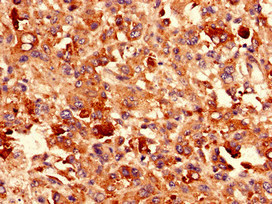
  • Immunohistochemistry analysis of human melanoma using CSB-PA10715A0Rb at dilution of 1:100

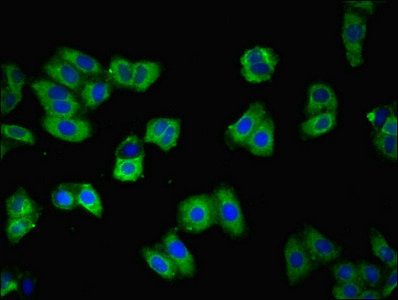
  • Immunofluorescent analysis of HepG2 cells using CSB-PA10715A0Rb at dilution of 1:100 and Alexa Fluor 488-congugated AffiniPure Goat Anti-Rabbit IgG(H+L)

Customer Reviews and Q&A

 Customer Reviews

Target Background

Function(From Uniprot)
Cadherins are calcium-dependent cell adhesion proteins. They preferentially interact with themselves in a homophilic manner in connecting cells; cadherins may thus contribute to the sorting of heterogeneous cell types.
Gene References into Functions
  1. the evaluation of P-cadherin expression in lymph node metastases is an important predictor of disease outcome in breast cancer axillary lymph node metastases PMID:28084338
  2. P-cadherin (CDH3) is highly dominant in both mouse and human retinal pigment epithelium in situ. The degree of dominance of P-cadherin is surprisingly large, with mouse Cdh3 and human CDH3 accounting for 82-85% and 92-93% of the total of the three cadherin mRNAs, respectively. PMID:29338041
  3. Ophthalmologists should consider the diagnosis of CDH3-related retinopathy in individuals with such clinical features whether or not there is frank hypotrichosis. PMID:26885695
  4. Adhesive dimerization of human P-cadherin catalyzed by a chaperone-like mechanism has been described. PMID:27545624
  5. Results strongly advocated a pathogenic potential of the novel variants of CDH3 for the HJMD phenotypes. PMID:27456782
  6. CDH3-related disease is characterized by a childhood-onset, progressive chorioretinal atrophy confined to the posterior pole. PMID:27386845
  7. This study aimed to demonstrate the usefulness of mRNA expression levels of cadherin 3 (CDH3) in brush cytology specimens combined with cytology for the diagnosis of malignant biliary stricture PMID:27399126
  8. CDH3 was negatively regulated at the genomic, transcriptional, and epigenetic level in PCa. PMID:26771841
  9. The P-cadherin structure and packing arrangement provide new and valuable information towards the complete structural characterization of the cadherin dimerization pathway. PMID:25849494
  10. In patients with breast infiltrating ductal carcinoma, P-cadherin was expressed in 40.5% of cases; P-cadherin expression had a negative relationship with the overall survival PMID:26299056
  11. results establish a link between aberrant P-cadherin expression and hypoxic, glycolytic and acid-resistant breast cancer cells, suggesting a possible role for this marker in cancer cell metabolism PMID:25269858
  12. Downregulation of P-cadherin expression appears to induce tumorigenicity in hepatocellular carcinoma. PMID:25337260
  13. P-cadherin is able to potentiate ligand-dependent signaling of insulin-like growth factor 1 receptor in malignant keratinocytes and epidermal growth factor receptor in dysplastic cells. PMID:25322858
  14. These findings indicate that HOXA9 contributes to poor outcomes in Epithelial ovarian cancer in part by promoting intraperitoneal dissemination via its induction of P-cadherin. PMID:25023983
  15. The X-dimer plays a key role in the specific cell-cell adhesion mediated by human P-cadherin. PMID:24559158
  16. Increased expression of CDH3 is associated with colorectal cancer. PMID:23682078
  17. Loss of P-cadherin expression is associated with oral squamous cell carcinoma. PMID:23740836
  18. P-cadherin and vimentin could be adjunctive to the commonly used immunohistochemical surrogates for basal-like breast cancer identification PMID:24139214
  19. High CDH3 expression is associated with aggressive breast tumour behaviour. PMID:23405208
  20. P-cadherin-mediated signaling is a melanocyte subtype-specific topobiological regulator of normal human pigmentation, possibly via GSK3beta-mediated canonical Wnt signaling. PMID:23334344
  21. LA carcinomas and carcinomas negative for basal markers were more often negative for epithelial cell adhesion molecule (Ep-CAM) and P-cadherin PMID:22531681
  22. Hypotrichosis associated with juvenile macular dystrophy is caused by mutations in CDH3, which encodes P-cadherin, a member of the classic cadherin family. PMID:23143461
  23. P-cadherin regulates human hair growth and cycling via canonical Wnt signaling and transforming growth factor-beta2. PMID:22696062
  24. Compared with conventional carcinomas, serrated adenocarcinomas showed no significant difference in P-cadherin staining. PMID:22209340
  25. A novel nonsense CDH3 mutation in hypotrichosis with juvenile macular dystrophy PMID:22348569
  26. High P-cadherin promotes liver metastasis and is associated with colon cancer. PMID:21703417
  27. P-cadherin cooperates with insulin-like growth factor-1 receptor to promote metastatic signaling of gonadotropin-releasing hormone in ovarian cancer via p120 catenin. PMID:21317933
  28. a novel splice site mutation (c.IVS10-1 G --> A) in intron 10, which leads to skipping of exon 11 in CDH3 gene in family with hypotrichosis with juvenile macular dystrophy PMID:20140736
  29. P-cadherin positivity is associated with high-grade breast cancer subtypes and well-established markers of poor prognosis. PMID:20852590
  30. Stable knockdown of P-cadherin in RT-112 cells diminished invasion and migration, and promoted intercellular adhesion PMID:20473917
  31. Data conclude that P-cadherin counteracts the expression and function of myosin II-B, resulting in the suppression of the invasive and migratory behaviour of BLM melanoma cells. PMID:20860798
  32. P-cadherin and CD24 are expressed in carcinomas of the biliary tract with high frequency and at an early stage of carcinogenesis. PMID:20621328
  33. Overexpression of CDH3 is associated with basal-like phenotype in breast cancer. PMID:19882246
  34. C/EBPbeta is able to up-regulate CDH3 promoter activity in breast cancer cells; the expression of P-cadherin linked with a worse prognosis of breast cancer patients PMID:20385540
  35. 2 splice site mutations (one novel and one recurrent mutation) were in the CDH3 gene leading to hypotrichosis with juvenile macular dystrophy. PMID:20203473
  36. P-cadherin gene expression proved to be a significant independent prognostic factor for both cancer-specific and recurrence-free survival in bladder cancer PMID:20204300
  37. high levels of 80 kDa sP-cadherin in human milk. PMID:11891861
  38. results point to the close relationship between the de novo expression of P-cadherin and the disruption of the cadherin/catenins complex with the squamoid phenotype of mucoepidermoid carcinoma of the thyroid (MECT) PMID:12021924
  39. may play a central role in the development of endometriosis by mediating endometrial-peritoneal cell interactions in a homophilic manner PMID:12112590
  40. Regulated expression of P-cadherin/beta-catenin complexes in ovarian tumor cells may represent a key step in disease progression PMID:12800191
  41. Inappropriate PCAD expression in mouse mammary epithelium is compatible with normal mammary gland function. PMID:12919105
  42. An absent P-cadherin expression could constitute a hallmark of aggressive biological behaviour in oral squamous cell carcinoma. PMID:15375751
  43. In summary, we have ascertained a third gene associated with ectrodactyly and have demonstrated a hitherto unrecognised role of CDH3 in shaping the human hand PMID:15805154
  44. A short truncated 50 kDa form of the N-terminal part of P-cadherin expresses in melanoma cell lines compared to melanocytes and keratinocytes. PMID:15817166
  45. P-cadherin may have a role in progression of oral squamous cell carcinoma PMID:15967043
  46. P-cadherin expression was strongly associated with tumor aggressiveness, being a good indicator of clinical outcome, and the aberrant expression of P-cadherin in breast cancer might be regulated by gene promoter hypomethylation. PMID:16115928
  47. Novel heterozygous CDH3 mutations in hypotrichosis with juvenile macular dystrophy in two nonconsaguineous families. PMID:17342797
  48. P-cadherin may be regarded as an additional immunohistochemical marker of basal-like breast carcinomas. PMID:18074863
  49. P-cadherin is a newly defined transcriptional target gene of p63, with a crucial role in hair follicle morphogenesis as well as the apical ectodermal ridge during limb bud outgrowth in humans. PMID:18199584
  50. Tunisian IBCs are characterized by frequent basal and ERBB2 phenotypes. Surprisingly, luminal inflammatory breast cancer also express the basal marker P-cadherin. PMID:18230143

Show More

Hide All

Subcellular Location
Cell membrane; Single-pass type I membrane protein.
Tissue Specificity
Expressed in some normal epithelial tissues and in some carcinoma cell lines.
Database Links

HGNC: 1762

UNIGENE: Hs.191842

KEGG: hsa:1001

STRING: 9606.ENSP00000264012

OMIM: 114021

icon of phone
Call us
301-363-4651 (Available 9 a.m. to 5 p.m. CST from Monday to Friday)

icon of address
Address
No. 269, Shendun 5th Road, Donghu Hi-Tech Development Area, Hubei Province, 430206, P.R.China
icon of social media
Join us with

Subscribe newsletter

Leave a message

* To protect against spam, please pass the CAPTCHA test below.
CAPTCHA verification
© 2007-2025 CUSABIO TECHNOLOGY LLC All rights reserved. 鄂ICP备15011166号-1
Select 0 Products