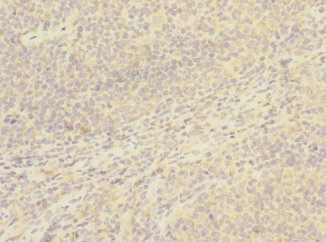
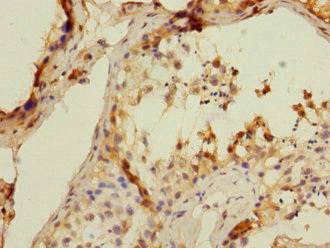
Recombinant Human T-cell surface glycoprotein CD8 beta chain protein (22-170AA)
Immunogen Species
Homo sapiens (Human)
Conjugate
Non-conjugated
Isotype
IgG
Purification Method
Antigen Affinity Purified
Concentration
It differs from different batches. Please contact us to confirm it.
Buffer
PBS with 0.02% sodium azide, 50% glycerol, pH7.3.
Tested Applications
ELISA, IHC
Recommended Dilution
Application
Recommended Dilution
IHC
1:20-1:200
Storage
Upon receipt, store at -20°C or -80°C. Avoid repeated freeze.
Lead Time
Basically, we can dispatch the products out in 1-3 working days after receiving your orders. Delivery time maybe differs from different purchasing way or location, please kindly consult your local distributors for specific delivery time.
Note: All of our proteins are default shipped with normal blue ice packs, if you request to ship with dry ice, please communicate with us in advance and extra fees will be charged.
Usage
For Research Use Only. Not for use in diagnostic or therapeutic procedures.
Integral membrane glycoprotein that plays an essential role in the immune response and serves multiple functions in responses against both external and internal offenses. In T-cells, functions primarily as a coreceptor for MHC class I molecule:peptide complex. The antigens presented by class I peptides are derived from cytosolic proteins while class II derived from extracellular proteins. Interacts simultaneously with the T-cell receptor (TCR) and the MHC class I proteins presented by antigen presenting cells (APCs). In turn, recruits the Src kinase LCK to the vicinity of the TCR-CD3 complex. A palmitoylation site in the cytoplasmic tail of CD8B chain contributes to partitioning of CD8 into the plasma membrane lipid rafts where signaling proteins are enriched. Once LCK recruited, it initiates different intracellular signaling pathways by phosphorylating various substrates ultimately leading to lymphokine production, motility, adhesion and activation of cytotoxic T-lymphocytes (CTLs). Additionally, plays a critical role in thymic selection of CD8+ T-cells.
Gene References into Functions
results suggest that mycoplasma induces a resistance to multiple drugs in hepatocarcinoma cells which required the interaction of P37 and Annexin A2. The pathway downstream this interaction needs to be exploredPMID:28976984
[review] Coreceptor CD8alphabeta contributes to the antigen-recognition process by binding to a largely invariant region of the MHCI molecule and by promoting intracellular signaling.PMID:21954283
A clustering of DNase hypersensitivity sites and matrix attachment regions capable of binding SATB1 and GATA-3, colocalized at the 3' end of the CD8B gene, suggests that this region is an epigenetic regulator of CD8 expression.PMID:11937547
RT-PCR, and related methodologies are not useful substitutes for assessment of CD4 and CD8 cell numbers in HIV-infected persons.PMID:12702212
study demonstrated differential mRNA expression patterns of CD8beta splice variants in thymocytes and in resting, memory, and activated primary CD8(+) T cellsPMID:18490743
Show
More
Hide
All
Subcellular Location
[Isoform 1]: Cell membrane; Single-pass type I membrane protein.; [Isoform 2]: Cell membrane; Single-pass type I membrane protein.; [Isoform 3]: Secreted.; [Isoform 4]: Cell membrane; Single-pass type I membrane protein.; [Isoform 5]: Cell membrane; Single-pass type I membrane protein.; [Isoform 6]: Secreted.; [Isoform 7]: Secreted.; [Isoform 8]: Secreted.
Tissue Specificity
Isoform 1, isoform 3, isoform 5, isoform 6, isoform 7 and isoform 8 are expressed in both thymus and peripheral CD8+ T-cells. Expression of isoform 1 is higher in thymus CD8+ T-cells than in peripheral CD8+ T-cells. Expression of isoform 6 is higher in pe