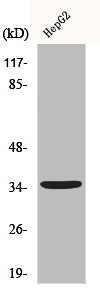
Synthesized peptide derived from the Internal region of Human CD1e.
Immunogen Species
Homo sapiens (Human)
Conjugate
Non-conjugated
Isotype
IgG
Purification Method
The antibody was affinity-purified from rabbit antiserum by affinity-chromatography using epitope-specific immunogen.
Concentration
It differs from different batches. Please contact us to confirm it.
Buffer
Liquid in PBS containing 50% glycerol, 0.5% BSA and 0.02% sodium azide.
Tested Applications
WB, ELISA
Storage
Upon receipt, store at -20°C or -80°C. Avoid repeated freeze.
Lead Time
Basically, we can dispatch the products out in 1-3 working days after receiving your orders. Delivery time maybe differs from different purchasing way or location, please kindly consult your local distributors for specific delivery time.
Note: All of our proteins are default shipped with normal blue ice packs, if you request to ship with dry ice, please communicate with us in advance and extra fees will be charged.
Usage
For Research Use Only. Not for use in diagnostic or therapeutic procedures.
T-cell surface glycoprotein CD1e, soluble binds diacetylated lipids, including phosphatidyl inositides and diacylated sulfoglycolipids, and is required for the presentation of glycolipid antigens on the cell surface. The membrane-associated form is not active.
Gene References into Functions
There was no association between polymorphisms of CD1E genes and the susceptibilities to Guillain-Barre syndrome.PMID:27653862
The interaction of LAPTM5 with CD1e and their colocalization in antigen processing compartments both suggest that LAPTM5 might influence the role of CD1e in the presentation of lipid antigens.PMID:22880058
in the late endosomes/lysosomes of dendritic cells, the acid pH promotes the binding of lipid antigens to CD1e through increased hydrophobic and ionic interactionsPMID:21481186
allelic variation in CD1E does not play a major role in determining multifocal motor neuropathy susceptibility.PMID:22003931
CD1e may positively or negatively affect lipid presentation by CD1b, CD1c, and CD1d.PMID:21844346
These data support that CD1e could have evolved to mediate lipid-exchange/editing processes.PMID:21788486
substitutions lead to amino acid changes at position 73 and 77 of the alpha1 domain in the former and at position 30 of the alpha2 domain in the latter suggesting that the CD1E gene is much more polymorphic than previously assumed.PMID:12144626
cellular and biochemical properties of the human and simian CD1e molecules are similar, suggesting that the particular intracellular distribution of CD1e is important for its physiological and/or immunological functionPMID:12671734
required for processing of the mycobcterial antigens hexamannosylated phosphatidyl-myo-inositols(PIM6); propose that, through this form of glycolipid editing, CD1e helps expand the repertoire of glycolipidic T cell antigens to optimize immune responsePMID:16311334
Data show that ubiquitination of CD1e appears to trigger its exit from Golgi compartments and its transport to endosomes.PMID:18208508
A polymorphism related to the capacity of the CD1E molecule to participate in the immune response to complex glycolipids is discovered in individuals who might display a CD1e-altered immune response to complex glycolipid antigens.PMID:18325888
CD1e propeptide is conserved during evolution, suggesting that it may also optimize the generation of CD1e molecules in other species.PMID:19196239
Show
More
Hide
All
Subcellular Location
[T-cell surface glycoprotein CD1e, membrane-associated]: Golgi apparatus membrane; Single-pass type I membrane protein. Early endosome. Late endosome. Note=Predominantly localized in the trans-Golgi network in immature dendritic cells, and as a cleaved, soluble protein in the lysosome lumen of mature dendritic cells.; [T-cell surface glycoprotein CD1e, soluble]: Lysosome lumen.
Tissue Specificity
Expressed on cortical thymocytes, dendritic cells, Langerhans cells, on certain T-cell leukemias, and in various other tissues.