Synthesized peptide derived from the Internal region of Human CD1C.
Immunogen Species
Homo sapiens (Human)
Conjugate
Non-conjugated
Isotype
IgG
Purification Method
The antibody was affinity-purified from rabbit antiserum by affinity-chromatography using epitope-specific immunogen.
Concentration
It differs from different batches. Please contact us to confirm it.
Buffer
Liquid in PBS containing 50% glycerol, 0.5% BSA and 0.02% sodium azide.
Tested Applications
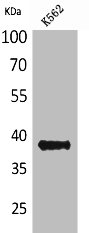
WB, ELISA
Storage
Upon receipt, store at -20°C or -80°C. Avoid repeated freeze.
Lead Time
Basically, we can dispatch the products out in 1-3 working days after receiving your orders. Delivery time maybe differs from different purchasing way or location, please kindly consult your local distributors for specific delivery time.
Note: All of our proteins are default shipped with normal blue ice packs, if you request to ship with dry ice, please communicate with us in advance and extra fees will be charged.
Usage
For Research Use Only. Not for use in diagnostic or therapeutic procedures.
Antigen-presenting protein that binds self and non-self lipid and glycolipid antigens and presents them to T-cell receptors on natural killer T-cells.
Gene References into Functions
these results demonstrated the mechanism that suppression of CD1c by BCG infection is mediated by miR-381-3pPMID:27296666
We found a significant difference in the density of intraepidermal CD1c+ cells between the examined lesions; the mean CD1c cell count was 7.00/mm(2) for invasive melanomas, 2.94 for in situ melanomas, and 13.35 for dysplastic neviPMID:28331853
Stressed beta-cells have little effect on human BDCA1-expressed dendritic cells activation and function, while enterovirus-infected beta-cells impact these cells significantly.PMID:26888163
Circulating atopic dermatitis pre-dendritic CD1c+ cells are premature and bear atopic characteristics even without tissue-specific stimulation, suggesting that their development is not only influenced by the skin microenvironment, but also by the local milieu in the blood.PMID:27701668
human CD1c adopts different conformations dependent on ligand occupancy of its groove, with CE and ASG stabilizing CD1c conformations that provide a footprint for binding of CD1c self-reactive T-cell receptorsPMID:26884207
There was a significant increase of blood CD1c(+) myeloid dendritic cells in autoimmune uveitis patients. The mature phenotype and function of CD1c(+) mDC1 were regulated by TNFalpha via a p38 MAPK-dependent pathway.PMID:25784146
decidual CD1c(+) dendritic cells with Toxoplasma gondii infection have enhanced cytotoxicity of decidual natural killer cellsPMID:24573986
hMPV-infected BDCA-1(+) and BDCA-3(+) mDCs induced expansion of Th17 cells, in response to RSV, BDCA-1(+) mDCs induced expansion of Th1 cells and BDCA-3(+) mDCs induced expansion of Th2 cells and TregsPMID:24918929
mLPA-specific T cells efficiently kill CD1c(+) acute leukemia cells, poorly recognize nontransformed CD1c-expressing cells, and protect immunodeficient mice against CD1c(+) human leukemia cells.PMID:24935257
Activated dendritic cell subsets expressing CD141/CLEA9A/CD1c, likely recruited into the tubulointerstitium, are positioned to play a role in the development of fibrosis and, thus, progression to chronic kidney disease.PMID:24049150
CD1c+ myeloid dendritic cells were increased in idiopathic pulmonary fibrosis patients versus controls.PMID:19556741
RSV infection induces a distinct pattern of costimulatory molecule expression and cytokine production by BDCA-1(+) and BDCA-3(+) mDCs, and impairs their ability to stimulate T cell proliferation.PMID:23829893
Downregulation of both CD1c and CD1d expression through a Vpu-dependent and Nef-independent mechanism, and the concomitant HIV-1-induced production of host cholesterol decreased the extent of CD1c and CD1d modulation.PMID:23347583
Molecular mechanisms by which CD1c captures distinct classes of self- and mycobacterial antigens are reviewed. Review.PMID:23468110
CD1c-PM complexes stain T cell receptors (TCRs), providing direct evidence for a ternary interaction among CD1c-lipid-TCR.PMID:23530121
Data suggest that when CD1c is up-regulated, ILT4 is recruited to CD1c, thus reducing the inhibitory effect of immunoglobulin-like transcript 4 (ILT4) on CD1d recognition.PMID:22888216
Escherichia coli-activated CD1c(+) dendritic cells suppressed T-cell proliferation in an IL-10-dependent mannerPMID:22678905
Identification of self-lipids presented by CD1c and CD1d proteins.PMID:21900247
Accumulation of BDCA-1 and BDCA-2 around neovessels showed that mDCs and pDCs are recruited to advanced arteriosclerotic plaques.PMID:21436634
both CD1d and CD1c are upregulated by retinoic acid receptor alpha signaling in human B cellsPMID:21451111
Expression of dendritic cell markers CD11c/BDCA-1 and CD123/BDCA-2 in coronary artery disease upon activation in whole blood.PMID:20888334
B cell chronic lymphocytic leukemia cells significantly down-regulated transcripts from CD1c and CD1d genes, permitting cells to evade the immune responsePMID:12454749
CD1c expression was detected on monocytes in the majority of sickle cell anemia patients, and was highly expressed in Sbeta thalassemia patients.PMID:15556687
Data show that CD1c represents the second member of the CD1 family to present lipopeptides.PMID:19468063
A model of CD1c with bound mannosyl-beta(1)-phosphomycoketide was constructed and analyzed through molecular dynamics simulations.PMID:19828201
Show
More
Hide
All
Subcellular Location
Cell membrane; Single-pass type I membrane protein. Endosome membrane; Single-pass type I membrane protein. Lysosome.
Tissue Specificity
Expressed on cortical thymocytes, on certain T-cell leukemias, and in various other tissues.