CCDC6 Antibody

Code: CSB-PA623068LA01HU
Size:
20μg
20μg50μg100μg
US$83
Quantity:
Species Reactivity: Human
Raised in: Rabbit
Application: ELISA, WB, IHC, IF
For inquiries on large quantities or another requirements
Send an Inquiry
Start an on-line Chat
Online ordering is currently available for U.S. customers only. For orders outside the U.S., please kindly submit an inquiry or start a chat with us.

Product Details

Uniprot NO.
Target Names
CCDC6
Alternative Names
CCDC 6 antibody; CCDC6 antibody; CCDC6_HUMAN antibody; Coiled coil domain containing 6 antibody; Coiled coil domain containing protein 6 antibody; Coiled-coil domain-containing protein 6 antibody; D10S170 antibody; FLJ32286 antibody; H4 antibody; Papillary thyroid carcinoma encoded protein antibody; Papillary thyroid carcinoma-encoded protein antibody; Protein H4 antibody; PTC antibody; TPC antibody; TST 1 antibody; TST1 antibody
Raised in
Rabbit
Species Reactivity
Human
Immunogen
Recombinant Human Coiled-coil domain-containing protein 6 protein (347-440AA)
Immunogen Species
Homo sapiens (Human)
Conjugate
Non-conjugated
Isotype
IgG
Purification Method
>95%, Protein G purified
Concentration
It differs from different batches. Please contact us to confirm it.
Buffer
Preservative: 0.03% Proclin 300
Constituents: 50% Glycerol, 0.01M PBS, pH 7.4
Tested Applications
ELISA, WB, IHC, IF
Recommended Dilution
ApplicationRecommended Dilution
WB1:500-1:5000
IHC1:500-1:1000
IF1:50-1:200
Storage
Upon receipt, store at -20°C or -80°C. Avoid repeated freeze.
Lead Time
Basically, we can dispatch the products out in 1-3 working days after receiving your orders. Delivery time maybe differs from different purchasing way or location, please kindly consult your local distributors for specific delivery time.
Note: All of our proteins are default shipped with normal blue ice packs, if you request to ship with dry ice, please communicate with us in advance and extra fees will be charged.
Usage
For Research Use Only. Not for use in diagnostic or therapeutic procedures.
Datasheet & COA
Images
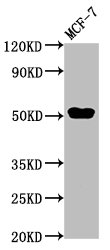
  • Western Blot
    Positive WB detected in: MCF-7 whole cell lysate
    All lanes: CCDC6 antibody at 3µg/ml
    Secondary
    Goat polyclonal to rabbit IgG at 1/50000 dilution
    Predicted band size: 54 kDa
    Observed band size: 54 kDa

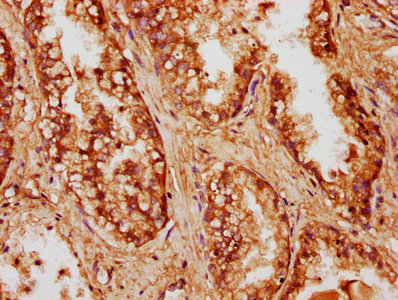
  • IHC image of CSB-PA623068LA01HU diluted at 1:500 and staining in paraffin-embedded human prostate cancer performed on a Leica BondTM system. After dewaxing and hydration, antigen retrieval was mediated by high pressure in a citrate buffer (pH 6.0). Section was blocked with 10% normal goat serum 30min at RT. Then primary antibody (1% BSA) was incubated at 4°C overnight. The primary is detected by a biotinylated secondary antibody and visualized using an HRP conjugated SP system.

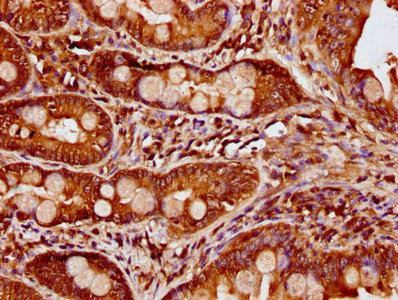
  • IHC image of CSB-PA623068LA01HU diluted at 1:500 and staining in paraffin-embedded human small intestine tissue performed on a Leica BondTM system. After dewaxing and hydration, antigen retrieval was mediated by high pressure in a citrate buffer (pH 6.0). Section was blocked with 10% normal goat serum 30min at RT. Then primary antibody (1% BSA) was incubated at 4°C overnight. The primary is detected by a biotinylated secondary antibody and visualized using an HRP conjugated SP system.

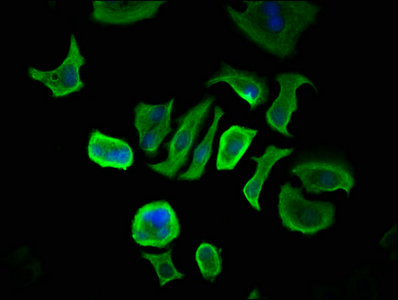
  • Immunofluorescence staining of MCF-7 cells with CSB-PA623068LA01HU at 1:166, counter-stained with DAPI. The cells were fixed in 4% formaldehyde, permeabilized using 0.2% Triton X-100 and blocked in 10% normal Goat Serum. The cells were then incubated with the antibody overnight at 4°C. The secondary antibody was Alexa Fluor 488-congugated AffiniPure Goat Anti-Rabbit IgG(H+L).

Customer Reviews and Q&A

 Customer Reviews

Target Background

Gene References into Functions
  1. FGFR inhibitors, particularly BGJ398, are therapeutic options for cholangiocarcinoma patients harboring FGFR2-CCDC6 fusions. PMID:27216979
  2. Our findings nevertheless suggest that CCDC6-RET fusions identified by multiplex testing are potential targets for nintedanib therapy. PMID:26787234
  3. we propose that the amount of CCDC6 protein in primary tumors, as reported in lung, may depend on the impairment of the CCDC6 turnover due to altered protein-protein interaction and post-translational modifications PMID:25885523
  4. Results show that RNA-binding protein EWS binds and regulates CCDC6 expression at RNA and protein levels. PMID:25751255
  5. CCDC6 levels provide valuable insight for OS. PMID:25302833
  6. the loss of CCDC6 could aid the spermatogonial cells to be part of a pro-survival pathway that helps to evade the toxic effects of endogenous oxidants and contributes to testicular neoplastic growth. PMID:24059746
  7. Expression of the CCDC6-RET fusion gene in LC-2/ad cells was demonstrated by the mRNA and protein levels, and the genomic break-point was confirmed by genomic DNA sequencing. PMID:23578175
  8. CCDC6 is associated with cAMP signaling by fine regulating CREB1 transcriptional activity in normal and transformed thyroid cells. PMID:23145146
  9. CCDC6-RET fusion is associated with lung adenocarcinoma. PMID:23154560
  10. It was shown that FBXW7 interacts with and targets CCDC6 for ubiquitin-mediated proteasomal degradation. FBXW7-mediated CCDC6 degradation was impaired in response to DNA damage. PMID:23108047
  11. Following genotoxic stress, loss or inactivation of CCDC6 in cancers that carry the CCDC6 fusion, accelerates the dephosphorylation of pH2AX S139, resulting in defective G2 arrest and premature mitotic entry. PMID:22655027
  12. CCDC6 plays a key role in cell cycle control. PMID:22363533
  13. we discovered previously unidentified kinase fusions that may be promising for molecular-targeted therapy, kinesin family member 5B (KIF5B)-ret proto-oncogene (RET) and coiled-coil domain containing 6 (CCDC6)-RET, in 14 adenocarcinomas PMID:22327623
  14. down-regulation of 14-3-3sigma in the absence of CCDC6 demonstrated their direct association and supports the notion that CCDC6 contributes to cancer development, possibly through malignant pathways involving 14-3-3sigma PMID:22399611
  15. repression of CREB1 activity by CCDC6 has a critical function in the development of human thyroid papillary carcinomas carrying RET/PTC1 activation. PMID:20498639
  16. H4(D10S170) is involved in the cellular response to ataxia telangectasia mutated (ATM) kinase; impairment of H4(D10S170) gene function might have a role in thyroid carcinogenesis. PMID:17420723
  17. frequency of the occurrence of BRAF mutation and/or RET/PTC in H4-PTEN positive tumors was extremely high (75%) in papillary thyroid carcinoma PMID:18226854
  18. PTC1 and PTC3 are highly oncogenic proteins when overexpressed, but result in indolent disease compared with RET-related MTCs due to their relatively low expression from the NCOA4 and CCDC6 promoters in vivo. PMID:19487296

Show More

Hide All

Subcellular Location
Cytoplasm. Cytoplasm, cytoskeleton. Note=May be a cytoskeletal protein.
Tissue Specificity
Ubiquitously expressed.
Database Links

HGNC: 18782

UNIGENE: Hs.591360

KEGG: hsa:8030

STRING: 9606.ENSP00000263102

OMIM: 601985

icon of phone
Call us
301-363-4651 (Available 9 a.m. to 5 p.m. CST from Monday to Friday)

icon of address
Address
No. 269, Shendun 5th Road, Donghu Hi-Tech Development Area, Hubei Province, 430206, P.R.China
icon of social media
Join us with

Subscribe newsletter

Leave a message

* To protect against spam, please pass the CAPTCHA test below.
CAPTCHA verification
© 2007-2025 CUSABIO TECHNOLOGY LLC All rights reserved. 鄂ICP备15011166号-1
Select 0 Products