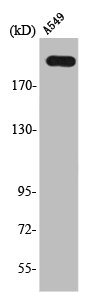
Alpha1 3.2 antibody; Alpha13.2 antibody; CAC1H_HUMAN antibody; CACNA 1H antibody; CACNA1 H antibody; CACNA1 HB antibody; Cacna1h antibody; CACNA1HB antibody; Calcium channel alpha13.2 subunit antibody; Calcium channel voltage dependent T type alpha 1H subunit antibody; Calcium channel; voltage-dependent; T type; alpha 1Hb subunit antibody; Cav 3.2 antibody; Cav T.2 antibody; Cav3.2 antibody; CavT.2 antibody; EIG 6 antibody; EIG6 antibody; Low voltage activated calcium channel alpha 13.2 subunit antibody; Low voltage activated calcium channel alpha1 3.2 subunit antibody; Low-voltage-activated calcium channel alpha1 3.2 subunit antibody; MNCb 1209 antibody; T type Cav3.2 antibody; Voltage dependent t type calcium channel alpha 1H subunit antibody; Voltage gated calcium channel alpha subunit Cav 3.2 antibody; Voltage gated calcium channel alpha subunit Cav T.2 antibody; Voltage gated calcium channel alpha subunit Cav3.2 antibody; Voltage gated calcium channel alpha subunit CavT.2 antibody; Voltage-dependent T-type calcium channel subunit alpha-1H antibody; Voltage-gated calcium channel subunit alpha Cav3.2 antibody
Raised in
Rabbit
Species Reactivity
Human,Mouse,Rat
Immunogen
Synthesized peptide derived from the Internal region of Human T-type Ca++ CP α1H.
Immunogen Species
Homo sapiens (Human)
Conjugate
Non-conjugated
Isotype
IgG
Purification Method
The antibody was affinity-purified from rabbit antiserum by affinity-chromatography using epitope-specific immunogen.
Concentration
It differs from different batches. Please contact us to confirm it.
Buffer
Liquid in PBS containing 50% glycerol, 0.5% BSA and 0.02% sodium azide.
Form
Liquid
Note: We will preferentially ship the format that we have in stock, however, if you have any special requirement for the format, please remark your requirement when placing the order, we will prepare according to your demand.
Upon receipt, store at -20°C or -80°C. Avoid repeated freeze.
Lead Time
Basically, we can dispatch the products out in 1-3 working days after receiving your orders. Delivery time maybe differs from different purchasing way or location, please kindly consult your local distributors for specific delivery time.
Note: All of our proteins are default shipped with normal blue ice packs, if you request to ship with dry ice, please communicate with us in advance and extra fees will be charged.
Usage
For Research Use Only. Not for use in diagnostic or therapeutic procedures.
Voltage-sensitive calcium channel that gives rise to T-type calcium currents. T-type calcium channels belong to the 'low-voltage activated (LVA)' group. A particularity of this type of channel is an opening at quite negative potentials, and a voltage-dependent inactivation. T-type channels serve pacemaking functions in both central neurons and cardiac nodal cells and support calcium signaling in secretory cells and vascular smooth muscle. They may also be involved in the modulation of firing patterns of neurons. In the adrenal zona glomerulosa, participates in the signaling pathway leading to aldosterone production in response to either AGT/angiotensin II, or hyperkalemia.
Gene References into Functions
These findings reveal spectrin (alpha/beta) / ankyrin B cytoskeletal and signaling proteins as key regulators of T-type calcium channels expressed in the nervous system.PMID:29720258
In colonic biopsies, the Cav3.2 mRNA level was significantly higher in the irritable bowel syndrome group compared to controls.PMID:27196538
Here we show that T-type channels Cav3.1 and Cav3.2 are present in the lung and PASMCs from iPAH patients and control subjects. The blockade of T-type channels by the specific blocker, TTA-A2, prevents cell cycle progression and PASMCs growthPMID:28655554
Our data establish Stac1 as an important modulator of T-type channel expression and provide new insights into the molecular mechanisms underlying the trafficking of T-type channels to the plasma membrane.PMID:27149520
CACNA1H variant is associated with differential antiepileptic drug response in childhood absence epilepsy.PMID:28165634
There is a direct link between CACNA1H(M1549V) mutation and an increased aldosterone production. This suggests that calcium channel blockers may be beneficial in the treatment of a subset of patients with primary aldosteronism.PMID:27258646
CACNA1H might be a susceptibility gene predisposing to PA with different phenotypic presentations, opening new perspectives for genetic diagnosis and management of patients with PA.PMID:27729216
modulation of N-linked glycosylation of hCav3.2 channels may play an important physiological rolePMID:26745591
heterozygous mutations identified in a pediatric patient with chronic pain and absence seizures result in loss of channel function, with significantly smaller current densities across a wide range of voltages when co-expressed in tsA-201 cells.PMID:26706850
Study revealed no association between the 15 tagSNPs of CACNA1A, 1C, and 1H and antiepileptic drug efficacy in the Chinese Han epileptic population; the TAGAA haplotype of CACNA1A may be a risk factor for drug resistancePMID:26216687
Cav3.2 channels are highly phosphorylated in the mammalian brain and establish phosphorylation as an important mechanism involved in the dynamic regulation of Cav3.2 channel gating propertiesPMID:26483470
Recurrent gain of function mutation in calcium channel CACNA1H causes early-onset hypertension with primary aldosteronism.PMID:25907736
reveal an unexpected role of CaV3.2 channels in regulating NMDA-R-mediated transmission and a novel epileptogenic mechanism for human childhood absence epilepsyPMID:26220996
The I-II loop of the Cav3.2 protein inhibits neuronal Cav3.1 and Cav3.2 channels.PMID:25931121
C456S mutation leads to substantially increased excitability of cultured neurons due to increased spontaneous firing rate.PMID:24277868
N-linked glycosylation of Cav3.2 not only controls surface expression.PMID:23503728
Data indicate that endogenous/exogenous hydrogen sulfide regulates function of T-type Ca(2+) channel Cav3.2 expressed in HEK293 cellsPMID:24508802
It plays pivotal roles in processing of pain signals.(review)PMID:23903007
Both Asp residues critically control the biophysical properties of Ca(v)3.2, including relative permeability between Ba2+ and Ca2+, voltage dependency of channel activation, Cd2+ blocking sensitivity, and pH effects, in distinctive ways.PMID:23849427
Cav3.2 is differently expressed in normal pleura and malignant pleural mesotheliomaPMID:22564432
Data suggest a pathway in which thioredoxin (Trx) acts as a tonic, endogenous regulator of Cav3.2 channels, while heme oxygenase-1 (HO-1)-derived carbon dioxide (CO) disrupts this regulation, causing channel inhibition.PMID:23671274
Results indicate that the S4-S5 and S6 helices from adjacent domains are energetically coupled during the activation of a low voltage-gated T-type CaV3.2 channel.PMID:23970551
A novel Cav3-KCa1.1 signaling complex has been identified where Cav3-mediated calcium entry enables KCa1.1 activation over a wide range of membrane potentials.PMID:23626738
Cav3.2 regulates calcineurin/NFAT pathway through both the Ca(2+) influx and calcineurin bindingPMID:23669360
Our results support the notion that ion channel autoimmunity might at least partially contribute to HaNDL pathogenesis and occurrence of neurological symptoms.PMID:23111027
The abnormal mRNA expressions of T-type channel alpha1H and alpha1G may be one of the causes of declined semen quality and infertility in varicocele patients.PMID:22574369
ZnT-1 enhances the activity of CaV3.1 and CaV3.2 via activation of Ras-ERK signaling pathways in the plasma membrane.PMID:22572848
Cav3.2 channels were expressed at the membrane of large portions of cells, with no likely relation to Cav3.1 expression or apoptosis.PMID:22469755
A Ca(v)3.2/syntaxin-1A signaling complex controls T-type channel activity and low-threshold exocytosis.PMID:22130660
Data showed expression of L-type (Ca(v) 1.2), P/Q-type (Ca(v) 2.1), and T-type subtype (Ca(v) 3.1 and Ca(v) 3.2) voltage-gated calcium channels (Ca(v)s) in renal artery and dissected intrarenal blood vessels from nephrectomies.PMID:21788606
The function of T-type Ca(2+) channels is important for the proliferation of human ovarian cancer cells.PMID:21438841
Review: I-II loops of T-channels play critical roles in the trafficking and gating of these channels. This loop contains an intracellular gating brake that is essential to their ability open after small depolarizations of the membrane.PMID:21099341
Ca(V)3.2 alternative splicing generates significant T-type Ca channel structural and functional diversity with potential implications relevant to cardiac developmental and pathophysiological statesPMID:20699644
Present evidence that N2O-based inhibition of Cav3.2 channels is mediated by free radical signalling and results in analgesia.PMID:21059758
functional modulation of the Ca(v)3.2 channels by Cav-3 is important for understanding the compartmentalized regulation of Ca(2+) signaling during normal and pathological processes.PMID:21084288
T-type calcium channel gene-CACNA1H might be a susceptibility gene to childhood absence epilepsy.PMID:15833171
Review discusses mutations of the Cav3.2 isoform (CACNA1H gene) that enhance channel activity and their association with idiopathic generalized epilepsies, whereas mutations that disrupt its activity are associated with autism spectrum disorders.PMID:19903827
We conclude that low voltage activated voltage-operated Ca(2+) channels are expressed in cells of the human male germ line.PMID:11751928
characterization in terms of activation and inactivation properties as well as cation permeabilityPMID:14529577
Ca(v)3.2 has a role in calcium influx during physiological activation and mutations may be causative in the propensity for seizures in patients with childhood absence epilepsyPMID:14729682
recombinant low voltage-activated T-type Ca channels exhibit a small, though clearly evident, window T-type Ca(2)(+) current which is also present in native channels from different neuronal types--REVIEWPMID:15498803
CACNA1H is a susceptibility gene in complex idiopathic generalized epilepsyPMID:15852375
Data indicate that Domain IV/S4 of Ca(v)3.2 is an activation domain and is not involved in inactivation from the open state.PMID:16133267
Cloning and calcium channel characteristics of Cav3.2 isoforms.PMID:16301824
His-191 in the S3-S4 loop is a critical residue conferring nickel block to Ca(v)3.2PMID:16377633
inhibitory effects of amiodarone on the modified T-type Cav3.2 Ca2+ channel created by long-term amiodarone treatmentPMID:16443692
The expression of CACNA1H in breast cancer has been confirmed by RT-PCR.PMID:16475676
Linkage analysis of 44 pedigrees provided no evidence for a locus in the CACNA1H region; no Chinese variants were found in 220 unrelated patients.PMID:16504478
CACNA1H RNA is alternatively spliced at 12-14 sites where it can destroy, create or change the regulatory specificity of predicted exonic splicing enhancer sequences that may control splicing regulation.PMID:16565161
functional analysis shows that missense mutations significantly reduce Ca(V)3.2 channel activity and thus could affect neuronal function and potentially brain development and could contribute to the development of the ASD phenotypePMID:16754686
Expressed in the adrenal glomerulosa (at protein level). In nonneuronal tissues, the highest expression levels are found in the kidney, liver, and heart. In the brain, most abundant in the amygdala, caudate nucleus, and putamen. In the heart, expressed in