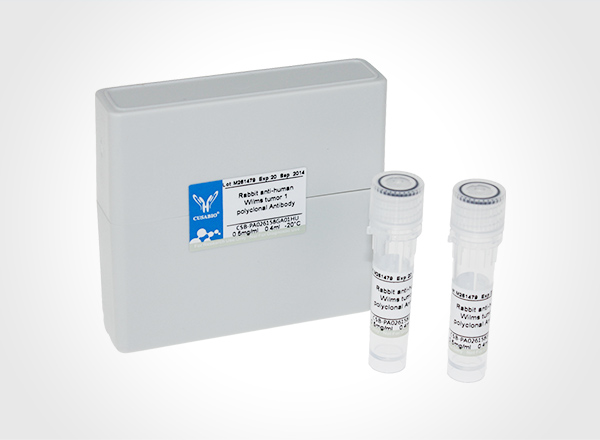
Liquid
Note: We will preferentially ship the format that we have in stock, however, if you have any special requirement for the format, please remark your requirement when placing the order, we will prepare according to your demand.
Upon receipt, store at -20°C or -80°C. Avoid repeated freeze.
Lead Time
Basically, we can dispatch the products out in 1-3 working days after receiving your orders. Delivery time maybe differs from different purchasing way or location, please kindly consult your local distributors for specific delivery time.
Note: All of our proteins are default shipped with normal blue ice packs, if you request to ship with dry ice, please communicate with us in advance and extra fees will be charged.
Usage
For Research Use Only. Not for use in diagnostic or therapeutic procedures.
Substrate recognition component of a SCF (SKP1-CUL1-F-box protein) E3 ubiquitin-protein ligase complex which mediates the ubiquitination and subsequent proteasomal degradation of target proteins. Recognizes and binds to phosphorylated target proteins. SCF(BTRC) mediates the ubiquitination of CTNNB1 and participates in Wnt signaling. SCF(BTRC) mediates the ubiquitination of phosphorylated NFKB1, ATF4, CDC25A, DLG1, FBXO5, PER1, SMAD3, SMAD4, SNAI1 and probably NFKB2. SCF(BTRC) mediates the ubiquitination of NFKBIA, NFKBIB and NFKBIE; the degradation frees the associated NFKB1 to translocate into the nucleus and to activate transcription. Ubiquitination of NFKBIA occurs at 'Lys-21' and 'Lys-22'. SCF(BTRC) mediates the ubiquitination of CEP68; this is required for centriole separation during mitosis. SCF(BTRC) mediates the ubiquitination and subsequent degradation of nuclear NFE2L1. Has an essential role in the control of the clock-dependent transcription via degradation of phosphorylated PER1 and PER2. May be involved in ubiquitination and subsequent proteasomal degradation through a DBB1-CUL4 E3 ubiquitin-protein ligase. Required for activation of NFKB-mediated transcription by IL1B, MAP3K14, MAP3K1, IKBKB and TNF. Required for proteolytic processing of GLI3. Mediates ubiquitination of REST, thereby leading to its proteasomal degradation. SCF(BTRC) mediates the ubiquitination and subsequent proteasomal degradation of KLF4; thereby negatively regulating cell pluripotency maintenance and embryogenesis.
Gene References into Functions
The primary role of the S(52,56) residues of Vpu in antagonism of CD4, GaLV Env, and BST-2/tetherin is to recruit the SCF/betaTrCP ubiquitin ligase.PMID:30347660
TSPAN15 interacts with BTRC to promote oesophageal squamous cell carcinoma metastasis via activating NF-kappaB signaling.PMID:29650964
BTrCP-FBXW2-SKP2 axis forms an oncogene-tumour suppressor-oncogene cascade to control cancer cell growth with FBXW2 acting as a tumour suppressor by promoting SKP2 degradation.PMID:28090088
Data show that the SCF(beta-TrCP) ubiquitin E3 ligase complex responsible for regulating the active protein kinase C-associated kinase (RIPK4) level.PMID:29435596
SAG/RBX2 E3 ligase complexes with UBCH10 and UBE2S ubiquitin-conjugating enzymes to ubiquitylate beta-TrCP1 via K11-linkage for degradation.PMID:27910872
Data indicate the role of tyrosine kinase c-Src (Src) in rescuing Taz (transcriptional coactivator with PDZ-binding motif) from E3 ligase SCF(beta-TrCP)-mediated degradation.PMID:28154141
SCFbeta-TRCP negatively regulates the FLCN complex by promoting FNIP2 degradation in Birt-Hogg-Dube syndrome-associated renal cancer.PMID:28039480
beta-TRCP depletion in HepG2 hepatocellular carcinoma cells resulted in increased Lipin1 protein abundance.PMID:28049764
It demonstrates that degradation of Lipin-1 is regulated by BTRC in the cytoplasm and on membranesPMID:28483528
It has been proposed that CENP-W may function as a booster of beta-TrCP1 nuclear import to increase the oncogenicity of beta-TrCP1.PMID:27861801
oncogenic effect of miR-182 and its reversal by beta-TrCP2 were confirmed in vivo This study suggests that beta-TrCP and miR-182 may be possible biomarkers and targets for early detection and treatment of pancreatic cancerPMID:27797718
Beta-TrCP controls ubiquitination and degradation of liver-enriched transcription factor CREB-H.PMID:27029215
Phosphorylated VEGFR-2 was reduced by hyperglycemia while total VEGFR-2 was almost unaltered. However, VEGFR-2 was reduced when directly exposed to reactive oxygen species, with resultant co-location of beta-TrCP and VEGFR-2.PMID:26935904
EBV-miR-BART10-3p facilitated epithelial-mesenchymal transition and promotes metastasis of nasopharyngeal carcinoma by targeting BTRC.PMID:26497204
beta-TrCP1/FWD1 dominant negative mutant has a role in reducing myeloma cell growthPMID:26009993
This study showed SCF(beta-TRCP) earmarks Set8 for ubiquitination and degradation in a casein kinase I-dependent manner, which is activated by DNA-damaging agents.PMID:26666832
SCF(beta-TrCP1/2) interacting partners, were identified.PMID:25900982
a model that CD166 regulates MCAM through a signaling flow from activation of PI3K/AKT and c-Raf/MEK/ERK signaling to the inhibition of potential MCAM ubiquitin E3 ligases, betaTrCP and Smurf1.PMID:26004137
Human rotavirus NSP1 functions by mimicking the host IkappaB phosphodegron recognized by beta-TrCP.PMID:25626907
Interaction between the phosphorylated degron motif of TRIM9 and the WD40 repeat region of beta-TrCP prevented beta-TrCP from binding its substrates, stabilizing IkappaBalpha and p100 and thereby blocking NF-kappaB activation.PMID:25190485
These results show that human rotaviruses commonly inhibit the NF-kappaB pathway via their NSP1 protein by degrading beta-TrCP and thus stabilizing IkappaB.PMID:25701827
No evidence of a direct association between beta-TRCP polymorphisms and breast cancer.PMID:26003292
identified 221 proteins that contained the DpSGXX(X)pS motif and also interacted specifically with the WD40 repeats of betaTrCP.PMID:25515538
beta-TrCP has an important role in controlling H3K27 trimethylation activity and lymphoma pathogenesis by targeting EZH2 for degradation.PMID:24469040
TRIB2 associated-ubiquitin E3 ligases beta-transducin repeat-containing E3 ubiquitin protein ligase (beta-TrCP), COP1 and Smad ubiquitination regulatory factor 1 (Smurf1) reduced TCF4/beta-Catenin expression, and these effects could be enhanced by TRIB2.PMID:25311538
NORE1A has a role in Ras regulation of SCF(beta-TrCP) protein activity and specificityPMID:25217643
Study provides a novel molecular mechanism for the negative regulation of MTSS1 by beta-TRCP in cancer cells.PMID:24318128
Upon DNA-damaging anticancer drug treatment, CK1/beta-TrCP-mediated Tiam1 degradation is abolished, and the accumulated Tiam1 contributes to downstream activation of Rac1/JNK.PMID:24737324
Wnt stimulation induced prolonged monoubiquitination of Gsk3beta and Gsk3beta-beta-TrCP interaction.PMID:24451375
betaTrCP-dependent degradation of TFAP4 is required for the fidelity of mitotic divisionPMID:24500709
this study showed betaTrCP-mediated regulation of Mis18beta stability is a mechanism to restrict centromere function of Mis18 complex from late mitosis to early G1 phase.PMID:24269809
we found no evidence of association between the 9N ins/del polymorphism of the b-TrCP gene and EOC in this Chinese populationPMID:23546975
SIRT1 acts as a negative regulator of beta-TrCP synthesis via promoting protein degradation.PMID:24211209
a model in which TNFalpha-induced beta-TrCP1 accumulation promotes SMRT degradation and the subsequent induction of proinflammatory gene expression.PMID:23861398
suggest that interaction of S100A4 and Rhotekin permits S100A4 to complex with RhoA and switch Rho function from stress fiber formation to membrane ruffling to confer an invasive phenotypePMID:22964642
SGT1 could enhance the binding between PHLPP1 and beta-TrCP which has been documented to be able to target PHLPP1 for destructionPMID:23440515
Results indicate that beta-TrCP1 is involved in the negative regulation of TRF1.PMID:23583392
Hsp27 and F-box protein beta-TrCP promote degradation of mRNA decay factor AUF1.PMID:23530064
mutational analysis indicates that IKKalpha-dependent phosphorylation at Ser-304 is crucial to the binding of HuR to beta-TrCP1.PMID:23115237
Knockdown of beta-TrCP1 and beta-TrCP2 attenuated the K48-linked ubiquitination and degradation of IRAK1.PMID:22851693
Fas-associated factor 1 is a scaffold protein that promotes beta-transducin repeat-containing protein (beta-TrCP)-mediated beta-catenin ubiquitination and degradation.PMID:22730322
Identified are three arginine residues of beta TrCP that participate in NRF2 docking.PMID:22751928
phosphorylated TAZ binds to the beta-TrCP subunit of the SCF(beta-TrCP) E3 ubiquitin ligasePMID:22692215
Data show that beta-TRCP knockdown causes accumulation of VEGFR2, resulting in increased activity of signaling pathways downstream of VEGFR2.PMID:22711876
this review discusses beta-TrCP's new downstream substrate, DEPTOR, as well as summarize the novel functional aspects of beta-TrCP in controlling cell growth and regulating autophagy, in part through governing the stability of DEPTOR.[Review]PMID:22454292
IL-10R1 is a novel substrate of betaTrCP-containing ubiquitin E3 ligase, a novel negative regulatory mechanism that may potentially affect IL-10 functionPMID:22087322
Data indicate that knockdown of beta-TrCP1 and beta-TrCP2 markedly reduced IL-17-induced, phosphorylation-dependent ubiquitination and degradation of Act1.PMID:22045853
mTOR drives its own activation via SCF(betaTrCP)-dependent degradation of the mTOR inhibitor DEPPMID:22017875
Endogenous DEPTOR levels are negatively regulated by betaTrCP.PMID:22017876
mTOR generates an auto-amplification loop by triggering the betaTrCP- and CK1alpha-dependent degradation of DEPTORPMID:22017877