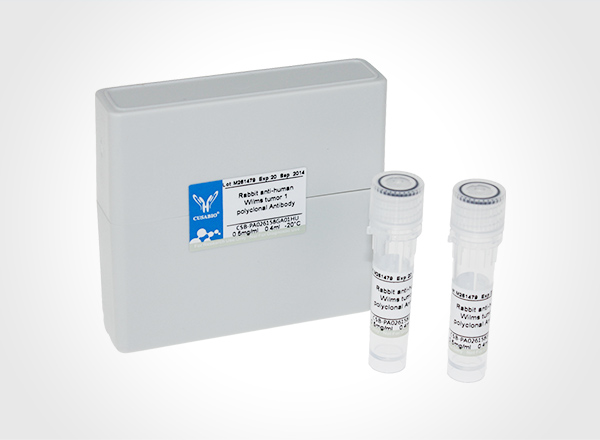
Upon receipt, store at -20°C or -80°C. Avoid repeated freeze.
Lead Time
Basically, we can dispatch the products out in 1-3 working days after receiving your orders. Delivery time maybe differs from different purchasing way or location, please kindly consult your local distributors for specific delivery time.
Note: All of our proteins are default shipped with normal blue ice packs, if you request to ship with dry ice, please communicate with us in advance and extra fees will be charged.
Usage
For Research Use Only. Not for use in diagnostic or therapeutic procedures.
Metalloprotease that specifically cleaves 'Lys-63'-linked polyubiquitin chains. Does not have activity toward 'Lys-48'-linked polyubiquitin chains. Component of the BRCA1-A complex, a complex that specifically recognizes 'Lys-63'-linked ubiquitinated histones H2A and H2AX at DNA lesions sites, leading to target the BRCA1-BARD1 heterodimer to sites of DNA damage at double-strand breaks (DSBs). In the BRCA1-A complex, it specifically removes 'Lys-63'-linked ubiquitin on histones H2A and H2AX, antagonizing the RNF8-dependent ubiquitination at double-strand breaks (DSBs). Catalytic subunit of the BRISC complex, a multiprotein complex that specifically cleaves 'Lys-63'-linked ubiquitin in various substrates. Mediates the specific 'Lys-63'-specific deubiquitination associated with the COP9 signalosome complex (CSN), via the interaction of the BRISC complex with the CSN complex. The BRISC complex is required for normal mitotic spindle assembly and microtubule attachment to kinetochores via its role in deubiquitinating NUMA1. Plays a role in interferon signaling via its role in the deubiquitination of the interferon receptor IFNAR1; deubiquitination increases IFNAR1 activity by enhancing its stability and cell surface expression. Down-regulates the response to bacterial lipopolysaccharide (LPS) via its role in IFNAR1 deubiquitination.
Gene References into Functions
this study shows that mitochondrial DNA oxidation induces imbalanced activity of NLRP3/NLRP6 inflammasomes by activation of caspase-8 and BRCC36 in dry eyePMID:28238526
In late S/G2 phase, the DNA damage-responsive E3 ligase RNF8 conjugates K63-linked ubiquitin chains to tankyrase 1, while in G1 phase such ubiquitin chains are removed by BRISC, an ABRO1/BRCC36-containing deubiquitinase complex.PMID:27993934
findings uncover a pivotal role of BRCC36 DUB in limiting DSB processing and repair and illustrate how cells may physically couple ubiquitin recognition and metabolizing activities for fine tuning of DNA repair processes.PMID:27288411
BRCC3 may play a role in B7-H3-induced 5-Fu resistance.PMID:27175567
BRCC3 inversely correlated with NPC overall and relapse-free survival. Its expression was higher in radioresistant NPC cells, where BRCC3 knockdown increased the cell survival fraction, attenuated DNA damage repair and resulted in G2/M cell cycle arrest.PMID:26024915
BRCC3 likely plays a role as tumor-associated gene in myelodysplastic syndromes and myelodysplastic/myeloproliferative neoplasms.PMID:26001790
KIAA0157 allosterically activates a cognate deubiquitinating enzyme (DUB) partner and implicates super dimerization as a new regulatory mechanism underlying BRCC36 DUB activity.PMID:26344097
upregulation of BRCC3 expression is associated with glioma.PMID:25337721
these data strongly suggest that BRCC3, a deubiquitinating enzyme that is part of the cellular BRCA1 and BRISC complexes, is an important player in angiogenesis and that BRCC3 loss-of-function mutations are associated with moyamoya angiopathy.PMID:21596366
NBA1/MERIT40 and BRE interaction is required for the integrity of two distinct deubiquitinating enzyme BRCC36-containing complexesPMID:21282113
scaffold proteins not only participate in the regulation of BRCC36 activity but also determine its subcellular localization and cellular functions.PMID:20656690
These findings demonstrate that BRCC3 is a novel effector of Raf-1, and implicate a role of BRCC3 in modulation of p-ERK, cell survival and proliferation.PMID:17143545
Specificity for K63-linked polyubiquitin is a common property of the JAMM/MPN+ family of deubiquitinating enzymes.PMID:19214193
Show
More
Hide
All
Subcellular Location
Nucleus. Cytoplasm. Cytoplasm, cytoskeleton, spindle pole.
Protein Families
Peptidase M67A family, BRCC36 subfamily
Tissue Specificity
Heart, brain, placenta, lung, liver, skeletal muscle, kidney and pancreas. Aberrantly expressed in the vast majority of breast tumors.