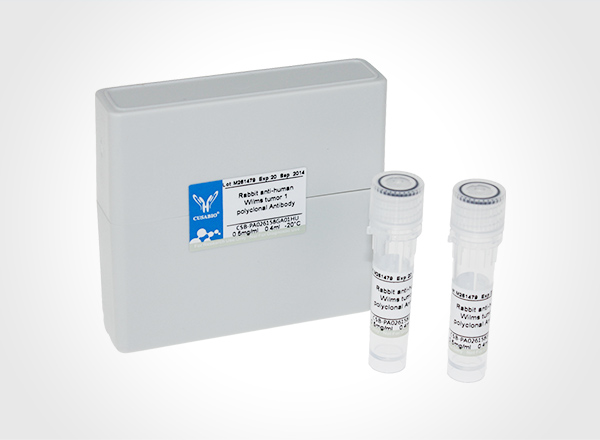
It differs from different batches. Please contact us to confirm it.
Buffer
Liquid in PBS containing 50% glycerol, 0.5% BSA and 0.02% sodium azide.
Form
Liquid
Note: We will preferentially ship the format that we have in stock, however, if you have any special requirement for the format, please remark your requirement when placing the order, we will prepare according to your demand.
Upon receipt, store at -20°C or -80°C. Avoid repeated freeze.
Lead Time
Basically, we can dispatch the products out in 1-3 working days after receiving your orders. Delivery time maybe differs from different purchasing way or location, please kindly consult your local distributors for specific delivery time.
Note: All of our proteins are default shipped with normal blue ice packs, if you request to ship with dry ice, please communicate with us in advance and extra fees will be charged.
Usage
For Research Use Only. Not for use in diagnostic or therapeutic procedures.
Phosphatidylserine receptor which enhances the engulfment of apoptotic cells. Also mediates the binding and engulfment of Gram-negative bacteria. Stimulates production of reactive oxygen species by macrophages in response to Gram-negative bacteria, resulting in enhanced microbicidal macrophage activity. In the gastric mucosa, required for recognition and engulfment of apoptotic gastric epithelial cells. Promotes myoblast fusion. Activates the Rho pathway in a G-protein-dependent manner. Inhibits MDM2-mediated ubiquitination and degradation of DLG4/PSD95, promoting DLG4 stability and regulating synaptic plasticity. Required for the formation of dendritic spines by ensuring the correct localization of PARD3 and TIAM1. Potent inhibitor of angiogenesis in brain and may play a significant role as a mediator of the p53/TP53 signal in suppression of glioblastoma.; Inhibits angiogenesis in a CD36-dependent manner.; Inhibits angiogenesis.
Gene References into Functions
We have uncovered a new role for BAI1 in facilitating macrophage anti-viral responses. We show that arming oHSV with antiangiogenic Vstat120 also shields them from inflammatory macrophage antiviral response, without reducing safetyPMID:27852701
Data suggest agonist-induced signal transduction via either BAI1/ADGRB1 or GPR56/ADGRG1 does not require conserved membrane-proximal stalk region; thus, it appears GAIN domain cleavage via autoproteolysis is not necessary for receptor activation.PMID:26710850
BAI1 may be involved in the negative regulation of bladder transitional cell carcinoma microvascular proliferation, and its expression may be associated with a reduction in p53 mutations.PMID:26129954
Results show that lower BAI1 expression correlates with poorer patient survival, and high Nestin expression is associated with an increased probability of metastases in breast cancer patients.PMID:25376607
recognition of apoptotic cells by BAI1 contributes to their clearance in the human gastric mucosa and this is associated with anti-inflammatory effectsPMID:24509909
findings demonstrate that BAI1 is a synaptic receptor that can activate both the Rho and ERK pathways, with the N-terminal and C-terminal regions of the receptor playing key roles in the regulation of BAI1 signaling activityPMID:23782696
The results of this study indicated that BAI1 plays an important role in synaptogenesis that is mechanistically distinct from its role in phagocytosis.PMID:23595754
Proprotein convertases, primarily furin, activate latent matrix metalloproteinase-14, which then directly cleaves BAI1 to release the bioactive fragment.PMID:22330140
MBD2 overexpression during gliomagenesis may drive tumor growth by suppressing the antiangiogenic activity of a key tumor BAI1.PMID:21724586
BAI1 was expressed in cerebral neurons but not astrocytes. It was localized in the cytoplasm and cell membrane. BAI1 protein may play an important role in synapse formation and signal transductionPMID:12074842
BAI1 was widely expressed in normal brain but was absent in 28 glioma cell lines and in the majority of human glioblastoma investigated. BAI1 expression did not correlate with TP53 statusPMID:12507886
Expressed in brain (at protein level). Expressed on mononuclear phagocytes and monocyte-derived macrophages in the gastric mucosa (at protein level). Expressed in normal pancreatic tissue but not in pancreatic tumor tissue. Reduced or no expression is obs