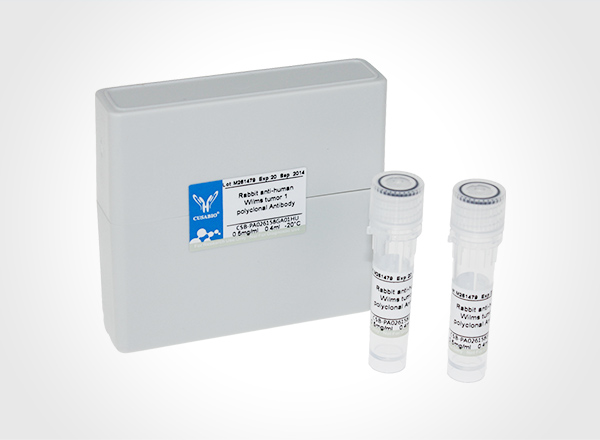
Liquid
Note: We will preferentially ship the format that we have in stock, however, if you have any special requirement for the format, please remark your requirement when placing the order, we will prepare according to your demand.
Upon receipt, store at -20°C or -80°C. Avoid repeated freeze.
Lead Time
Basically, we can dispatch the products out in 1-3 working days after receiving your orders. Delivery time maybe differs from different purchasing way or location, please kindly consult your local distributors for specific delivery time.
Note: All of our proteins are default shipped with normal blue ice packs, if you request to ship with dry ice, please communicate with us in advance and extra fees will be charged.
Usage
For Research Use Only. Not for use in diagnostic or therapeutic procedures.
Appears to play a role in the switch from cap-dependent to IRES-mediated translation during mitosis, apoptosis and viral infection. Cleaved by some caspases and viral proteases.
Gene References into Functions
The percentage at the S-stage was decreased in the miR-379 mimics and EIF4G2 shRNA groups.PMID:28381518
DAP5 knockdown from human ESCs (hESCs) resulted in persistence of pluripotent gene expression, delayed induction of differentiation-associated genes in different cell lineages, and defective embryoid body formationPMID:27664238
Data show that microRNA miR-379 potentiated lung cancer (LCa) chemosensitivity via modulation of cisplatin (CDDP)-induced apoptosis by directly targeting the eukaryotic translation initiation factor 4 gamma 2 (EIF4G2) 3' UTR.PMID:28117895
These results indicate that miR-139 is capable of inhibiting chondrocyte proliferation and migration, thus being a possible therapeutic target for OA. The mechanism of miR-139 in chondrocytes may be related to its regulation on EIF4G2 and IGF1R.PMID:27105918
The Coxsackievirus B3 protease 2A-mediated cleavage of DAP5 results in the production of two truncates that exert differential effects on protein translation of the IRES-containing genes, leading to enhanced host cell death.PMID:26586572
Knockdown of EIF4G2 recapitulated the effects of mir-139, whereas restoring EIF4G2 expression rescued the mir-139 phenotype. elevated miR-139-5p expression is associated with a favorable outcome in acute myeloid leukemia.PMID:26165837
findings provide the first mechanistic insights into the function of DAP5 as a selective regulator of cap-independent translationPMID:25779044
Our results provide evidence that the tumor suppressor effect of miR-520c-3p is mediated through repression of translation while inducing senescence and that eIF4GII is a key effector of this anti-tumor activity.PMID:24497838
DAP5, a translation initiation factor shown to positively regulate the translation of various internal ribosome entry sites containing mRNAs, promotes internal ribosome entry site-driven translation of p53 mRNA.PMID:23318444
DAP5/p97 and DAP5/p86 enhanced the translation of the anti-apoptotic protein Bcl-2 and inhibited cisplatin-induced apoptosisPMID:22555068
Multiple isoforms of eIF4GII arise from multiple promoters & alternative splicing events. A non-canonical CUG initiation codon extends the eIF4GII N-terminus. The eIF4GII N-terminus plays an alternative role in initiation factor assembly.PMID:22909319
crystal structure of C-terminal region (residues 540-897) of p97/EIF4G2 (at 2.0 Angstrom resolution): sequence/structure homology with EIF4G1PMID:20544972
crystallization and preliminary X-ray diffraction analysis of the MIF4G domain of DAP5 is presented.PMID:20057060
Includes the functional analysis of a similar protein in yeast.PMID:11331597
The caspase-cleaved DAP5 protein supports internal ribosome entry site-mediated translation of death proteinsPMID:11943866
endogenous eIF4GII was phosphorylated by Ca(2+)/calmodulin-dependent protein kinase IPMID:14507913
Cleavage of eIF4GII is induced in cells and in cell extracts by the FMDV leader protease (L(pro)) alonePMID:15016848
EIF4G2 transcripts exhibited three different expression patterns, downregulation was found in about 50% of the cases analyzed and EIF4G2 gene transcription was associated with invasive tumors.PMID:16410684
p97 is functionally different from the closely related C-terminal two-thirds of eIF4GI and it can positively promote protein synthesis and cell proliferation.PMID:16932749
These data indicate that full-length p97 is a translational activator with essential role(s) in unstressed cells, suggesting a reassessment of current models of p97 function.PMID:17237356
Data show that DAP5 promotes cap-independent translation of Bcl-2 and CDK1 to facilitate cell survival during mitosis.PMID:18450493
role and regulation of death-associated protein-5 (DAP5/p97/NAT1), a novel inhibitor of translational initiation, in acute promyelocytic leukemia cell differentiation and apoptosisPMID:18491231
Results report the crystal structure of the C-terminal region of DAP5/p97 extending between amino acids 730 and 897.PMID:18722383
Exclusive use of a GUG translation initiation codon is conserved in human, chicken, Xenopus, and zebrafish.PMID:15718103
translation starts exclusively at a non-AUG translation initiation codon (GUG).PMID:9049310
Show
More
Hide
All
Protein Families
Eukaryotic initiation factor 4G family
Tissue Specificity
Ubiquitously expressed in all adult tissues examined, with high levels in skeletal muscle and heart. Also expressed in fetal brain, lung, liver and kidney.