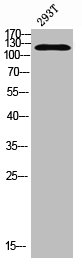
Synthesized peptide derived from Human RIP140 around the acetylation site of K158.
Immunogen Species
Homo sapiens (Human)
Conjugate
Non-conjugated
Purification Method
The antibody was affinity-purified from rabbit antiserum by affinity-chromatography using epitope-specific immunogen.
Concentration
It differs from different batches. Please contact us to confirm it.
Buffer
Liquid in PBS containing 50% glycerol, 0.5% BSA and 0.02% sodium azide.
Tested Applications
WB, ELISA
Storage
Upon receipt, store at -20°C or -80°C. Avoid repeated freeze.
Lead Time
Basically, we can dispatch the products out in 1-3 working days after receiving your orders. Delivery time maybe differs from different purchasing way or location, please kindly consult your local distributors for specific delivery time.
Note: All of our proteins are default shipped with normal blue ice packs, if you request to ship with dry ice, please communicate with us in advance and extra fees will be charged.
Usage
For Research Use Only. Not for use in diagnostic or therapeutic procedures.
Modulates transcriptional activation by steroid receptors such as NR3C1, NR3C2 and ESR1. Also modulates transcriptional repression by nuclear hormone receptors. Positive regulator of the circadian clock gene expression: stimulates transcription of ARNTL/BMAL1, CLOCK and CRY1 by acting as a coactivator for RORA and RORC. Involved in the regulation of ovarian function. Plays a role in renal development.
Gene References into Functions
Data suggests that NRIP1 is overexpressed both in skin and PBMCs of psoriasis patients and may be involved in the abnormal proliferation and apoptosis of keratinocytes.PMID:27708240
In skeletal muscle, imposed rest increased NRIP1 expression by 80%, and strength training increased expression by 25% compared to baseline. Following rest, NRIP1 expression became sensitive to insulin stimulation. After re-training, NRIP1 expression decreased. Interactome analysis showed significant proximity of NRIP1 interacting partners to the obesity network/module.PMID:28656645
Taken together, these results provide new insights into the mechanism of action of LCoR and RIP140 and highlight their strong interplay for the control of gene expression and cell proliferation in breast cancer cells.PMID:28414308
Study found low expression level of RIP140 in tumor-associated macrophages (TAM) of hepatocellular carcinoma (HCC) tissues and demonstrated that RIP140 expression in plays a role in the growth of hepatoma cells.PMID:28393222
results indicated that there was a significant association between migraine and gene-gene interaction among the CYP19A1, FSHR, ESR1 and NRIP1.PMID:27019440
Data indicate that nuclear receptor interacting protein 1 (NRIP1) is elevated in tumors compared to cancer adjacent normal tissue.PMID:26492163
NOP14 suppresses breast cancer progression by inhibiting NRIP1/Wnt/beta-catenin pathway.PMID:26213846
NRIP1 contributes to the mitochondrial dysfunction observed in DS. Furthermore, they suggest that the NRIP1-PGC-1alpha axe might represent a potential therapeutic target for restoring altered mitochondrial function in DS.PMID:24698981
RIP140 gene has been shown to be involved in the regulation of energy expenditure, in mammary gland development and intestinal homeostasis as well as in behavior and cognitionPMID:26116758
Downregulation of RIP140 promoted the tumorigenicity of HCC cells in vitro.PMID:25391428
Data suggest that vitamin D receptor target genes (NRIP1; DUSP10, dual specificity phosphatase 10; THBD, thrombomodulin; TRAK1, trafficking protein kinesin binding 1) can be used as markers for individual's response to vitamin D3 supplements.PMID:24975273
RIP140 negatively regulated the macrophage expression of ATP-binding cassette transporters A1 and G1.PMID:25616132
The associations of rs2616984 in CSMD1 gene, putative associations of rs3131296 in NOTCH4 gene, and associations of rs2229741 of NRIP1 gene with Alzheimer's disease have been found in a Russian population.PMID:25845235
data suggest that RIP140 plays an important role in ERalpha-mediated transcriptional regulation in breast cancer and response to tamoxifen treatmentPMID:25145671
In breast cancer cells, GSTP1 inhibits the expression of RIP140, a negative regulator of estrogen receptor alpha transcription, at both mRNA and protein levels.PMID:25218501
RIP140 stimulated APC transcription and inhibited beta-catenin activation and target gene expression.PMID:24667635
these data demonstrate the inhibitory effects of ERbeta on estrogen signaling in ovarian cancer cells and the key role that RIP140 plays in this phenomenon.PMID:23885094
genetic association studies in population of women in Spain: Data suggest an association between an SNP in NRIP1 (rs2229741) and age at menopause; thus, duration of fertility in women may have genetic determinants involved in estrogen metabolism.PMID:23173577
Increased RIP140 level may be closely associated with inflammation and disorder of lipid and glucose metabolism in diabetic patients.PMID:22956256
RIP140, a Janus metabolic switch involved in defense functions.PMID:23241901
this work identifies the RIP140 gene as a new transcriptional target of E2F1 which may explain some of the effect of E2F1 in both cancer and metabolic diseases.PMID:22629304
Highlight the importance of cross-regulation between AhR and ERalpha and a novel mechanism by which AhR controls, through modulating the recruitment of RIP140 to ERalpha-binding sites, the kinetics and magnitude of ERalpha-mediated gene stimulation.PMID:22071320
The fusion of NRIP1 with UHRF1 involved in the unbalanced translocation between chromosomes 19 and 21 in a patient with an ALL-positive for a t(9;22) translocation.PMID:22285022
Decreased RIP140 protein content not required for exercise and AMPK-dependent increases in skeletal muscle mitochondrial content.PMID:21700896
We demonstrate that NRIP is a novel binding protein for human papillomavirus 16 (HPV-16) E2 protein and directly interacts with the TAD of HPV-16 E2.PMID:21543494
This study shows that RIP140 is a regulator of the E2F pathway, which discriminates luminal- and basal-like tumors, emphasizing the importance of these regulations for a clinical cancer phenotype.PMID:20410059
RIP140 transgenic mice, expressing increased levels of RIP140 mRNA/protein in the heart, exhibit rapid and progressive postnatal cardiomyopathy leading to premature death predominantly owing to compromised energy production.PMID:20083575
Receptor-interacting protein 140 (RIP140) is a corepressor for nuclear receptors with an important role in the inhibition of energy expenditure.PMID:19367438
Down-regulation of PROS1 gene expression by 17beta-estradiol via estrogen receptor alpha (ERalpha)-Sp1 interaction recruiting receptor-interacting protein 140 and the corepressor-HDAC3 complex.PMID:20200160
The RIP140 gene does not play a pivotal role in the process of ovulation, insulin resistance, or fat accumulation in women with PCOS.PMID:19887821
RIP140 may have a role in retinoic acid mediation of long-paced oscillations in retinoid receptor activityPMID:19862326
RIP140 has a role in binding to nuclear receptors, as well as additional functions mediated by the formation and intranuclear relocalization of a repressive protein complexPMID:12773562
there are four autonomous repression domains in the corepressor receptor interacting protein 140PMID:14736873
RIP140 has a regulatory role in mediating anti-estrogenic effects of RA in estrogen-dependent breast cancer cellsPMID:15632153
RIP140 differentially regulates ERR activity depending on the target sequence on the promoters.PMID:16439465
Receptor-interacting protein 140 is a repressor of the androgen receptor activity.PMID:16527872
RIP140 discriminates among different classes of retinoic acid target genes. RIP140 limits RA signaling & tumor-cell differentiation. RIP140 silencing sensitizes embryonal carcinoma cells to low doses of RA.PMID:17880687
The results presented here suggested the cooperative transcriptional regulation of estrogen signaling by FHL1 and RIP140.PMID:19401155
Show
More
Hide
All
Subcellular Location
Nucleus. Note=Localized to discrete foci and redistributes to larger nuclear domains upon binding to ligand-bound NR3C1.