ATG14 Antibody

Code: CSB-PA741052LA01HU
Size:
20μg
20μg50μg100μg
US$83
Quantity:
Species Reactivity: Human, Mouse, Rat
Raised in: Rabbit
Application: ELISA, WB, IHC, IF
For inquiries on large quantities or another requirements
Send an Inquiry
Start an on-line Chat
Online ordering is currently available for U.S. customers only. For orders outside the U.S., please kindly submit an inquiry or start a chat with us.

Product Details

Uniprot NO.
Target Names
ATG14
Alternative Names
4832427M01 antibody; ATG14 antibody; Atg14L antibody; Autophagy-related protein 14-like protein antibody; BAKOR_HUMAN antibody; Barkor antibody; Beclin 1-associated autophagy-related key regulator antibody; D14Ertd114e antibody; D14Ertd436e antibody; KIAA0831 antibody; mCG_6911 antibody
Raised in
Rabbit
Species Reactivity
Human, Mouse, Rat
Immunogen
Recombinant Human Beclin 1-associated autophagy-related key regulator protein (1-492AA)
Immunogen Species
Homo sapiens (Human)
Conjugate
Non-conjugated
Isotype
IgG
Purification Method
>95%, Protein G purified
Concentration
It differs from different batches. Please contact us to confirm it.
Buffer
Preservative: 0.03% Proclin 300
Constituents: 50% Glycerol, 0.01M PBS, pH 7.4
Tested Applications
ELISA, WB, IHC, IF
Recommended Dilution
ApplicationRecommended Dilution
WB1:200-1:5000
IHC1:20-1:200
IF1:50-1:200
Storage
Upon receipt, store at -20°C or -80°C. Avoid repeated freeze.
Lead Time
Basically, we can dispatch the products out in 1-3 working days after receiving your orders. Delivery time maybe differs from different purchasing way or location, please kindly consult your local distributors for specific delivery time.
Note: All of our proteins are default shipped with normal blue ice packs, if you request to ship with dry ice, please communicate with us in advance and extra fees will be charged.
Usage
For Research Use Only. Not for use in diagnostic or therapeutic procedures.
Datasheet & COA
Images
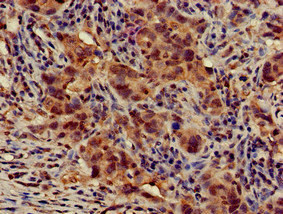
  • Immunohistochemistry of paraffin-embedded human pancreatic cancer using CSB-PA741052LA01HU at dilution of 1:100

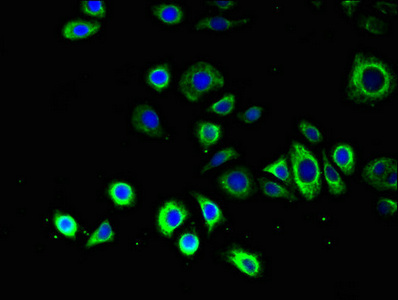
  • Immunofluorescent analysis of PC-3 cells using CSB-PA741052LA01HU at dilution of 1:100 and Alexa Fluor 488-congugated AffiniPure Goat Anti-Rabbit IgG(H+L)

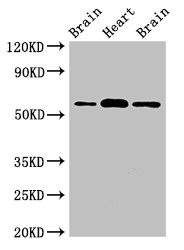
  • Western Blot
    Positive WB detected in: Rat brain tissue, Mouse heart tissue, Mouse brain tissue
    All lanes: ATG14 antibody at 2μg/ml
    Secondary
    Goat polyclonal to rabbit IgG at 1/50000 dilution
    Predicted band size: 56, 43 kDa
    Observed band size: 56 kDa

Customer Reviews and Q&A

 Customer Reviews

Target Background

Function(From Uniprot)
Required for both basal and inducible autophagy. Determines the localization of the autophagy-specific PI3-kinase complex PI3KC3-C1. Plays a role in autophagosome formation and MAP1LC3/LC3 conjugation to phosphatidylethanolamine. Promotes BECN1 translocation from the trans-Golgi network to autophagosomes. Enhances PIK3C3 activity in a BECN1-dependent manner. Essential for the autophagy-dependent phosphorylation of BECN1. Stimulates the phosphorylation of BECN1, but suppresses the phosphorylation PIK3C3 by AMPK. Binds to STX17-SNAP29 binary t-SNARE complex on autophagosomes and primes it for VAMP8 interaction to promote autophagosome-endolysosome fusion. Modulates the hepatic lipid metabolism.
Gene References into Functions
  1. Knockdown of ATG14 protein leds to decreased autophagy and chemoresistance of melphalan-resistant myeloma cells PMID:30121664
  2. This study identifies an unexpected role for PtdIns(4,5)P2 signaling in the regulation of ATG14 complex and autophagy. PMID:27621469
  3. These data provide evidence for additional roles of Atg2A and Atg14L in the formation of early autophagosomal membranes and also in lipid metabolism. PMID:24776541
  4. we found that ATG14 interacted with Ulk1 and LC3, and knock down of Ulk1 prevented the lipidation of LC3 and autophagy in HeLa-ATG14 cells. We also identified a phosphatidylethanolamine (PE) binding region in ATG14, and the addition of Ulk1 to Hela-ATG14 cells decreased the ATG14-PE interaction. PMID:28069524
  5. polar BECN2 CCD interface residues result in a metastable homodimer, facilitating dissociation, but enable better interactions with polar ATG14 residues stabilizing the BECN2:ATG14 heterodimer. PMID:28218432
  6. use circular dichroism and small-angle X-ray scattering (SAXS) to show that the ATG14 coiled-coil domain (CCD) is significantly disordered but becomes more helical in the BECN1:ATG14 heterodimer, although it is less well-folded than the BECN1 CCD homodimer PMID:27383850
  7. These results define a key molecular event for the starvation-induced activation of the ATG14-containing PtdIns3K complex by ULK1. PMID:27046250
  8. data suggest an autophagy-specific membrane fusion mechanism in which oligomeric ATG14 directly binds to STX17-SNAP29 binary t-SNARE complex on autophagosomes and primes it for VAMP8 interaction to promote autophagosome-endolysosome fusion PMID:25686604
  9. Cisplatin upregulated Barkor protein levels of the Saos-2 cell line. PMID:24337183
  10. Atg14 is critical in controlling an autophagy-dependent phosphorylation of beclin-1. We map novel phosphorylation sites to serines 90 and 93 and demonstrate that phosphorylation at these sites is necessary for maximal autophagy. PMID:23878393
  11. Our findings reveal that Atg14L, previously considered to be solely a Beclin 1-binding autophagy protein, plays a novel role in the late stage of endocytic trafficking in conjunction with Snapin PMID:22797916
  12. Anaplasma actively induces autophagy by secreting Ats-1 that hijacks the Beclin 1-Atg14L autophagy initiation pathway likely to acquire host nutrients for its growth PMID:23197835
  13. Atg14 is a new target gene of FoxOs and the core clock machinery, and this gene plays an important role in hepatic lipid metabolism PMID:22992773
  14. analysis of how the Beclin1 coiled-coil domain interface regulates homodimer and heterodimer formation with Atg14L and UVRAG PMID:22314358
  15. Data suggest that the Atg14L-dependent appearance of phosphatidylinositol 3-phosphate in the endoplasmic reticulum makes this organelle the platform for autophagosome formation. PMID:20713597
  16. These results suggest that mammalian cells have at least two distinct class III PI3-kinase complexes, and that beclin 1 interacts distinctly with mammalian Atg14 and UVRAG in two of these complexes. PMID:18843052
  17. study defines a regulatory signaling pathway mediated by Barkor (KIAA0831) that positively controls autophagy through Beclin 1 PMID:19050071
  18. Two Beclin 1 associated proteins, Atg14L and Rubicon, were identified. PMID:19270696
  19. Barkor/KIAA0831 functions as an autophagy targeting factor for Beclin 1 and the class III PI3 kinase. Barkor and UVRAG form two distinct protein complexes with the core class III PI3 kinase. Barkor is a functional ortholog of yeast Atg14. PMID:19050071

Show More

Hide All

Subcellular Location
Cytoplasm. Endoplasmic reticulum membrane; Peripheral membrane protein. Preautophagosomal structure membrane; Peripheral membrane protein. Cytoplasmic vesicle, autophagosome membrane; Peripheral membrane protein.
Protein Families
ATG14 family
Database Links

HGNC: 19962

UNIGENE: Hs.414809

KEGG: hsa:22863

STRING: 9606.ENSP00000247178

OMIM: 613515

icon of phone
Call us
301-363-4651 (Available 9 a.m. to 5 p.m. CST from Monday to Friday)

icon of address
Address
No. 269, Shendun 5th Road, Donghu Hi-Tech Development Area, Hubei Province, 430206, P.R.China
icon of social media
Join us with

Subscribe newsletter

Leave a message

* To protect against spam, please pass the CAPTCHA test below.
CAPTCHA verification
© 2007-2025 CUSABIO TECHNOLOGY LLC All rights reserved. 鄂ICP备15011166号-1
Select 0 Products