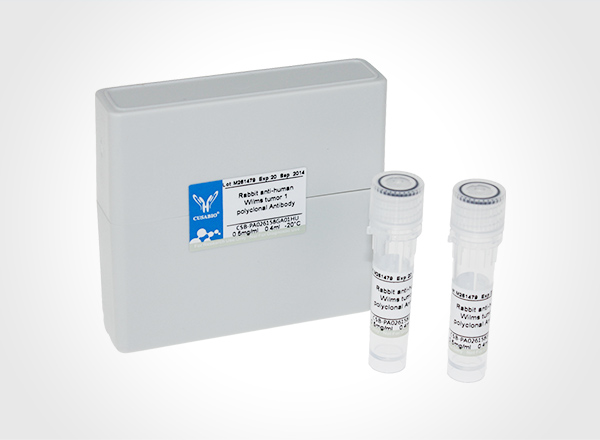
Liquid
Note: We will preferentially ship the format that we have in stock, however, if you have any special requirement for the format, please remark your requirement when placing the order, we will prepare according to your demand.
Storage
Upon receipt, store at -20°C or -80°C. Avoid repeated freeze.
Lead Time
Basically, we can dispatch the products out in 1-3 working days after receiving your orders. Delivery time maybe differs from different purchasing way or location, please kindly consult your local distributors for specific delivery time.
Note: All of our proteins are default shipped with normal blue ice packs, if you request to ship with dry ice, please communicate with us in advance and extra fees will be charged.
Usage
For Research Use Only. Not for use in diagnostic or therapeutic procedures.
Specifically acetylates 'Lys-40' in alpha-tubulin on the lumenal side of microtubules. Promotes microtubule destabilization and accelerates microtubule dynamics; this activity may be independent of acetylation activity. Acetylates alpha-tubulin with a slow enzymatic rate, due to a catalytic site that is not optimized for acetyl transfer. Enters the microtubule through each end and diffuses quickly throughout the lumen of microtubules. Acetylates only long/old microtubules because of its slow acetylation rate since it does not have time to act on dynamically unstable microtubules before the enzyme is released. Required for normal sperm flagellar function. Promotes directional cell locomotion and chemotaxis, through AP2A2-dependent acetylation of alpha-tubulin at clathrin-coated pits that are concentrated at the leading edge of migrating cells. May facilitate primary cilium assembly.
Gene References into Functions
these results demonstrate alphaTAT1 enters the lumen of microtubules from open extremities and spreads K40 acetylation marks longitudinally along cellular microtubules; this mode of tip-directed microtubule acetylation may allow for selective acetylation of subsets of microtubulesPMID:27752143
Depletion of the tubulin acetyltransferase TAT1 led to a significant increase in the frequency of microtubule breakage.PMID:28428427
cellular quiescence induces Mec17 to couple the production of acetylated microtubules and Myh10, whose accumulation overcomes the inhibitory role of Myh9 and initiates ciliogenesisPMID:25494100
These results suggest that alphaTAT1-mediated Wnt1 expression via microtubule acetylation is important for colon cancer progression.PMID:27836544
Studies indicate that alpha-tubulin acetylation and microtubule level is mainly governed by opposing actions of alpha-tubulin acetyltransferase 1 (ATAT1) and histone deacetylase 6 (HDAC6).PMID:26227334
Results suggest that lithium chloride (LiCl) treatments activate alpha-tubulin N-acetyltransferase 1 (alphaTAT1) by the inhibition of glycogen synthase kinase 3 beta (GSK-3beta) and promote the alpha-tubulin acetylation, and then elongate the primary cilia.PMID:24760594
Data suggest that invariant residues Arg132 and Ser160 in catalytic domain of ATAT1 participate in stable interaction with CoA and acetyl-CoA; ATAT1 with mutation at either residue exhibits much faster intracellular degradation.PMID:25602620
Crystal structure of the catalytic core of human MEC-17 in complex with acetyl-CoA. MEC17 has large, conserved surface patch that is critical for enzymatic activity suggesting extensive interactions with alpha-tubulin.PMID:24846647
Mechanistic underpinnings for TAT activity and its preference for microtubules with slow turnover; cocrystal structures constrain TAT action to the microtubule lumen with Lys40 engaged in a suboptimal active site; despite the confined location of Lys40, TAT efficiently scans the microtubule bidirectionally and acetylates stochastically without preference for ends.PMID:24906155
microtubules contacting clathrin-coated pits become acetylated by alphaTAT1; in migrating cells, this mechanism ensures the acetylation of microtubules oriented towards the leading edge, thus promoting directional cell locomotion and chemotaxisPMID:24097348
cysteine residues play important catalytic roles through a ternary complex mechanism. alphaTAT1 mutations have analogous effects on tubulin acetylation in vitro and in cellsPMID:23071314
analysis reveals a basic patch implicated in substrate binding and a conserved glutamine residue required for catalysis, demonstrating that the family of alpha-tubulin acetyltransferases uses a reaction mechanism different from other lysine acetyltransferasesPMID:23071318