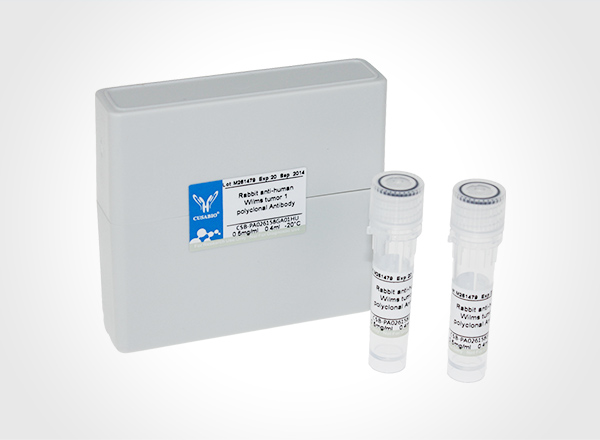
Upon receipt, store at -20°C or -80°C. Avoid repeated freeze.
Lead Time
Basically, we can dispatch the products out in 1-3 working days after receiving your orders. Delivery time maybe differs from different purchasing way or location, please kindly consult your local distributors for specific delivery time.
Note: All of our proteins are default shipped with normal blue ice packs, if you request to ship with dry ice, please communicate with us in advance and extra fees will be charged.
Usage
For Research Use Only. Not for use in diagnostic or therapeutic procedures.
Plays a central role in tight junction maintenance via the complex formed with ARHGAP17, which acts by regulating the uptake of polarity proteins at tight junctions. Appears to regulate endothelial cell migration and tube formation. May also play a role in the assembly of endothelial cell-cell junctions.
Gene References into Functions
Angiomotin promotes prostate cancer cell proliferation by signaling through the Hippo-YAP pathway.PMID:28052036
The authors propose that phosphorylation of Amot(S176) is a critical post-translational modification that suppresses YAP's ability to promote cell proliferation and tumorigenesis by altering the subcellular localization of an essential YAP co-factor.PMID:28464980
Data indicate that Amot is crucial for the maintenance of nuclear YAP to promote renal epithelial and RCC proliferation.PMID:26848622
Decreased AMOT-p130 expression coupled with high nuclear YAP1 expression resulted in shorter overall survival and disease-free survival in patients with advanced gastric cancer.PMID:28885730
Study focused on the methylation profile of the AMOT promoter CpG island during development, comparing it in circulating cord blood endothelial progenitor cells (ECFC) of cord blood from term versus preterm newborns. Findings highlight importance of pro-angiogenic AMOT gene methylation in ECFC, suggesting that epigenetic mechanisms may control the regulation of angiogenesis during development.PMID:29036193
AMOT may function as an oncogene in the progression of colon cancer by activating the YAP-ERK/PI3K-AKT signaling pathway.PMID:27779692
angiomotin and Merlin respectively interface cortical actin filaments and core kinases in Hippo signalingPMID:26045165
Study shows miR-205 significantly downregulated and directly target the 3'-UTR of AMOT in breast cancer. In vitro, miR-205 regulates the proliferation and invasion of breast cancer cells through suppression of AMOT expression.PMID:26239614
Amot was highly expressed in breast cancer tissues and was important in the promotion of breast cancer cell proliferation and invasion. Amot knockdown in MCF-7 cells decreased the expression of YAP, YAP/TAZ and LATS1.PMID:25647626
experiments indicate that AMOT and other motin family members function together with NEDD4L to help complete immature virion assembly prior to ESCRT-mediated virus buddingPMID:25633977
AMOT is a crucial suppressor of lung cancer metastasis and highlight its critical role as a tumor suppressor and its potential as a prognostic biomarker and therapeutic target for lung cancer.PMID:25381822
expression is upregulated in sinonasal inverted papillomaPMID:24532565
angiomotin proteins connect F-actin architecture to YAP regulation.PMID:24648494
function of Angiomotins and other members of the Motin protein familyPMID:24548561
Scaffold proteins angiomotin (Amot) and angiomotin-related AmotL1 and AmotL2 were recently identified as negative regulators of YAP and TAZ by preventing their nuclear translocation.PMID:24003252
Within the nucleus, Amot-p130 was associated with the transcriptional complex containing Yap and Teads (TEA domain family members) and contributed to the regulation of a subset of Yap target genes, many of which are associated with tumorigenesis.PMID:24003254
These results collectively suggest that the Hippo pathway negatively regulates the actin-binding activity of Amot family members through direct phosphorylation.PMID:24225952
Thus AMOT is a direct substrate of Lats1/2 mediating functions of the Hippo pathway in endothelial cell migration and angiogenesis.PMID:24106267
Data indicate that the phosphorylation of Amot130 by LATS1/2 is found to be a key feature that enables it to inhibit Yes-associated protein (YAP) dependent signaling and cell growth.PMID:24101513
High levels of Amot transcripts were associated with poor differentiation, venous invasion and decreased survival in patients with clear cell renal cell carcinoma.PMID:23588948
Soluble melanoma cell adhesion molecule (sMCAM/sCD146) promotes angiogenic effects on endothelial progenitor cells through angiomotinPMID:23389031
Three L/P-PXY motifs of AMOT/p130 and the WW domains of Nedd4 mediate the interaction of Nedd4, Nedd4-2 and Itch.PMID:22385262
Data show that Amot expression is required for proliferation of breast cancer cells in specific microenvironmental contexts that require ERK1/2 signaling.PMID:21285250
ADepletion of Angiomotin in Nf2(-/-) Schwann cells attenuates the Ras-MAPK signaling pathway, impedes cellular proliferation in vitro and tumorigenesis in vivoPMID:21481793
novel mechanism to restrict the activity of TAZ and YAP through physical interaction with Amot and AmotL1PMID:21224387
a novel lipid binding domain within Amot is shown to selectively bind with high affinity to membranes containing monophosphorylated phosphatidylinositols and cholesterolPMID:20080965
PDZ binding motif of angiomotin plays a critical role in regulating the responsiveness of endothelial cells to chemotactic cuesPMID:12902404
angiomotin, in addition to controlling cell motility, may play a role in the assembly of endothelial cell-cell junctionsPMID:16043488
p80- and p130-angiomotin play coordinating roles in vascular tube formation by affecting cell migration and cell shape, respectively.PMID:16640563
Results show that DNA vaccination targeting angiomotin may be used to mimic the effect of angiostatin.PMID:16754857
the directional migration of capillaries in the embryo is governed by the Amot:Patj/Mupp1:Syx signaling that controls local GTPase activityPMID:18824598
The angiomotin-like 1 is involved in actin-cytoskeleton-based processes, in part, via its interaction with a p80-angiomotin-containing complex and the actin cytoskeletonPMID:19565639
Amot and AmotL1 have similar effects on endothelial migration and tight junction formation in vitro. In vivo Amot appears to control the cell polarity and AmotL1 affects the stability of cell-cell junctions.PMID:19590046
Show
More
Hide
All
Subcellular Location
Cell junction, tight junction. Note=Localized on the cell surface. May act as a transmembrane protein.
Protein Families
Angiomotin family
Tissue Specificity
Expressed in placenta and skeletal muscle. Found in the endothelial cells of capillaries as well as larger vessels of the placenta.