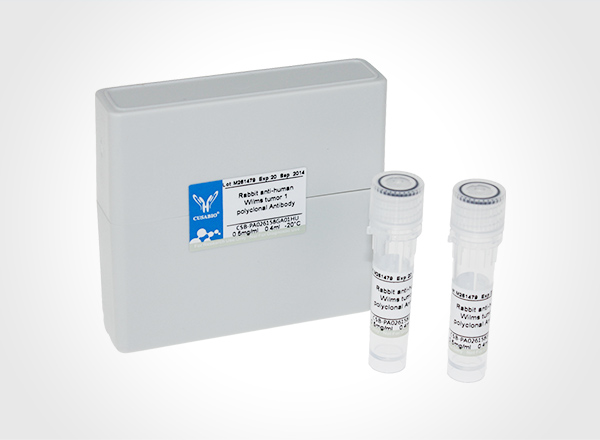
Liquid
Note: We will preferentially ship the format that we have in stock, however, if you have any special requirement for the format, please remark your requirement when placing the order, we will prepare according to your demand.
Upon receipt, store at -20°C or -80°C. Avoid repeated freeze.
Lead Time
Basically, we can dispatch the products out in 1-4 working days after receiving your orders. Delivery time maybe differs from different purchasing way or location, please kindly consult your local distributors for specific delivery time.
Note: All of our proteins are default shipped with normal blue ice packs, if you request to ship with dry ice, please communicate with us in advance and extra fees will be charged.
Usage
For Research Use Only. Not for use in diagnostic or therapeutic procedures.
Adapter or scaffold protein which participates in the assembly of numerous protein complexes and is involved in several cellular processes such as cell fate determination, cytoskeletal organization, repression of gene transcription, mitosis, cell-cell adhesion, cell differentiation, proliferation and migration. Contributes to the linking and/or strengthening of epithelia cell-cell junctions in part by linking adhesive receptors to the actin cytoskeleton. May be involved in signal transduction from cell adhesion sites to the nucleus. Plays an important role in regulation of the kinase activity of AURKA for mitotic commitment. Also a component of the IL-1 signaling pathway modulating IL-1-induced NFKB1 activation by influencing the assembly and activity of the PRKCZ-SQSTM1-TRAF6 multiprotein signaling complex. Functions as an HDAC-dependent corepressor for a subset of GFI1 target genes. Acts as a transcriptional corepressor for SNAI1 and SNAI2/SLUG-dependent repression of E-cadherin transcription. Acts as a hypoxic regulator by bridging an association between the prolyl hydroxylases and VHL enabling efficient degradation of HIF1A. Positively regulates microRNA (miRNA)-mediated gene silencing. Negatively regulates the Hippo signaling pathway and antagonizes phosphorylation of YAP1.
Gene References into Functions
High AJUBA level enhances cervical cancer cells.PMID:29126926
Data show that AJUBA upregulated MMP10 and MMP13 expression in esophageal squamous cell carcinoma (ESCC).PMID:27172796
Mechanistic investigations reveal that AJUBA specifically binds the FERM domain of JAK1 to dissociate JAK1 from the IFNgamma recepter, resulting in an inhibition of STAT1 phosporylation and concomitantly its nuclear translocation. Clinically, the level of AJUBA in CRC specimens is negatively correlated with the levels of IFIT2 and pSTAT1PMID:27893714
AJUBA is a LIM domain protein and contributes to the formation and stability of cadherin-mediated cell-cell adhesion. Loss of AJUBA enhances Prostate cancer cell migration and downregulation of AJUBA expression is observed in metastatic Prostate cancer.PMID:28422308
Mutations of the LIM protein AJUBA mediate sensitivity of head and neck squamous cell carcinomas to treatment with PLK1 inhibitors.PMID:28126323
mitotic phosphorylation of Ajuba is sufficient to promote cell proliferation and anchorage-independent growth in vitro and tumorigenesis in vivoPMID:27226586
The results in this study uncovered that JUB was a regulator involved in proliferation of glioma cells, and it could be used as a potential therapeutic target for glioma.PMID:26406867
AJUBA negatively regulates YAP activity through the LATS family, and inactivation of AJUBA is a novel key mechanism in malignant mesothelioma cell proliferationPMID:24336325
the LIM protein JUB serves as a tumor-promoting gene in colorectal cancer by promoting epithelial-mesenchymal transition, a critical process of metastasis.PMID:24673742
The LIM domain of Ajuba can competitively bind to the N-terminal of Aurora-A, and inhibited the interaction between N-terminal and C-terminal of Aurora A.PMID:24680704
A Rac-PAK1-Ajuba feedback loop integrates spatiotemporal signaling with actin remodeling at cell-cell contacts and stabilizes preassembled cadherin complexes.PMID:22105346
Ajuba contains functional nuclear-receptor interacting motifs and selectively interacts with retinoic acid receptors and rexinoid receptor subtypes.PMID:20133701
Ajuba contributes to the bridging of the cadherin adhesive complexes to the actin cytoskeleton and as such contribute to the formation or strengthening of cadherin-mediated cell-cell adhesion.PMID:12417594
in addition to its effects upon Rac activity, Ajuba can also influence cell migration through regulation of PI(4,5)P2 synthesis through direct activation of PIPKIalpha enzyme activityPMID:15870270
Ajuba is a new cytosolic component of the IL-1 signaling pathway modulating IL-1-induced NF-kappaB activation by influencing the assembly and activity of the aPKC/p62/TRAF6 multiprotein signaling complexPMID:15870274
Ajuba promoted GSK-3beta-mediated phosphorylation of beta-catenin by reinforcing the association between beta-catenin and GSK-3beta.PMID:17621269
Ajuba is a microtubule-associated protein that collaborates with Aurora B and BUBR1 at the metaphase-anaphase transition and this may be important to ensure proper chromosome segregation.PMID:18710370
Ajuba is utilized as a corepressor selectively on Gfi1 target genesPMID:18805794
Show
More
Hide
All
Subcellular Location
Cytoplasm, cytoskeleton. Cell membrane. Cell junction. Nucleus. Cytoplasm, cytoskeleton, microtubule organizing center, centrosome. Cytoplasm, P-body. Note=Shuttles between the cytoplasm and the nucleus. Localizes on centrosomes during G2-M phase. Preferentially co- localizes with cadherin-adhesive complexes at sites of cell-cell contacts. Colocalizes with GFI1 in the nucleus.